10 Apr 2026
- 0 Comments
Key Takeaways for Safe Optical Cleaning
- Never spray compressed air cans upside down or tilted, as liquid propellant can leak onto the glass.
- Use a manual rocket blower for 90% of dust removal to avoid chemical contamination.
- Keep the nozzle at least 6 inches away from the lens to prevent high-pressure impact damage.
- Avoid "industrial" air compressors that may contain oil residues or moisture.
- Only use compressed air for loose debris; never use it to "scrub" a smudge.
The Danger of the "Canned Air" Trap
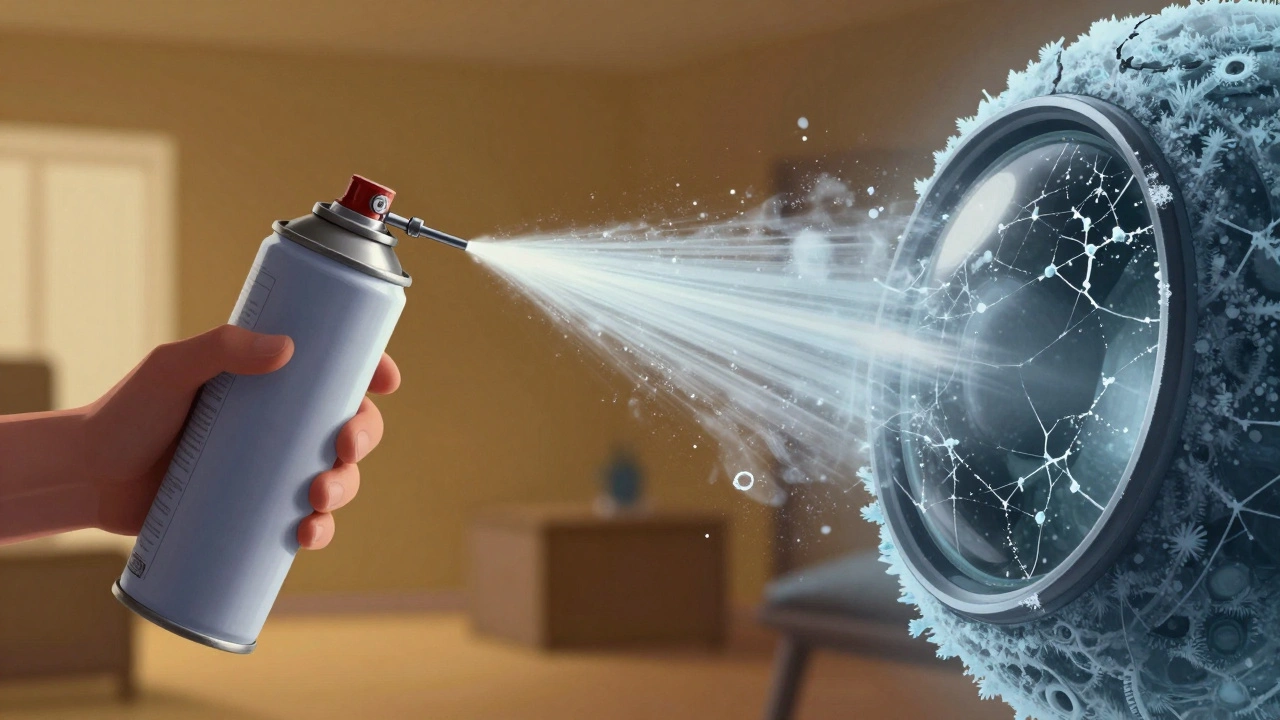
When you buy a standard can of air from a big-box store, you aren't actually buying air. You're buying a pressurized gas, usually Difluoroethane or Tetrafluoroethane. These chemicals are designed to be colorless and odorless, but they are extremely cold when released. If you spray too close, the temperature shock can cause micro-fractures in the delicate Anti-reflective coating (ARC), which is the specialized layer that keeps your images crisp and contrasty.
The real nightmare, however, is the liquid propellant. If the can tilts just a bit, a jet of liquid chemical can shoot out. This liquid can react with the coatings or leave a stubborn, oily residue that is nearly impossible to remove without using a professional solvent. In some cases, this propellant can actually eat away at the bonding agents used in multi-coated lenses, leading to "delamination," where the coating begins to peel off in tiny flakes.
Understanding How Coatings Actually Work
To understand why we have to be so careful, we need to look at what we're actually cleaning. Most modern telescopes use Dielectric coatings or magnesium fluoride layers. These are measured in nanometers. When a piece of dust sits on the glass, it's a physical object. When a chemical solvent hits the glass, it's a molecular interaction. If you blast a piece of grit with high-pressure air, you aren't just moving the dust; you're potentially sliding that grit across the surface like a sandpaper grain, creating microscopic scratches called "cleaning marks."
| Method | Risk Level | Pros | Cons |
|---|---|---|---|
| Manual Rocket Blower | Very Low | No chemicals, safe pressure | Less power for stubborn dust |
| Canned Air (Gas) | Medium | Powerful, portable | Chemical residue, frost risk |
| Electric Compressor | High | Infinite supply | Oil droplets, moisture, too high pressure |
The Right Way to Use Compressed Air
If you absolutely must use a can of compressed air-perhaps you're in the field and a rocket blower isn't cutting it-you have to follow a strict protocol. First, always hold the can perfectly upright. If you tilt it, you're risking that liquid propellant leak we talked about. Second, use short, controlled bursts. Long sprays cause the can to freeze, which increases the likelihood of the valve malfunctioning and spitting liquid.
Distance is your best friend here. Keep the nozzle at least 6 to 10 inches away from the Optical surface. You want the air to push the dust off the lens, not blast the dust into the coating. Imagine you're trying to blow a crumb off a table; you don't press your lips against the wood, you blow from a distance. The same logic applies to your mirrors and lenses.
Another pro tip: check the nozzle. Some cheap cans have plastic tips that can scratch the glass if they accidentally touch the surface. If you're working with an expensive aperture, consider removing the plastic straw if the valve allows, or be extremely mindful of your hand stability.
Better Alternatives to Canned Air
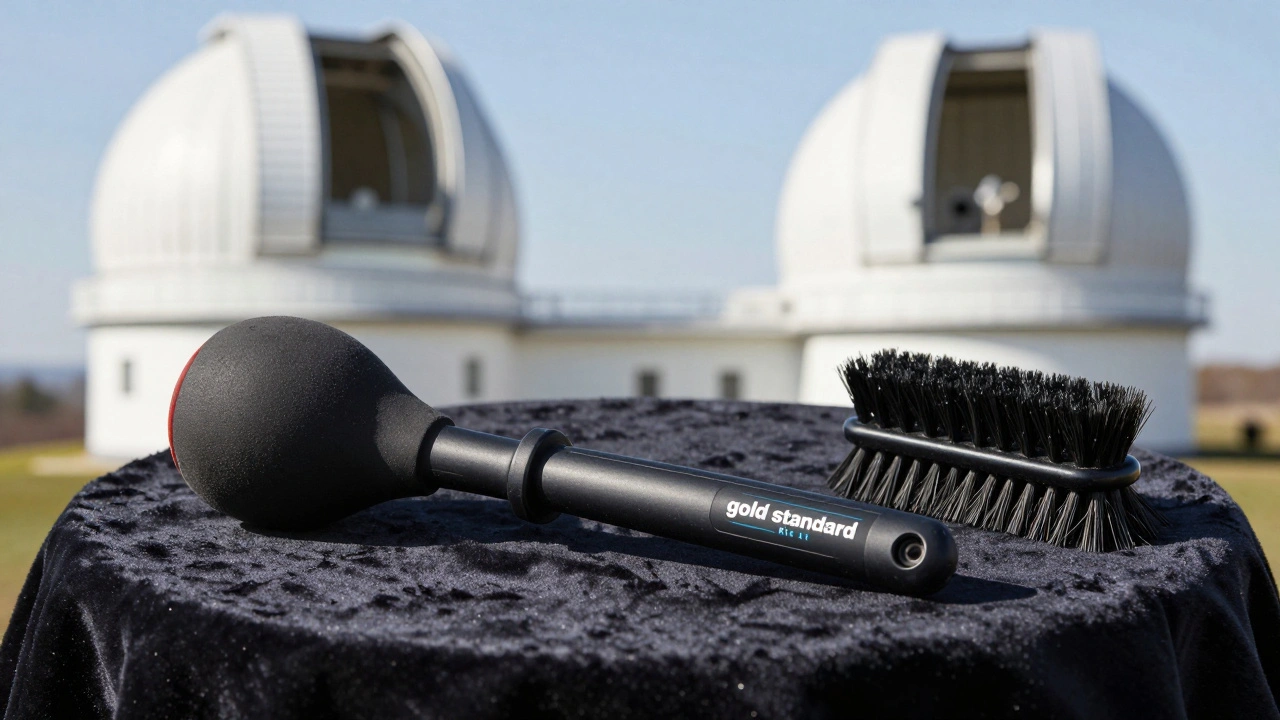
The gold standard for any serious astronomer is the Rocket Blower. These are hand-operated bellows that push actual ambient air. There are no chemicals, no propellant, and the pressure is low enough that it won't drive particles into the glass. Since there's no risk of chemical contamination, you can use them every single time you take your telescope out of its case.
For those who deal with heavy dust environments, an Ionized Air Blower can be used, though these are usually reserved for professional labs. For the home user, a simple high-quality bellows blower combined with a Lens brush (made of soft goat hair or synthetic fibers) is the safest combo. The brush loosens the dust, and the blower whisks it away. Just remember to never brush the lens without blowing the larger grits off first, or you'll be scratching the surface with the very tool meant to clean it.
When to Stop Using Air and Call a Pro
Air is for dust. It is not for fingerprints, oil, or fungus. If you see a smudge on your lens, blowing on it with compressed air is like trying to clean a grease stain with a fan-it's just not going to work. Attempting to "blast" a smudge away often leads to people pressing the nozzle too close, resulting in the very damage we're trying to avoid.
If you have oil or fingerprints, you need a dedicated Optical cleaning solution, typically a mix of isopropyl alcohol and distilled water, applied with a microfiber cloth or lens tissue. However, if you notice "bloom" or a cloudy film that doesn't move, you might be dealing with coating degradation or fungus. At that point, stop. Trying to clean a failing coating with air or chemicals will only accelerate the peel. This is the time to send your equipment to a professional optics shop for re-coating.
Can I use an electric air compressor from my garage?
It is highly discouraged. Most home compressors use oil for lubrication, and tiny droplets of this oil can be misted into the air stream. This oil will land on your telescope coatings, creating a film that attracts more dust and is very difficult to remove without scratching the lens.
What happens if I accidentally spray liquid propellant on my mirror?
If you see a wet spot from a tilted can, do not rub it. Let it evaporate. If it leaves a residue, you may need to use a specialized optical cleaner. If the propellant has etched the coating, the damage is permanent and will likely require the mirror to be re-aluminized.
Is it safe to use "duster" cans on CMOS camera sensors?
The same rules apply. Sensors are even more delicate than telescope lenses. Use a rocket blower first. If you must use canned air, hold it strictly upright and use short bursts from a distance to avoid "frosting" the sensor or leaving chemical spots.
How often should I be cleaning my telescope optics?
Less is more. Every time you touch or clean a lens, you risk introducing a scratch. Only use compressed air or blowers when dust is visibly affecting the image contrast. If the telescope is performing well, leave the coatings alone.
Do all telescopes have coatings that can be damaged?
Almost all modern telescopes use some form of coating. Reflectors have aluminum or dielectric coatings on the mirror, and refractors have multi-coatings on the glass elements. All of these are thinner than a human hair and can be damaged by chemical solvents or high-pressure impact.
Next Steps for Maintenance
If you're just starting your maintenance routine, start by auditing your kit. Throw away any old, generic air cans and invest in a decent rocket blower. If you're an advanced user, consider a dedicated cleaning station with a clean-room cloth and distilled water. For those with expensive APO refractors, remember that the goal isn't a "perfectly" clean lens-it's a lens that performs optimally. A few specks of dust rarely affect an image, but a single deep scratch from a cleaning error will haunt every photo you take for the rest of the telescope's life.