9 Apr 2026
- 0 Comments
Quick Takeaways
- Winter air is often drier and clearer, which can actually make urban light domes look brighter and more intrusive.
- Summer humidity and aerosols can create a "scattering effect," diffusing city lights across a larger area of the sky.
- Seasonal changes in the Earth's tilt affect where the "darkest" patches of sky are located relative to your horizon.
- Planning your calendar around these shifts allows you to catch fleeting deep-sky objects before they are drowned out by seasonal haze.
The Winter Paradox: Clear Air and Bright Glows
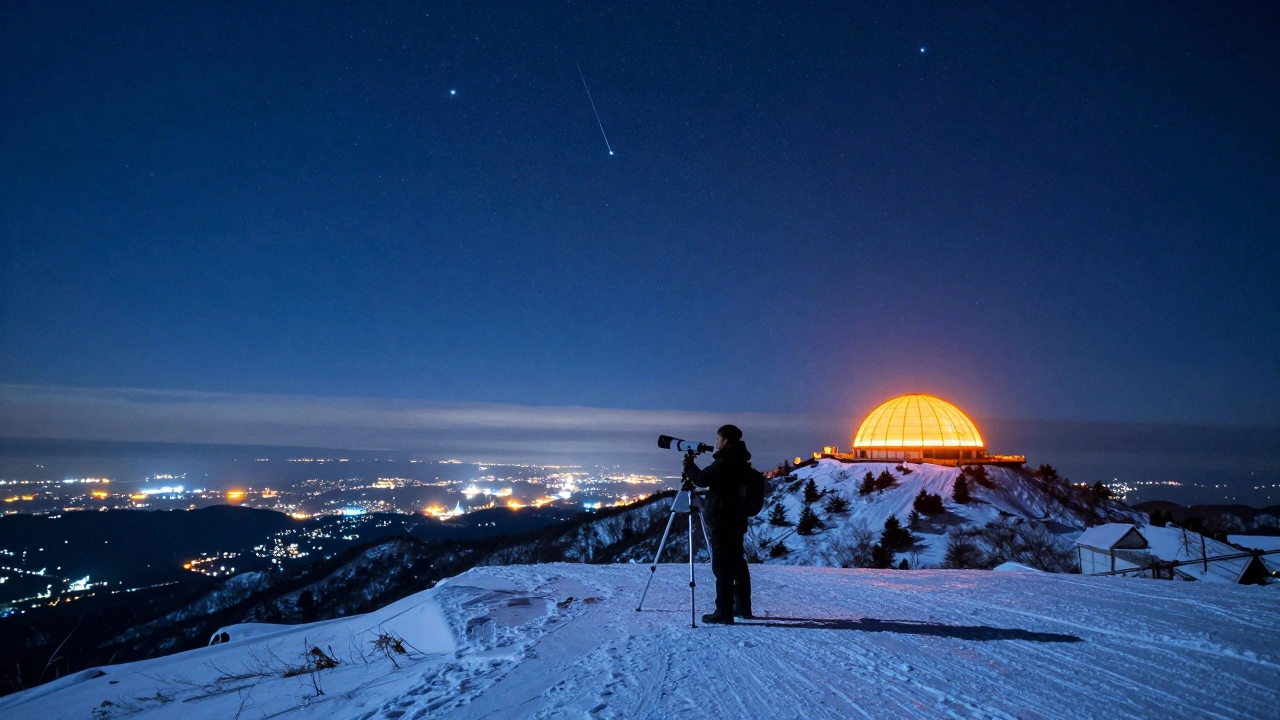
You might think winter is the best time for observing because the nights are long. While the duration is a win, the atmospheric chemistry is a bit of a trickster. During winter, the air in temperate zones is typically much drier. Low humidity means there are fewer water droplets to absorb light, but it also means there's less "natural" haze to mask the glow of a nearby city. When the air is crisp and cold, the light from a distant metropolis can travel further and more cleanly, creating a sharp, piercing light dome on the horizon.
This affects your Observing Calendar because the targets you usually see in winter-like the Orion Nebula-are often located in regions of the sky that might be hit harder by this concentrated glow. If you're chasing the faintest galaxies, a truly "clear" winter night can sometimes feel more polluted than a slightly hazy autumn evening because the contrast between the dark sky and the urban glow is so stark.
Summer Haze and the Scattering Effect
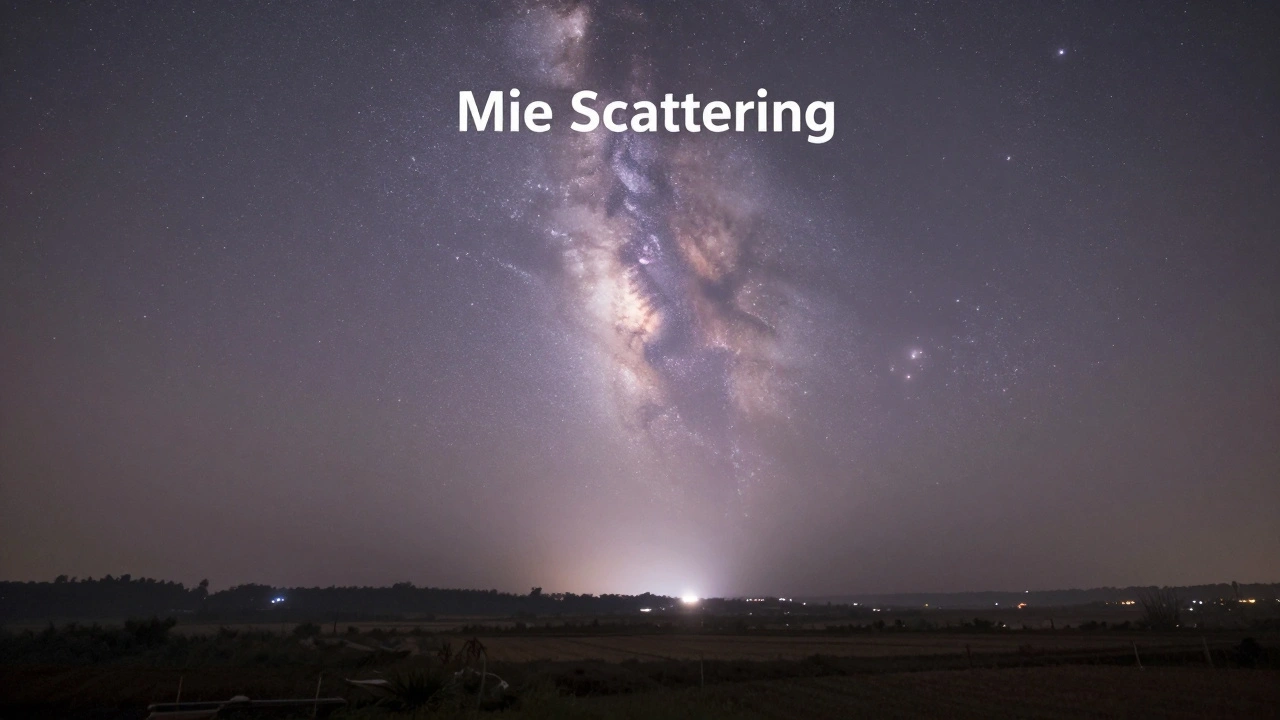
As we move into June and July, the atmosphere changes. Humidity spikes, and we get more aerosols-tiny particles of dust, pollen, and salt. This is where the Mie Scattering process kicks in. Unlike the clean travel of light in winter, summer air acts like a giant diffuser. The light from street lamps and office buildings doesn't just stay in a neat dome; it bounces off these particles and spreads across the zenith.
For the observer, this means the "background glow" of the entire sky rises. You might find that while the horizon looks less intensely bright than in January, the overall darkness of the sky is diminished. This is why the Milky Way often looks a bit more "washed out" in late summer even in rural areas. If you're planning to hunt for globular clusters in Hercules or Lyra, you have to account for this diffused light by using tighter filters or moving to higher altitudes where the air is thinner and cleaner.
Measuring the Damage with the Bortle Scale
To really understand how these seasonal shifts impact your experience, you need a way to quantify the sky. The Bortle Scale is the gold standard here. It's a nine-level numeric scale that describes the night sky's brightness. A Class 9 sky is the center of New York City, while Class 1 is a truly pristine wilderness.
The interesting part is that your local site can actually shift Bortle classes depending on the season. A site that feels like a Class 3 (Rural Sky) in the autumn might behave like a Class 4 (Rural/Suburban Transition) during a humid August night due to the scattering mentioned earlier. When you're marking your calendar, don't just trust the map; trust the current atmospheric conditions.
| Season | Atmospheric Condition | Light Behavior | Impact on Observation |
|---|---|---|---|
| Winter | Dry, Low Humidity | Concentrated light domes | Better transparency, but sharper urban glow |
| Spring | Variable, Pollen-heavy | Moderate scattering | Unpredictable contrast levels |
| Summer | High Humidity, Aerosols | Widespread sky glow | Lower contrast, "washed out" Milky Way |
| Autumn | Cooling, Clearing | Decreasing scattering | Optimal balance of transparency and darkness |
The Role of Astronomical Seeing and Transparency
There's a big difference between "seeing" and "transparency," and confusing the two is a common mistake for beginners. Astronomical Seeing refers to the stability of the air. If the stars are twinkling violently, the seeing is poor. Transparency, however, is how much light the atmosphere absorbs or scatters. This is the primary driver of seasonal light pollution.
In the autumn, we often hit a "sweet spot." The air is cooling down (increasing stability/seeing) and the humidity is dropping (increasing transparency). This is why many astrophotographers prioritize October for imaging deep-sky objects. The light pollution is less scattered than in summer, but the air isn't so dry and unstable as it can be during mid-winter cold fronts. If you want to maximize your results, aim for the transition periods between seasons.
Adjusting Your Observing Calendar
So, how do you actually change your plan? First, stop treating your target list as a static checklist. Instead, categorize your targets by "contrast requirement." Objects with high surface brightness, like the Andromeda Galaxy, can handle a bit of summer haze. But if you're hunting for the faint, ghostly arms of a distant spiral galaxy, you need the high-transparency windows of late autumn or early winter.
Second, consider your geography. If you live south of a major city, your "light dome" is in the north. In the summer, the constellations you want to see are often high in the north, putting them right in the path of that diffused glow. Shift your focus to the southern horizon during those months. Use the Dark Sky Map to identify areas where the seasonal scattering is least likely to interfere with your specific targets.
Pro Tips for Fighting Seasonal Glow
If you can't change the season, change your gear. Light pollution filters-specifically those that target the narrow wavelengths of LED and sodium lamps-are a lifesaver. While they aren't a magic bullet for everything, they can help recover contrast during those hazy summer nights when the sky looks gray instead of black.
Another trick is to time your observations with the "atmospheric window." After a strong cold front passes through, the air is often scrubbed clean of aerosols and moisture. This is the best time to attempt your most ambitious observations, as the transparency will be at its peak, regardless of what the calendar says. Keep an eye on the dew point; when the dew point is significantly lower than the air temperature, you're likely looking at a high-transparency night.
Why does the sky look brighter in summer even if the city lights haven't changed?
This is due to increased humidity and aerosols in the air. Water droplets and dust particles act like tiny mirrors, scattering the artificial light from cities across a larger portion of the sky, which creates a general "glow" rather than a concentrated light dome.
Does the Bortle scale change by season?
Technically, the Bortle scale describes the site's general quality, but the *perceived* class can shift. A site might feel like a Class 4 in the summer due to atmospheric scattering but feel like a Class 3 in the winter when the air is drier and more transparent.
What is the best month for the darkest skies?
Generally, autumn (October/November) offers the best balance. The air is typically clearing and cooling, leading to higher transparency and better astronomical seeing compared to the humid summer or the volatile winter.
Can a light pollution filter fix seasonal haze?
Filters can help by blocking specific wavelengths of artificial light (like those from street lamps), which improves contrast. However, they cannot fix the "glow" caused by natural atmospheric scattering of all light frequencies.
How does the moon affect seasonal light pollution?
The moon is a natural source of light pollution. During summer, when the moon is often lower or in different positions, its light can interact with the high humidity to create a much brighter "sky glow" than it would on a dry winter night.
Next Steps for Better Viewing
If you're feeling overwhelmed, start small. Pick one target you've always wanted to see and track it for three months. Note the sky color, the humidity, and the clarity. You'll start to see the pattern of your local "light seasons." If you're a beginner, try using a simple star map app to identify where the nearest city's light dome is located and consciously move your telescope to the opposite side of the sky.
For the more advanced, start a transparency log. Record the dew point and the visibility of the Milky Way's core each time you go out. After a year, you'll have a personalized calendar that tells you exactly when your site is at its peak, allowing you to stop guessing and start observing.