24 Apr 2026
- 0 Comments
The Psychology of Gear Forgetfulness
Why do we forget things, even when we have a routine? Most of the time, it is because we rely on "mental checklists." Your brain tells you, "I've got the tripod, I've got the tube, I'm good." But telescope packing list is not just about remembering the big items; it is about the invisible dependencies. For example, a Equatorial Mount is useless without its counterweights. A CMOS Camera is just a heavy brick without a dew heater or a specific USB-C cable.
The key is to move from a memory-based system to a process-based system. Instead of asking "Did I pack everything?" you should be asking "Did I check every box on the list?" This shift reduces the cognitive load and ensures that your focus remains on the stars, not on the gear you're missing.
The Essential Optical Core
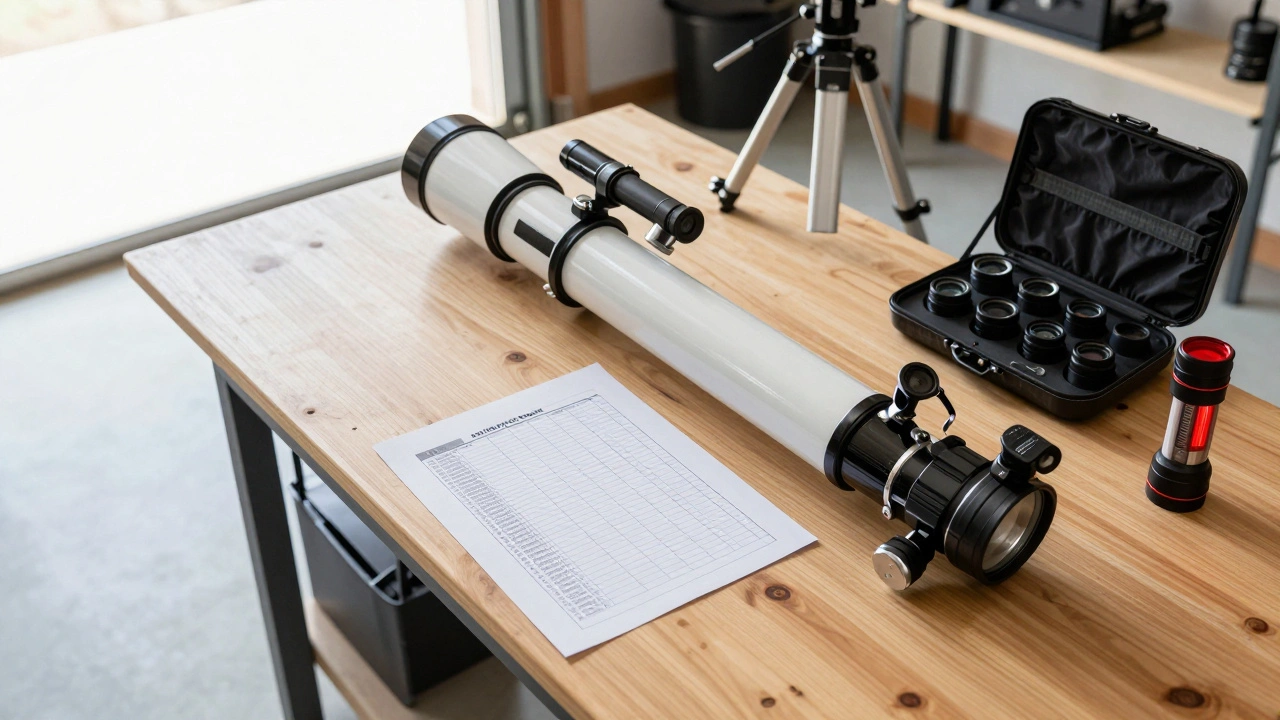
Your primary optics are the heart of your setup. If these aren't right, nothing else matters. Start with your Optical Tube Assembly (OTA). Whether you are using a Refractor telescope or a Reflector telescope, ensure the mirrors are locked and the lenses are protected.
Don't just pack the telescope; pack the interface. Many people forget the diagonal mirror or the specific adapter that connects the camera to the focuser. If you use a Newtonian telescope, check that your collimation tool is in the bag. There is nothing worse than arriving at a dark site and realizing your mirrors are out of alignment with no way to fix them.
| Item | Criticality | Common Failure/Forgetfulness |
|---|---|---|
| Optical Tube (OTA) | Essential | Left in the holder/dock |
| Eyepieces (Multiple Focal Lengths) | Essential | Only packing one high-power piece |
| Star Diagonal | High | Left in the storage case |
| Collimation Tool | Medium | Forgotten until mirrors are skewed |
| Dew Shields/Heaters | High | Forgotten until 2 AM condensation hits |
Mounting and Stability Requirements
A shaky image is an unusable image. The Mount is the unsung hero of astronomy. If you use a German Equatorial Mount, you need a specific sequence of packing. First, the tripod legs, then the mount head, and most importantly, the counterweights. I've seen people arrive at a site only to realize they left the weights in the garage, making it impossible to balance a heavy telescope.
Consider the terrain. If you are heading to a rocky area, a set of vibration suppression pads can be a lifesaver. Also, check your locking knobs. Ensure you have the correct wrenches or Allen keys if your setup requires manual tightening. A loose bolt on a tripod can lead to a catastrophic gear crash, especially when you are working in the dark with heavy equipment.
Power and Electronics Logistics
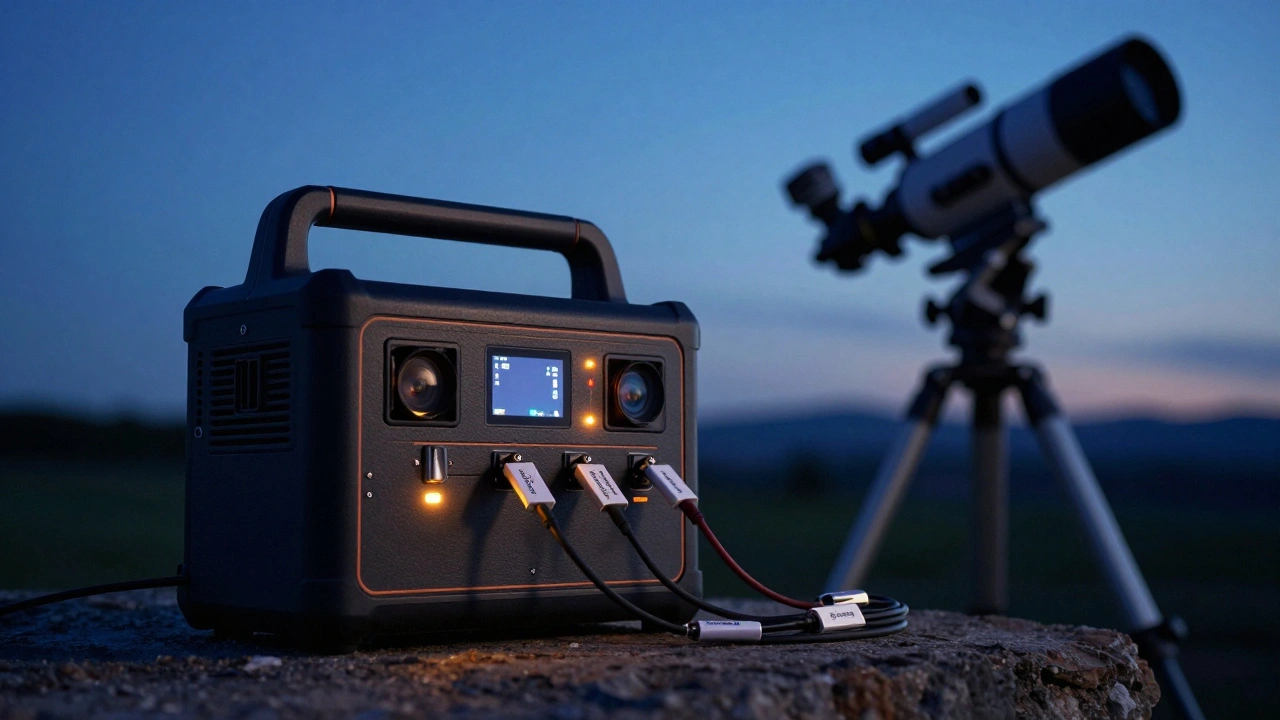
Modern astronomy is essentially a computer science project in the woods. Between GoTo mounts, electronic focusers, and cooled cameras, the power requirements are significant. A common mistake is relying on a single battery pack. If that pack dies or the fuse blows, your entire night is over.
Invest in a high-capacity Portable Power Station. Make sure you have the correct DC adapters and a few spare fuses. If you are doing long-exposure Astrophotography, you will need a way to power your laptop or controller. Don't forget the cables. I recommend using a label maker to mark each cable (e.g., "Mount Power," "Camera USB") so you aren't untangling a "cable nest" in the freezing dark.
- Main Battery / Power Station (fully charged)
- Backup batteries (AA, AAA, 18650 as needed)
- Power strips and extension cords (industrial grade)
- USB cables and adapters (USB-C, USB-B)
- Laptop and charger (if using software control)
The "Comfort and Survival" Kit
You cannot observe the stars if you are shivering uncontrollably. Your brain stops functioning logically when you hit mild hypothermia, and that is when expensive gear gets dropped. Packing for the environment is as important as packing for the optics. Even in summer, high-altitude dark sites drop in temperature rapidly once the sun goes down.
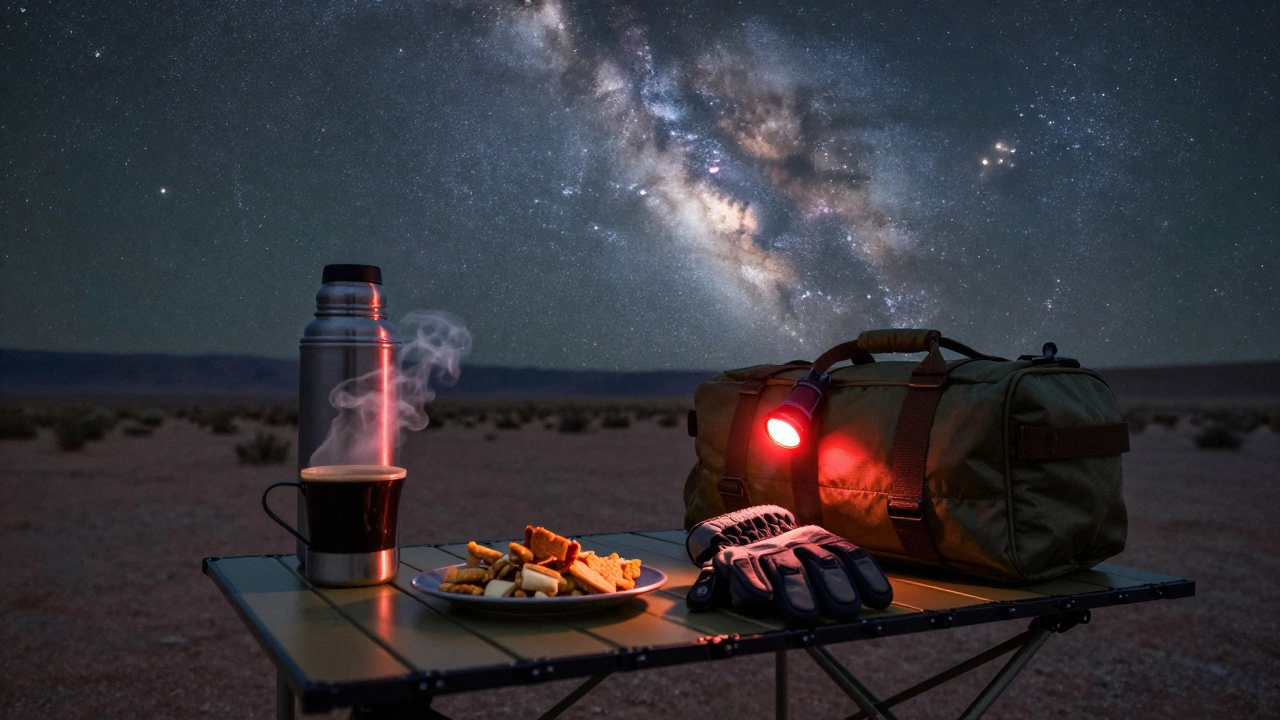
Think about the basics: a red-light flashlight to preserve your Night Vision. White light from a phone screen will blind you for ten minutes and ruin your ability to see faint nebulae. Bring a thermos of hot coffee and high-calorie snacks. Your body burns a lot of energy staying warm while standing still for hours.
Clothing should be layered. Use moisture-wicking base layers, a fleece mid-layer, and a windproof outer shell. Don't forget heavy-duty gloves-preferably ones with "flip-back" fingertips so you can still turn small knobs on your focuser without taking your whole hand out of the warmth.
Transport Strategies and Loading Order
How you pack your car matters just as much as what you pack. The rule of thumb is "Last In, First Out." The items you need immediately upon arrival-like the tripod and the red flashlight-should be the last things you put in the vehicle. The heavy cases and storage bins should go in first.
Secure your gear. Telescopes are fragile. Use foam inserts or specialized padded bags. If you are transporting a large Dobsonian telescope, ensure it is strapped down so it doesn't slide during a sudden stop. Heavy equipment moving in a car can easily crack a mirror or bend a focuser drawtube.
Create a "Ready-Bag." This is a small, dedicated bag that contains all the small bits: lens caps, screws, adapters, and the packing list itself. When you arrive, you only need to grab the big equipment and this one bag to have everything necessary for assembly.
The Pre-Departure Final Check
The most dangerous part of the process is the "last minute rush." When you are rushing to beat the sunset, you are most likely to forget something. Implement a 24-hour staging area. Instead of packing the car the morning of the trip, move all your gear to a specific area of the garage or room the night before. This allows you to visually verify the presence of every item on your list without the pressure of a ticking clock.
Do a "dry run" for complex setups. If you have a new camera or a different mount, assemble the whole thing in your living room. This ensures that all the parts are compatible and that you aren't missing a tiny, essential washer or adapter. If it doesn't work in your house, it definitely won't work in a field in the middle of nowhere.
What is the most commonly forgotten piece of gear?
Ironically, it is usually the smallest items: lens caps, charging cables, and specifically, the red-light flashlight. Many people also forget the specific adapters needed to connect a camera to the telescope, as these are often stored in separate small bins rather than with the main optical tube.
How do I manage a packing list for different types of sessions?
Create "modular" lists. Have one base list for general visual observing and a separate "add-on" list for astrophotography (which includes things like guiding cameras, dew heaters, and laptop setups). This prevents the list from becoming bloated and overwhelming for a simple night of stargazing.
Should I carry spare parts like screws and bolts?
Yes. A small assortments kit of M4, M5, and M6 screws, along with a few spare locking nuts, is a pro move. Vibrations from transport can loosen fasteners, and losing a single bolt in the grass can render a mount unusable.
How do I prevent condensation from ruining my gear?
Include electronic dew heaters on your list. These are strips of heating wire that wrap around the lens or mirror. If you don't have these, a simple oversized dew shield can help, but in high-humidity areas, active heating is the only real solution to keep your optics clear.
What is the best way to organize cables in a transport case?
Use velcro cable ties instead of plastic zip ties. Label both ends of every cable. This allows you to quickly identify which cable goes to the mount and which goes to the camera without having to trace the wire through a tangle in the dark.