26 Apr 2026
- 0 Comments
The Quick Breakdown: Why Heat Ruins Your View
- Thermal Expansion: Different materials (aluminum, steel, carbon fiber) shrink at different rates as they cool.
- Cell Tension: As a mirror cell cools, it can pinch the primary mirror, distorting its shape.
- Air Currents: Warm air trapped in the tube creates "tube currents" that blur the image.
- Mechanical Shift: Small contractions in the focuser or mirror mounts physically move the optical axis.
What Actually Happens During Cooling
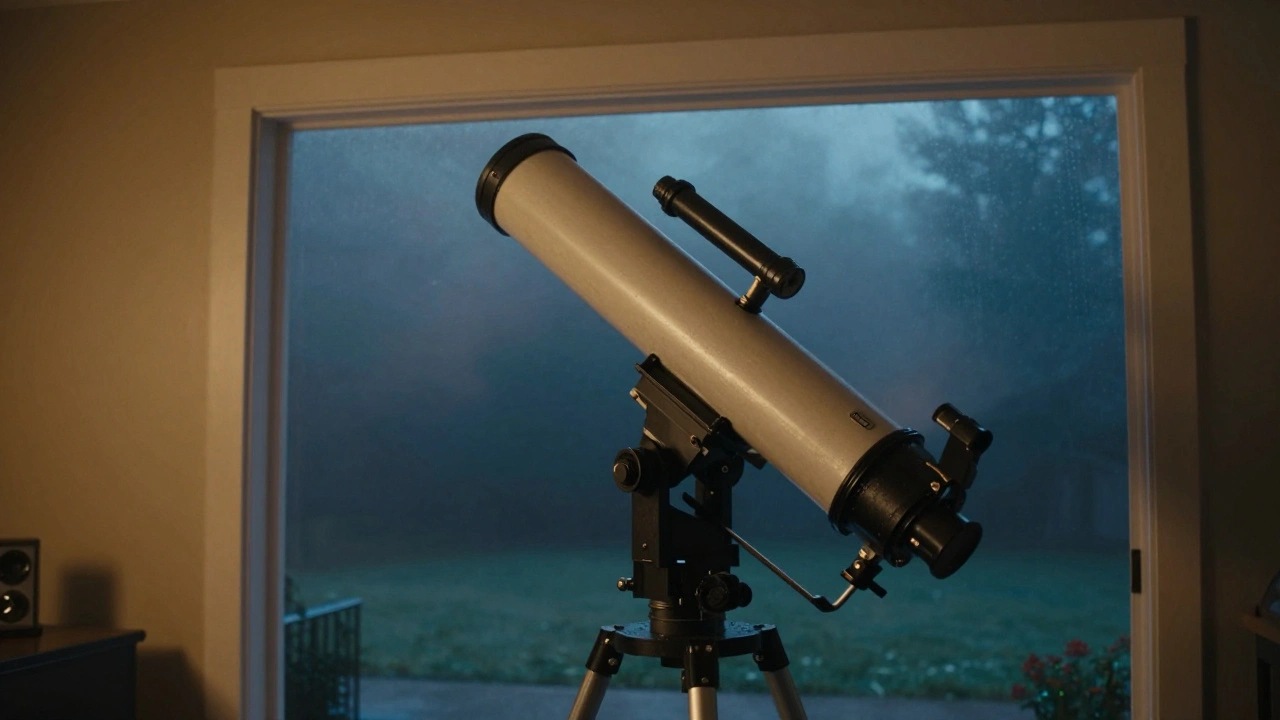
When you move a telescope from a 70°F house to a 40°F backyard, you aren't just changing the air temperature. You are triggering a physical reaction in the materials. Collimation is the process of aligning the optical components of a telescope so that light rays travel along a precise, single axis. But this alignment relies on the physical position of the mirror and the secondary mirror.
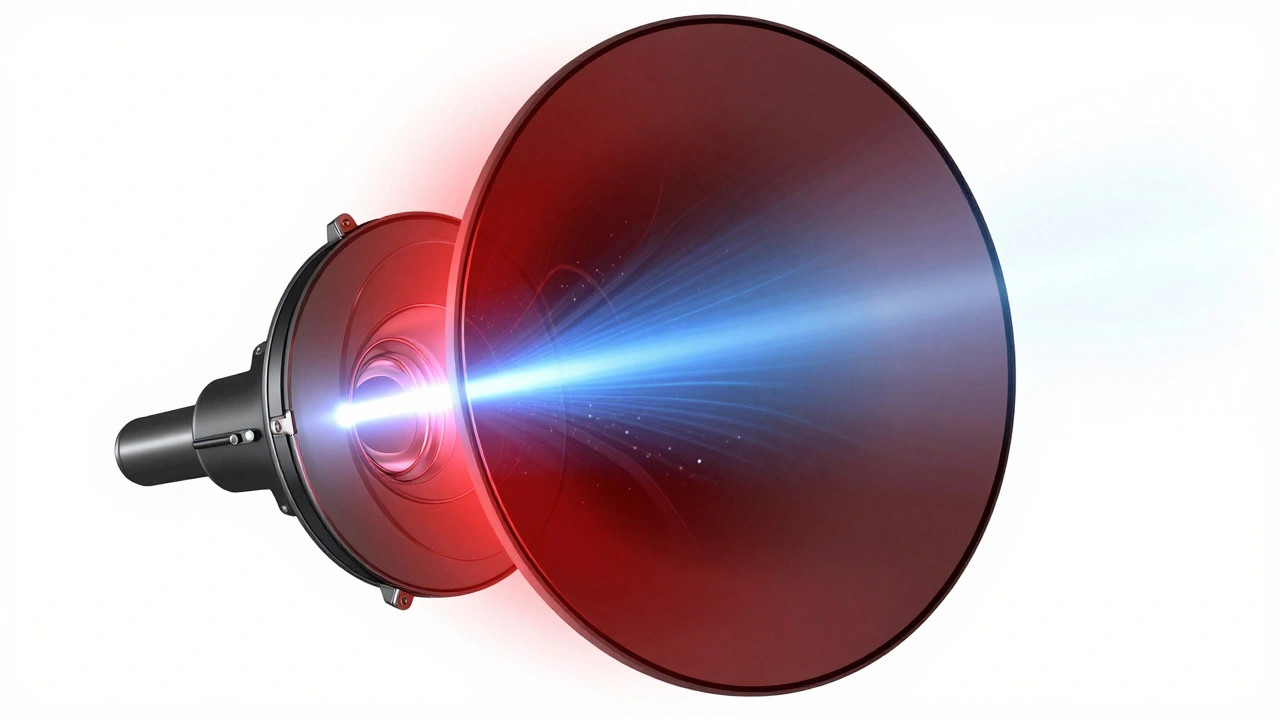
Most telescopes use a Mirror Cell is the mechanical structure that holds the primary mirror in place, providing support and adjustment points made of aluminum or steel. Aluminum has a high coefficient of thermal expansion. As it cools, the metal contracts. If the mirror is held too tightly, the cooling metal can actually warp the surface of the glass, a phenomenon known as "pinching." Even if the mirror isn't pinched, the contraction can tilt the mirror by a fraction of a degree. In a high-focal-length system, a tiny shift at the base translates to a massive misalignment at the eyepiece.
The Struggle Between Different Materials
The real headache starts when your telescope is made of multiple materials. Think about a tube made of carbon fiber but with an aluminum focuser and a steel mirror cell. These materials don't shrink at the same rate. Carbon fiber is incredibly stable across temperature swings, but aluminum is not. As the aluminum components shrink while the carbon fiber stays put, the distance between the Secondary Mirror is the smaller mirror in a reflecting telescope that redirects light toward the eyepiece and the primary mirror changes. This shift alters the focal point and can throw your telescope collimation completely out of whack.
| Material | Expansion Rate | Effect on Alignment |
|---|---|---|
| Aluminum | High | Significant shift in focal plane and tilt |
| Steel | Medium | Moderate contraction; can cause mirror pinching |
| Carbon Fiber | Very Low | Minimal impact on structural length |
| Pyrex/Low-Expansion Glass | Extremely Low | Maintains surface figure during cooling |
The Ghost in the Tube: Tube Currents
It isn't just about the hardware shifting; it's about the air. When the mirror is warmer than the surrounding air, it creates a boundary layer of rising heat. This manifests as "shimmering" or "boiling" in the image. Even if your alignment is perfect, these Tube Currents is convective air currents within a telescope tube caused by temperature differences between the mirror and the air will make your stars look bloated. Many people mistake this for poor collimation and spend an hour tweaking their knobs, only to find that the image improves on its own once the mirror reaches thermal equilibrium.
Practical Strategies to Fight Thermal Drift
So, how do you stop your telescope from acting like a mood ring? The first step is timing. You cannot rush the cooling process. A large 12-inch mirror has significant thermal mass and can take hours to stabilize. If you collimate inside and then move outside, you are essentially fighting a losing battle.
Try these specific tactics to maintain a sharp image:
- The "Pre-Chill" Method: Set your telescope outside at least two hours before you plan to observe. This allows the mirror and the cell to reach the same temperature as the ambient air.
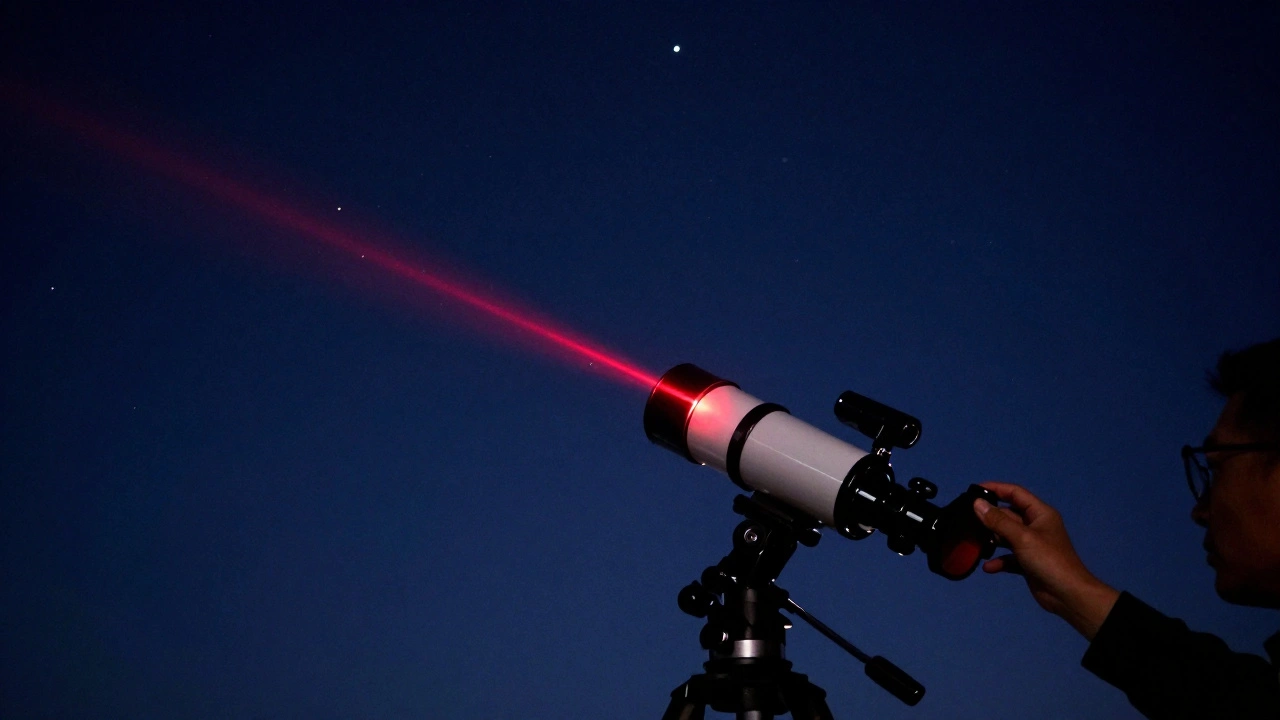
- Collimate On-Site: Never trust a "perfect" indoor collimation. Perform a rough alignment inside, but wait until the telescope has cooled completely before doing your final precision adjustment using a Laser Collimator is a device that projects a precise beam of light to help align the mirrors of a reflecting telescope or a Cheshire eyepiece.
- Use Fans: Many modern Dobsonians come with built-in fans. These aren't for cooling the glass-which happens slowly-but for stripping away the warm boundary layer of air sitting on the mirror's surface.
- Loosen the Cell: If you suspect your mirror is being pinched as it cools, slightly loosen the tension screws on the mirror cell. You want the mirror to be secure but not squeezed.
When to Stop Tweaking
One of the biggest traps for beginners is the "tweak loop." You see a blurry star, you turn a collimation knob, the image gets slightly worse, so you turn it back, and suddenly you've moved the mirror so much that you're totally lost. If you've reached thermal equilibrium and the image is still soft, check your Focuser is the mechanism used to move the eyepiece or camera to achieve a sharp focus on the target . Temperature drops often cause the focal point to shift slightly inward. You might not need a collimation adjustment; you might just need to refocus.
If you are using a Newtonian Reflector is a type of telescope that uses a parabolic primary mirror and a flat secondary mirror to gather light , remember that the secondary mirror is held by a spider vane. These vanes can also expand or contract, slightly shifting the secondary's center. A quick check with a star test-looking for a perfectly round diffraction pattern-is the only way to confirm if your alignment survived the temperature drop.
Does collimation change every time I move my telescope?
Not necessarily, but it often does. If you move the telescope between drastically different temperatures, the metal components will shift. Even physical jarring during transport can knock the mirrors out of alignment, but thermal drift is a slower, more insidious process that happens while you're actually observing.
Can I use a hair dryer to warm up a cold telescope?
Avoid this. Rapidly heating one part of the telescope while the rest is cold creates massive temperature gradients. This will lead to severe tube currents and potentially warp the mirror if the heat is applied unevenly. The best way to manage temperature is gradual acclimatization.
Why does my telescope lose collimation even if it's already outside?
The temperature doesn't stay constant throughout the night. As the ground cools or a cold front moves in, the materials continue to contract. Additionally, as the telescope moves from pointing at the zenith (straight up) to the horizon, the mirror may shift slightly in the cell due to gravity, which is exacerbated by thermal changes in the support clips.
Are carbon fiber tubes really better for collimation?
Yes, significantly. Because carbon fiber has a near-zero coefficient of thermal expansion, the tube doesn't shrink or grow as the temperature drops. This means the distance between the primary and secondary mirrors stays constant, reducing the amount of re-collimation needed compared to aluminum tubes.
How do I know if I have tube currents or bad collimation?
Tube currents look like shimmering waves or a "boiling" effect that moves across the image. Bad collimation usually manifests as a "coma" or a smeared look to the stars, where one side of the star looks like a small tail. If the blurriness disappears after you turn on a fan or wait 30 minutes, it was thermal, not alignment.