25 Aug 2026
- 0 Comments
There is a persistent myth in the amateur astronomy community that zoom eyepieces are inherently inferior to their fixed counterparts. While it is true that high-end variable magnification optics can struggle with chromatic aberration or field curvature compared to premium single-focal-length designs, the gap has narrowed significantly over the last decade. The real question isn't about which one is "better" in a vacuum, but which tool fits your specific observing style and budget constraints.
Choosing between these two formats involves balancing the flexibility of changing magnification on the fly against the often superior edge-to-edge sharpness of a dedicated optic. If you are constantly switching targets from wide-field nebulae to tight planetary details, the convenience factor might outweigh minor optical compromises. However, if you prioritize absolute image fidelity for deep-sky work, a curated set of fixed eyepieces remains the gold standard.
The Mechanics of Variable Magnification
Zoom Eyepieces are optical instruments that allow the user to change the focal length, and thus the magnification, without swapping out the physical component. They typically use a mechanism similar to camera lenses, where internal lens groups move relative to each other to alter the effective focal ratio. Most modern zooms offer a range of roughly 3x to 6x, such as a 7-21mm or a 9-33mm model.
The primary advantage here is speed. When tracking a moving target like a double star or a planet, being able to dial up the magnification instantly without digging through a drawer saves valuable time. This is particularly useful during public events or when observing with friends who may have different preferences for how close they want the view to be. You can hand the scope to someone else, let them adjust the zoom to their comfort level, and then take it back without breaking the focus alignment too drastically.
However, this mechanical complexity introduces potential weak points. Zoom mechanisms require precise alignment of multiple lens elements. If the housing flexes or the gears wear down, the optical performance can degrade unevenly across the zoom range. A well-made zoom will perform consistently from its widest to narrowest setting, but a budget option might suffer from noticeable vignetting or softness at the extremes.
The Purity of Fixed Focal Length Optics
In contrast, Fixed Eyepieces are single-purpose optical tools designed to deliver maximum performance at one specific focal length. Because designers don't have to compromise the optical formula to accommodate a range of magnifications, they can push the limits of correction for that specific size. This often results in better control of spherical aberration and astigmatism, especially in lower-cost designs.
For serious deep-sky observers, fixed eyepieces are often preferred because they allow for specialized designs. For example, a 2-inch eyepiece offers a wider apparent field of view (AFOV) than a 1.25-inch design, allowing you to see more of the sky per glance. By owning a few key fixed lengths-such as a 32mm for wide views, a 13mm for general purpose, and a 6mm for detail-you create a toolkit that covers almost every scenario with optimal glass for each task.
The downside, naturally, is the clutter. Managing a collection of individual eyepieces requires organization. You need a case, a tray, or a dedicated shelf. Swapping them out takes time, and you must ensure you have the right adapter rings for your telescope's diagonal or focuser. If you forget to bring your 10mm to the observing site, you are stuck with whatever else you packed, potentially missing the ideal magnification for a faint galaxy.
Optical Performance: Where the Rubber Meets the Road
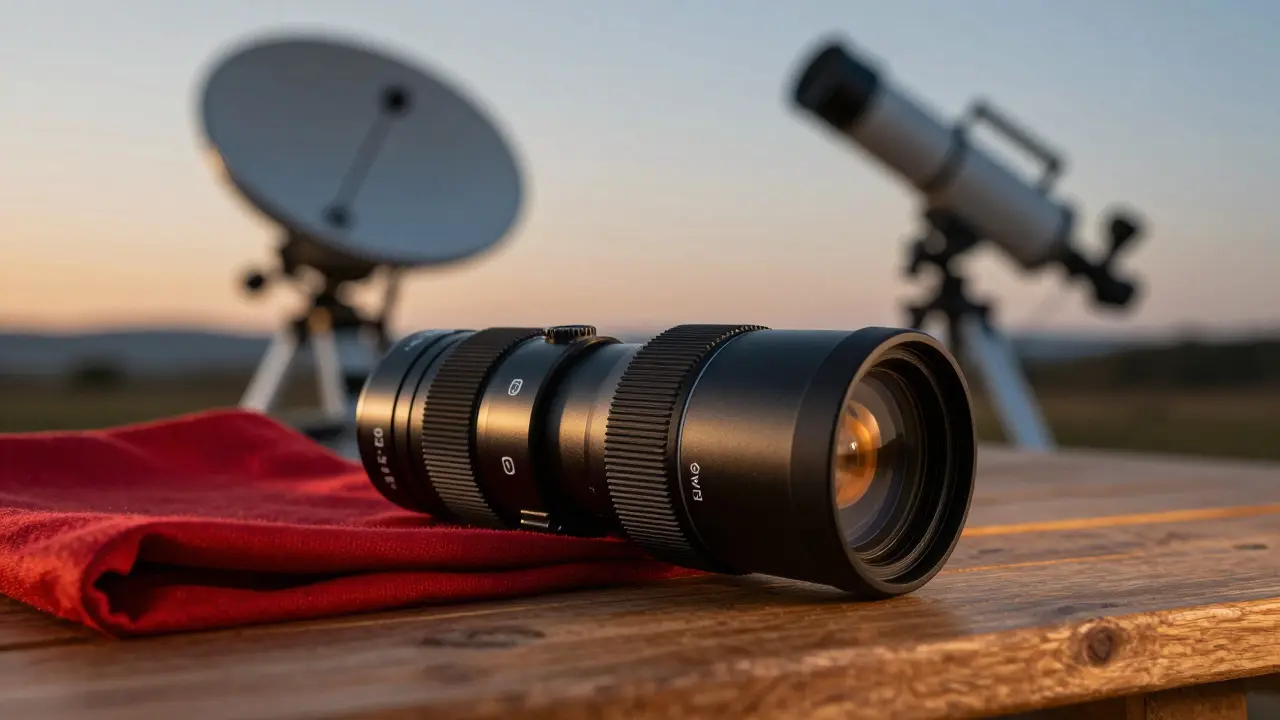
When we talk about optical quality, we are looking at several key metrics: field flatness, edge sharpness, and color fringing. In the past, zoom eyepieces were notorious for having curved fields, meaning the center was sharp but the edges were blurry. This made them unsuitable for large telescopes with fast focal ratios (like f/4 or f/5), where field curvature is already an issue.
Modern engineering has changed this landscape. High-quality zooms now feature multi-coated lenses and complex aspherical elements that flatten the field effectively. Brands like Celestron and Baader have released zoom models that rival mid-range fixed eyepieces in performance. However, at the very top end, specialized fixed designs still hold the crown. A premium 1.25-inch fixed eyepiece from a manufacturer like TeleVue or GSO can offer a perfectly flat field and zero visible aberrations, something that is difficult to achieve in a compact zoom housing.
Chromatic aberration is another factor. Since most visual eyepieces are achromatic (using two types of glass), some color fringing around bright stars is inevitable. Fixed eyepieces, being simpler, often manage this better. Zooms, with their additional lens groups, can sometimes exhibit slightly more purple or green fringing, particularly at higher magnifications within their range. For planetary observation, where you are looking at bright point sources, this difference is less noticeable. For extended objects like nebulae, however, clean black backgrounds and crisp star points matter more, giving fixed optics a slight edge in perceived contrast.
Cost Analysis and Value Proposition
Price is a major deciding factor for many astronomers. Generally, a single high-quality zoom eyepiece costs the same as two or three mid-range fixed eyepieces. If you buy a $200 zoom that covers 7-21mm, you get three distinct magnifications in one package. To replicate that range with fixed eyepieces, you would likely spend $150-$250 total, depending on the brands chosen.
However, value depends on usage frequency. If you observe rarely and only have a small scope, a zoom is a fantastic entry point. It keeps your setup simple and affordable. But if you observe frequently and upgrade your telescope, the limitations of a zoom become apparent. You might find that your 7-21mm zoom doesn't go wide enough for your new larger aperture scope, forcing you to buy a separate wide-field eyepiece anyway. In that scenario, starting with fixed eyepieces allows for more modular growth. You can add a specific eyepiece only when you need it, rather than buying a zoom that might not fit your future needs perfectly.
| Feature | Zoom Eyepieces | Fixed Eyepieces |
|---|---|---|
| Magnification Flexibility | High (continuous range) | Low (discrete steps) |
| Optical Sharpness (Edges) | Good to Very Good | Excellent to Perfect |
| Setup Time | Fast (no swapping) | Slower (requires swapping) |
| Portability | High (fewer items) | Lower (multiple items) |
| Cost Per Magnification Step | Higher upfront, lower per step | Lower upfront, higher cumulative |
| Best Use Case | Public events, beginners, quick changes | Serious deep-sky, high-end scopes |
Practical Scenarios: Which One Should You Choose?
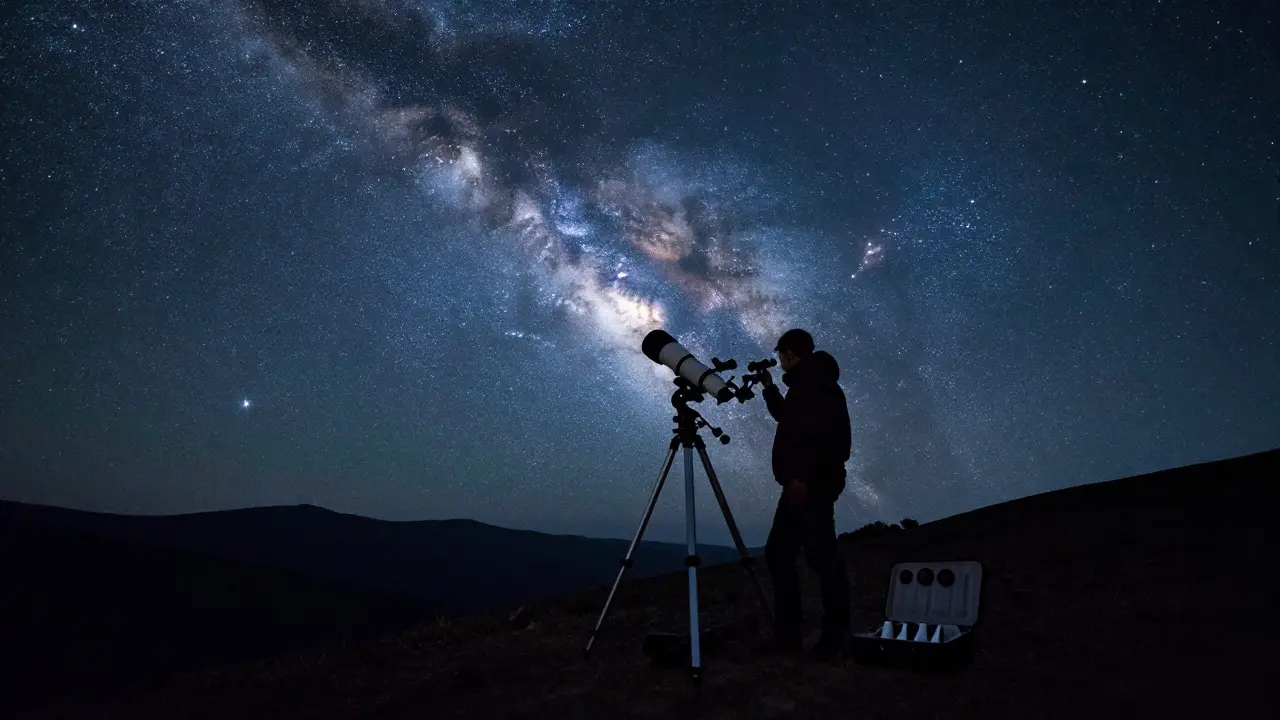
Your choice ultimately comes down to how you observe. Consider these common scenarios to help guide your decision.
- The Weekend Observer: If you only look through your telescope once or twice a month, a zoom is ideal. It reduces the mental load of remembering which eyepiece to bring. You pack one item, and you're ready for anything from the Moon to Andromeda.
- The Public Presenter: If you host stargazing nights at a park or school, a zoom is a lifesaver. Different people have different eyes and preferences. Letting a child zoom in on Saturn and then letting an adult zoom out for the Orion Nebula keeps everyone engaged without you running back and forth to swap tubes.
- The Dedicated Deep-Sky Chaser: If you drive hours to dark sites and spend four hours under the stars, fixed eyepieces win. You will appreciate the sharper edges and cleaner contrast. You will also have the freedom to choose specialized designs, like ultra-wide 100-degree apparent field of view eyepieces, which are rarely available in zoom formats due to their bulk.
- The Traveling Astronomer: If you hike to remote locations with limited space, a zoom minimizes gear weight. Carrying five fixed eyepieces plus adapters adds significant mass to your backpack. A single zoom unit keeps things light and simple.
Hybrid Approaches and Future Trends
You don't have to pick just one camp. Many experienced astronomers adopt a hybrid strategy. They keep a high-quality zoom for general use and quick adjustments, supplemented by one or two premium fixed eyepieces for specific tasks. For instance, a 7-21mm zoom handles most planetary and lunar work, while a dedicated 32mm fixed eyepiece provides a massive, immersive view of large nebulae. This combination offers the best of both worlds: convenience for daily use and peak performance for special targets.
Looking ahead, technology continues to blur the lines. Manufacturers are experimenting with electronic stabilization and digital processing in eyepieces, though this is still niche. More immediately, improvements in coating technologies and lens materials mean that even mid-range zooms are getting closer to the optical standards of fixed designs. As production techniques improve, the "quality penalty" for choosing a zoom will continue to shrink, making it an increasingly attractive option for the average enthusiast.
Ultimately, the best eyepiece is the one that gets you to the eyepiece. Whether that is a sleek, adjustable zoom or a collection of precision-crafted fixed tubes, the goal is to enjoy the night sky. Don't let gear anxiety stop you from observing. Start with what you have, test it out, and decide based on your personal experience with the stars.
Are zoom eyepieces bad for planetary viewing?
Not necessarily. Modern zooms are quite capable for planetary work, especially in the upper half of their magnification range. However, for the highest possible detail, a dedicated high-power fixed eyepiece might offer slightly crisper images due to better correction of aberrations at extreme settings.
Can I use a zoom eyepiece with any telescope?
Yes, provided you have the correct barrel size (1.25-inch or 2-inch). Most zooms come in 1.25-inch barrels, which fit standard diagonals and focusers. Just ensure the physical diameter of the zoom housing fits inside your focuser drawtube without hitting the bottom stop.
Which is easier to clean: zooms or fixed eyepieces?
Fixed eyepieces are generally easier to clean because you only deal with one or two exposed lens surfaces. Zooms have multiple internal lens groups that can accumulate dust or smudges, and cleaning them usually requires disassembly, which is risky for non-experts. It is best to avoid cleaning zoom internals unless necessary.
Do zoom eyepieces affect the exit pupil size?
The exit pupil is determined by the telescope's aperture divided by the magnification. Since a zoom changes magnification continuously, the exit pupil size changes accordingly. There is no inherent disadvantage to the exit pupil calculation itself, but you must ensure the resulting exit pupil is comfortable for your eye (usually between 1mm and 7mm).
Is it worth upgrading from a cheap zoom to a premium fixed set?
If you are noticing significant blurriness at the edges of your field or excessive color fringing, yes. Upgrading to premium fixed eyepieces will provide a dramatic improvement in image quality. However, if your current zoom performs adequately for your scope's capabilities, the jump in cost may not yield a proportional increase in enjoyment for casual observing.