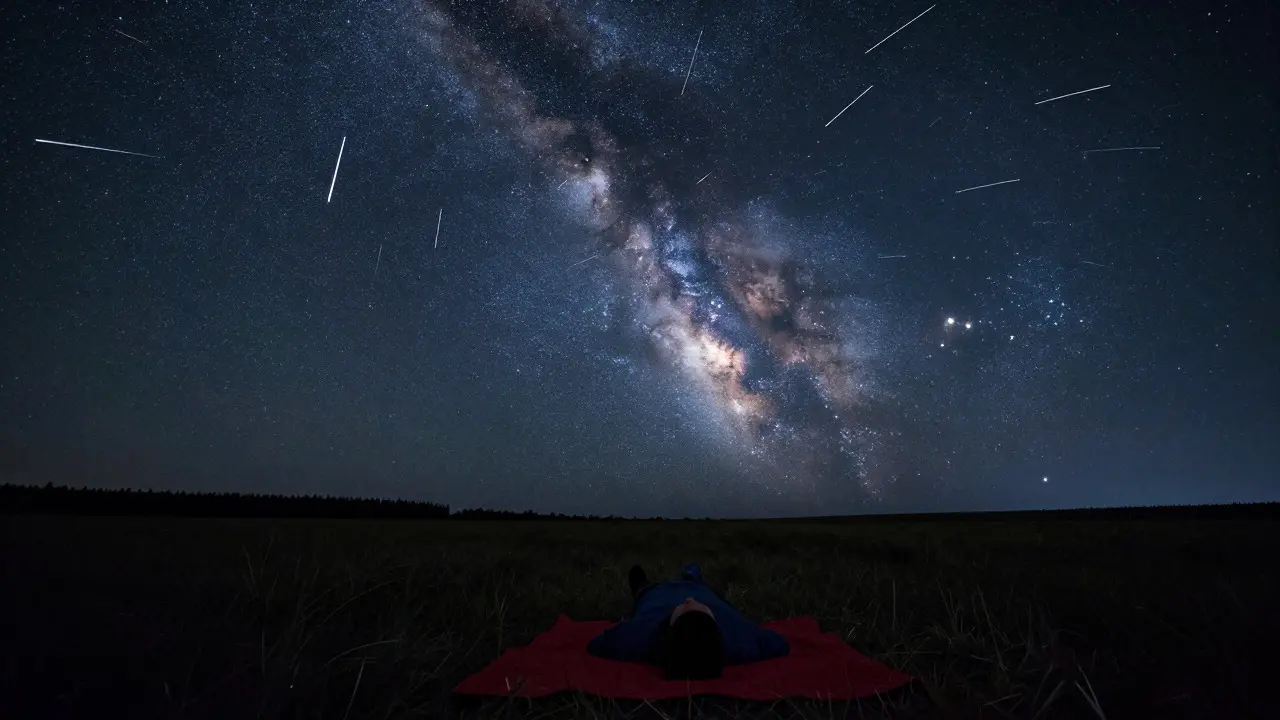
16 Aug 2026
- 0 Comments
There is a specific moment every year when the sky seems to rain. For most people, that moment is fleeting or missed entirely because they are looking at the wrong time, in the wrong direction, or under too much light pollution. Understanding the meteor shower calendar is not just about memorizing dates; it is about understanding the geometry of Earth’s orbit and the debris trails left by comets.
If you plan to watch the skies in 2026, you need more than just a list of months. You need to know when the Zenithal Hourly Rate (ZHR) peaks, how moonlight affects visibility, and which showers are reliable versus those that are often overhyped. This guide breaks down the annual cycle, provides precise peak windows for major events, and offers practical strategies to maximize your chances of seeing fireballs and persistent trains.
How Meteor Showers Actually Work
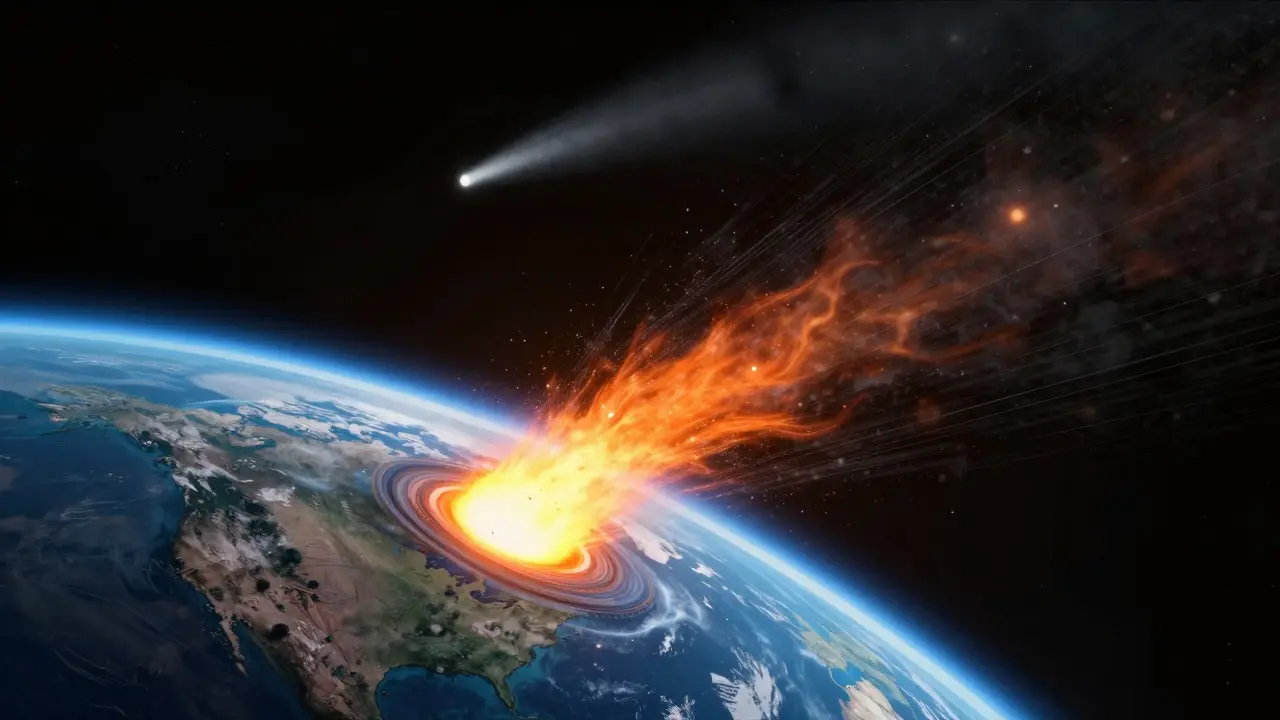
To predict when to look up, you first have to understand what you are looking at. A meteor shower occurs when Earth passes through a stream of dust and rock particles left behind by a comet. As our planet plows through this debris field at high speeds, these tiny grains enter the atmosphere at roughly 11 to 72 kilometers per second. The friction with air molecules heats them up until they glow, creating the streaks we call meteors.
The key metric for any shower is the ZHR. This number represents the maximum number of meteors an observer would see per hour if the radiant (the point in the sky from which meteors appear to originate) were directly overhead and the sky was perfectly dark. In reality, few observers achieve the full ZHR due to horizon obstruction, cloud cover, and light pollution. However, the ZHR remains the standard benchmark for comparing the intensity of different showers.
It is also crucial to distinguish between the "active period" and the "peak." Many showers are active for weeks or even months, but the density of particles is highest only during a narrow window. Watching the Quadrantids in early January outside of their three-day peak window is like trying to catch a needle in a haystack; watching during the peak is like catching needles on a sieve.
The Major Annual Showers: What to Expect
Not all meteor showers are created equal. Some produce hundreds of meteors per hour, while others offer a gentle sprinkle. Here is how the major annual events stack up in terms of intensity and reliability.
| Showers Name | Peak Date (2026) | Typical ZHR | Moon Phase Impact | Best Viewing Time |
|---|---|---|---|---|
| Quadrantids | Jan 3-4 | 110 | Waning Crescent (Good) | After Midnight |
| Lyrids | Apr 22-23 | 18 | Waxing Gibbous (Moderate) | Evening/Night |
| Eta Aquariids | May 5-6 | 50 | Waning Crescent (Excellent) | Pre-Dawn (3-5 AM) |
| Perseids | Aug 12-13 | 100 | Waning Crescent (Excellent) | All Night |
| Orionids | Oct 21-22 | 20 | Waning Gibbous (Moderate) | After Midnight |
| Geminids | Dec 13-14 | 150 | Waxing Gibbous (Moderate) | After Midnight |
The Perseids and Geminids are widely considered the two best showers of the year. The Perseids, peaking in mid-August, are famous for their bright fireballs and long-lasting trains. The Geminids, peaking in mid-December, are unique because their parent body is an asteroid rather than a comet, resulting in slower, brighter, and more colorful meteors. Both typically offer rates well above 50 per hour under ideal conditions.
The Quadrantids present a different challenge. They have a very sharp peak that lasts only about six hours. If you miss the exact night, the rate drops off dramatically. However, when they do peak, they can rival the Geminids in intensity, producing sudden bursts of activity that feel almost chaotic compared to the steady flow of other showers.
Timing Your Observation: The Geometry of the Sky
Knowing the date is only half the battle. The other half is timing. Meteor showers are named after the constellation where their radiant lies, but the radiant's position changes throughout the night as Earth rotates. To get the best view, you want the radiant to be as high in the sky as possible.
This usually means waiting until after midnight local time. When the radiant is low on the horizon, many meteors are obscured by trees, buildings, or the curvature of the Earth. Additionally, meteors traveling across a large portion of the sky appear longer and brighter. As the night progresses and the radiant rises, the visual impact increases significantly.
For pre-dawn showers like the Eta Aquariids, you must wake up early. These meteors radiate from the constellation Aquarius, which is best visible in the southeastern sky around 3:00 to 5:00 AM. Waiting until dawn reduces your viewing window drastically, so patience is required here.
The Moon Factor: Light Pollution vs. Lunar Interference
While artificial light pollution is a constant enemy for stargazers, the moon is a variable one. Its phase dictates whether a particular shower will be spectacular or nearly invisible. A full moon washes out faint meteors, leaving only the brightest fireballs visible. Conversely, a new moon or thin crescent provides pristine darkness, allowing you to see even the faintest streaks.
In 2026, the timing works out exceptionally well for the two biggest summer/fall events. The Perseids peak on August 12-13, 2026, coinciding with a waning crescent moon. The moon sets shortly after sunset, leaving the entire night dark. This is arguably the best astronomical alignment for meteor watching in years. Similarly, the Orionids in late October occur near a waning gibbous moon, which sets in the early morning hours, preserving the prime post-midnight viewing window.
Conversely, the Lyrids in April 2026 face a waxing gibbous moon. While still visible, the moonlight will suppress the total count significantly. Experienced observers might choose to skip the Lyrids in favor of other activities, or focus solely on the brightest meteors that punch through the lunar glare.
Practical Tips for Maximizing Visibility
You do not need a telescope to watch meteor showers. In fact, telescopes are often counterproductive because they limit your field of view. Meteors can appear anywhere in the sky, not just near the radiant. Instead, use your naked eye or binoculars if you wish to zoom in on specific areas, but keep your primary gaze wide.
- Find Dark Skies: Use tools like the Bortle Scale map to find locations away from city lights. Even moving 30 miles from a metropolitan area can double the number of visible meteors. If you stay in Portland, Oregon, consider driving to rural areas east of the city where the Cascade Mountains block some light pollution.
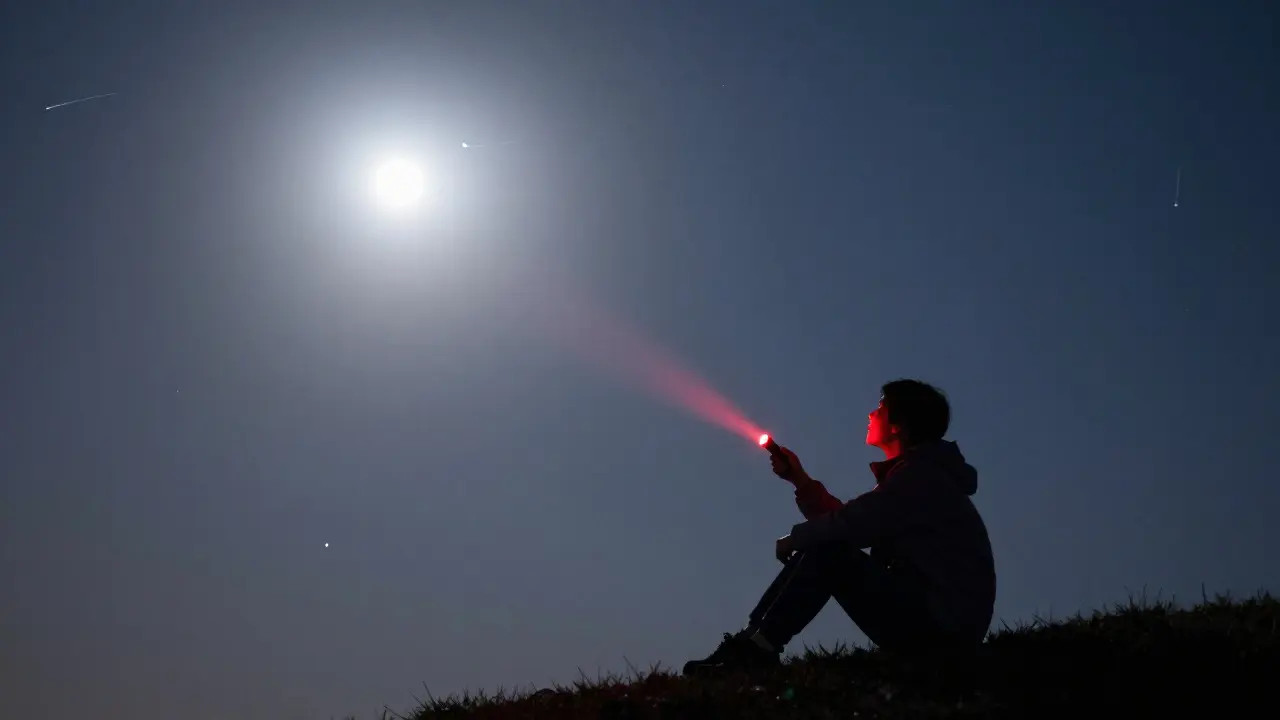
- Let Your Eyes Adapt: Human eyes take 20 to 30 minutes to fully adjust to darkness. Avoid using white-light flashlights or phone screens without red filters. Carry a red flashlight to preserve your night vision.
- Lie Down: Sitting upright limits your view to the upper hemisphere of the sky. Lying on a blanket allows you to see from horizon to horizon. Bring a sleeping bag, extra layers, and a thermos of hot coffee. It gets cold, even in summer, once the sun goes down.
- Be Patient: Meteor showers are not instantaneous. It may take 10 to 15 minutes of staring into the void before the first meteor appears. Do not give up after five minutes of silence.
- Check the Weather: Cloud cover is the ultimate dealbreaker. Check hyper-local forecasts for the specific location you plan to visit, not just your home address. Small pockets of clear sky can exist within larger storm systems.
Common Myths and Misconceptions
One of the most persistent myths is that you should look directly at the radiant. While meteors originate from the radiant, they are actually easier to see when they are further away from it. This is because meteors closer to the radiant appear shorter and move faster relative to your line of sight. The best strategy is to look about 30 to 40 degrees away from the radiant, towards the zenith. This gives you a wider field of view and catches meteors at their longest apparent length.
Another misconception is that all showers happen at night. While most are best viewed at night, some, like the Taurids, are active in the evening. However, the major high-rate showers generally require post-midnight viewing for optimal results. Finally, don't confuse meteors with satellites or space debris. Satellites move steadily and silently across the sky, often blinking slightly. Meteors are fast, brief, and often leave a fading trail. If you see a slow-moving object, it is likely a satellite, not a meteor.
Frequently Asked Questions
What is the best meteor shower to watch in 2026?
The Perseids, peaking on August 12-13, 2026, are widely considered the best due to the favorable moon phase (waning crescent) and high meteor rates. The Geminids in December are also excellent but suffer from a waxing gibbous moon, which reduces visibility of fainter meteors.
Do I need a telescope to see meteor showers?
No, a telescope is not recommended. Meteor showers cover a wide area of the sky, and a telescope has a narrow field of view, making it difficult to spot meteors. Binoculars can be helpful for enhancing color and detail, but the naked eye is sufficient for counting and enjoying the display.
What does ZHR mean in meteor shower predictions?
ZHR stands for Zenithal Hourly Rate. It is the theoretical number of meteors an observer would see per hour if the radiant were directly overhead and the sky was perfectly dark. Actual viewing rates are usually lower due to horizon obstructions, light pollution, and less-than-perfect atmospheric conditions.
Why do some meteor showers have short peaks while others last days?
The duration of a peak depends on the width of the particle stream left by the parent comet or asteroid. Narrow streams result in sharp, short peaks (like the Quadrantids), while wide streams result in broader, longer peaks (like the Perseids). The angle at which Earth intersects the stream also affects the duration of the peak.
Can I photograph meteor showers with a smartphone?
Yes, but it requires patience. Set your smartphone to manual mode, use a tripod, and take a series of long-exposure photos (10-15 seconds each). Stacking these images later will reveal multiple meteors in the final composite. Be careful not to let the screen light ruin your night vision while adjusting settings.