16 Aug 2026
- 0 Comments
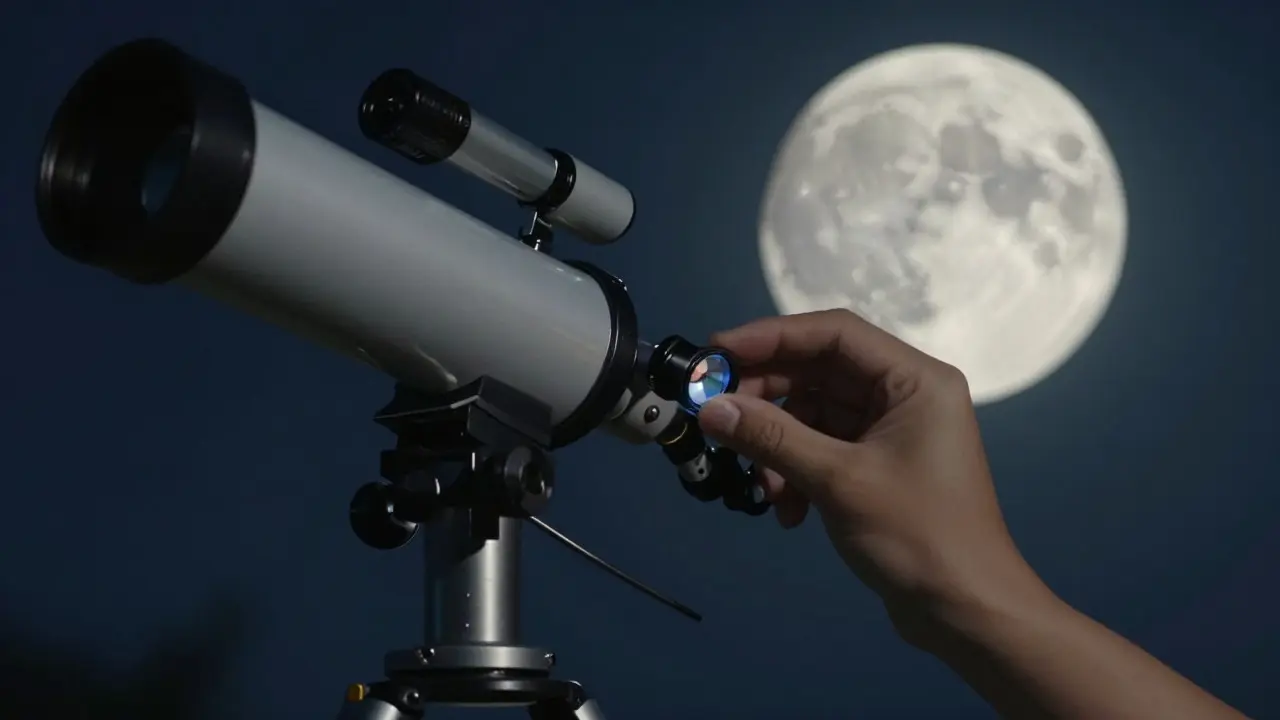
Standing under a dark sky with your first telescope, you stare at the Moon and see only a blurry white disk. You swap in the eyepiece that came in the box, and suddenly craters appear sharp and distinct. That moment of clarity is why choosing the right eyepiece set matters more than almost any other accessory you can buy. Most beginners make the mistake of buying too many expensive lenses or sticking with just one high-power lens that makes stars look like fuzzy blobs. The sweet spot? A simple trio of three focal lengths that covers wide-field views, medium detail, and close-up magnification without breaking the bank.
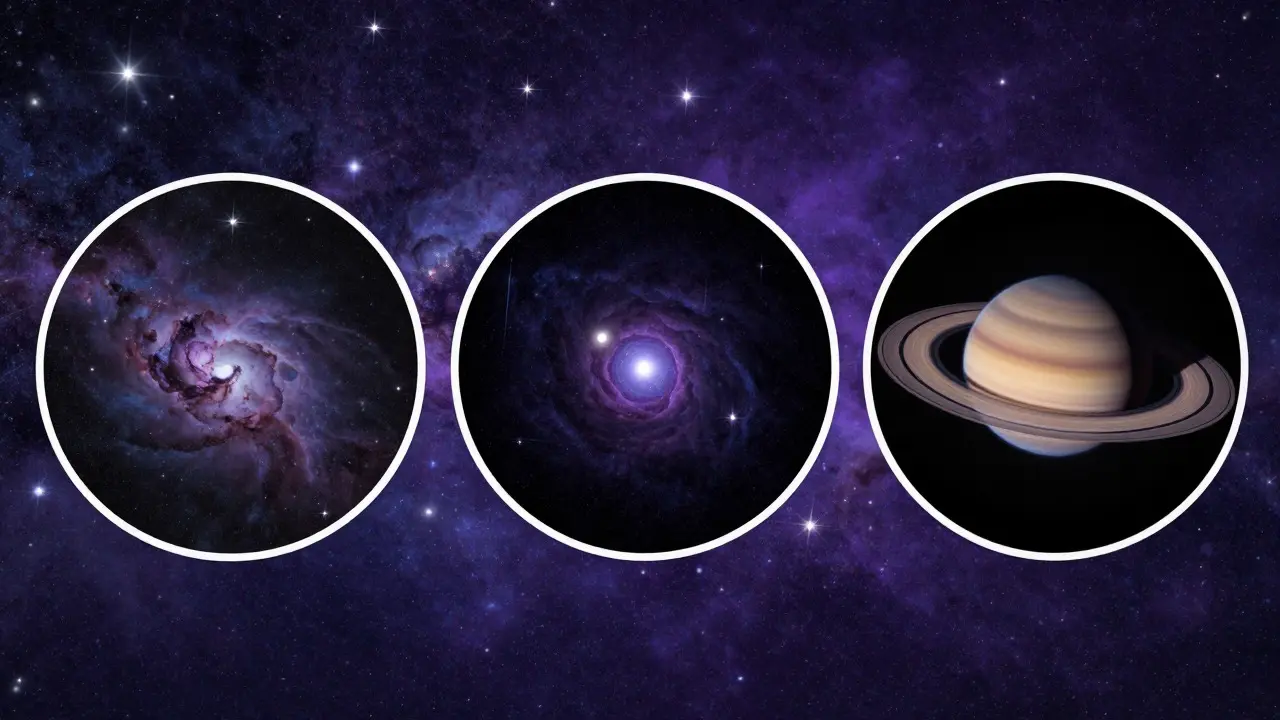
You don’t need a drawer full of glass to start observing seriously. In fact, having too many options often leads to confusion and frustration. A well-chosen set of three allows you to switch between different celestial objects quickly. Want to see the entire Orion Nebula? Use your longest focal length. Need to resolve the rings of Saturn? Switch to your shortest. This guide breaks down exactly which focal lengths to pick, what brands offer the best value, and how to avoid common pitfalls that waste money.
Why Three Focal Lengths Are the Gold Standard
Telescope magnification is calculated by dividing the telescope's focal length by the eyepiece's focal length. For example, if you have an 800mm Dobsonian telescope and use a 25mm eyepiece, your magnification is 32x (800 / 25). If you use a 10mm eyepiece, it jumps to 80x. The problem with random eyepieces is that they create gaps in this range. You might jump from 20x to 60x, missing out on the useful middle ground where most planetary and lunar viewing happens.
A standard beginner trio typically includes:
- Long Focal Length (Low Power): Usually between 25mm and 32mm. This provides the widest field of view, perfect for nebulae, galaxies, and large star clusters. It also offers the highest brightness, making it ideal for dim objects.
- Medium Focal Length: Typically around 12mm to 16mm. This is your all-rounder. It works well for the Moon, double stars, and larger planets when conditions are average.
- Short Focal Length (High Power): Generally between 7mm and 10mm. This delivers higher magnification for resolving surface details on Jupiter, Saturn, and Mars. Be careful here; going below 7mm often exceeds the practical limit of small telescopes, resulting in a dark, empty image.
This progression ensures you have a smooth transition in magnification. Each step up roughly doubles or triples the power, keeping the images bright enough to be visible while allowing you to zoom in progressively.
Understanding Field of View and Apparent Field of View
Focal length isn't the only number that matters. You also need to understand the apparent field of view (AFOV), which is the width of the image as seen through the eyepiece itself. Most modern eyepieces have an AFOV of 50 degrees to 68 degrees. Older, cheaper designs might only offer 40 degrees or less, which feels cramped and claustrophobic.
The true field of view (TFOV) is what you actually see in the sky. It’s calculated by dividing the AFOV by the magnification. Let’s say you have a 68-degree AFOV eyepiece and you’re at 30x magnification. Your TFOV is 68 / 30 = 2.27 degrees. That’s a huge patch of sky, about four times the width of the full Moon. Now, if you switch to a 10mm eyepiece at 80x, your TFOV shrinks to 0.85 degrees. Suddenly, fitting the entire Moon in the frame becomes difficult. Understanding this relationship helps you choose eyepieces that fit your telescope’s capabilities. A wide-AFOV eyepiece gives you more 'real estate' in the sky, which is crucial for deep-sky objects.
Budget-Friendly Brand Comparisons
You don’t need to spend hundreds of dollars per eyepiece to get good results. Several manufacturers produce reliable optics that are perfectly suitable for beginner scopes. Here is how the top budget-friendly options stack up against each other.
| Brand/Model | Approximate Price (Per Set) | Apparent Field of View | Coating Quality | Best For |
|---|---|---|---|---|
| GSO Panoptic-style | $40 - $60 | ~50° | Multi-coated | Widest availability, basic needs |
| Zhumell Zoomable | $30 - $50 | ~45° | Basic Coatings | Convenience, quick switching |
| Celestron X-Cel LX | $80 - $120 | ~60° | Multi-Coated | Better edge sharpness, wider FOV |
| Orion SkyQuest | $90 - $130 | ~60° | Multi-Coated | Compatibility with Orion scopes, good contrast |
While premium brands like Tele Vue or Explore Scientific offer superior optics, their price tags are steep. For a beginner, the Celestron X-Cel LX series strikes an excellent balance. They are significantly sharper at the edges compared to generic unbranded lenses found in cheap scope kits. If you are on a tight budget, GSO offers decent performance, but be aware that their coatings may not be as durable over time. Avoid no-name brands entirely; the optical distortion can ruin your experience before you even get started.
Common Mistakes to Avoid When Buying Eyepieces
Many new astronomers fall into traps that lead to disappointment. Here are the biggest ones to watch out for:
- Buying Too High Power: An 8mm or 6mm eyepiece sounds exciting because it promises 100x+ magnification. However, atmospheric turbulence usually limits useful magnification to about 50x per inch of aperture. On a 4-inch scope, anything above 100x will likely look muddy. Stick to 10mm or longer for your highest power unless you have a very stable atmosphere and a larger scope.
- Ignoring Eye Relief: If you wear glasses, you need eyepieces with long eye relief (usually 18mm or more). Short-eye-relief designs force you to remove your glasses or squint uncomfortably close to the lens. Check the specifications carefully. Wide-angle eyepieces generally have better eye relief, which is another reason to prioritize quality over quantity.
- Mismatched Barrels: Most modern telescopes use 1.25-inch eyepiece barrels. Some larger scopes accept 2-inch eyepieces for ultra-wide fields. Ensure your set matches your telescope’s focuser size. A 2-inch eyepiece won’t fit in a 1.25-inch holder without an adapter, and adapters can introduce optical issues.
- Overlooking Focus Travel: Some telescopes, particularly those with short focal ratios, require significant focus travel. If your eyepiece doesn’t extend far enough, you might not be able to bring faint objects into sharp focus. This is rare with standard triplets but worth noting if you plan to upgrade later.
How to Choose the Right Trio for Your Specific Telescope
Your telescope type dictates the best eyepiece combination. Let’s look at two common scenarios.
Scenario A: Refractor (e.g., 70mm f/10) Refractors have long focal lengths, meaning they naturally provide high magnification with modest eyepieces. A 700mm refractor paired with a 25mm eyepiece gives you 28x. A 10mm eyepiece gives you 70x. This is a great range. For this setup, a trio of 25mm, 12.5mm, and 6mm works well. The 6mm pushes you to 116x, which is usable on a clear night for Jupiter. Because refractors handle high power well, you can afford to go slightly shorter on the high-end end.
Scenario B: Dobsonian (e.g., 6-inch f/8) Dobsonians are fast reflectors. A 6-inch Dob has a focal length of about 1200mm. With a 25mm eyepiece, you get 48x. With a 10mm, you get 120x. This is already quite powerful. Adding a 6mm would push you to 200x, which is often too much for a 6-inch scope due to light loss and atmospheric seeing. Instead, opt for a 32mm, 16mm, and 8mm set. The 32mm gives you a wide, bright view of nebulae. The 16mm is perfect for the Moon and planets. The 8mm provides 150x, which is aggressive but manageable for planetary details on steady nights. Notice how the starting point is wider (32mm vs 25mm) to compensate for the faster optics.
In both cases, the goal is to cover the range from wide-field surveying to detailed planetary observation without stepping into useless territory. Calculate your maximum useful magnification (aperture in inches x 50) and ensure your shortest eyepiece stays near or below that limit.
Practical Tips for Using Your Eyepiece Set
Owning the right tools is half the battle; using them correctly is the other half. Start every session with your lowest power eyepiece. It’s easier to find objects in the sky when you have a wide field of view. Once you’ve centered the target, slowly switch to higher powers. Never try to find a faint galaxy with your 10mm eyepiece-you’ll miss it entirely.
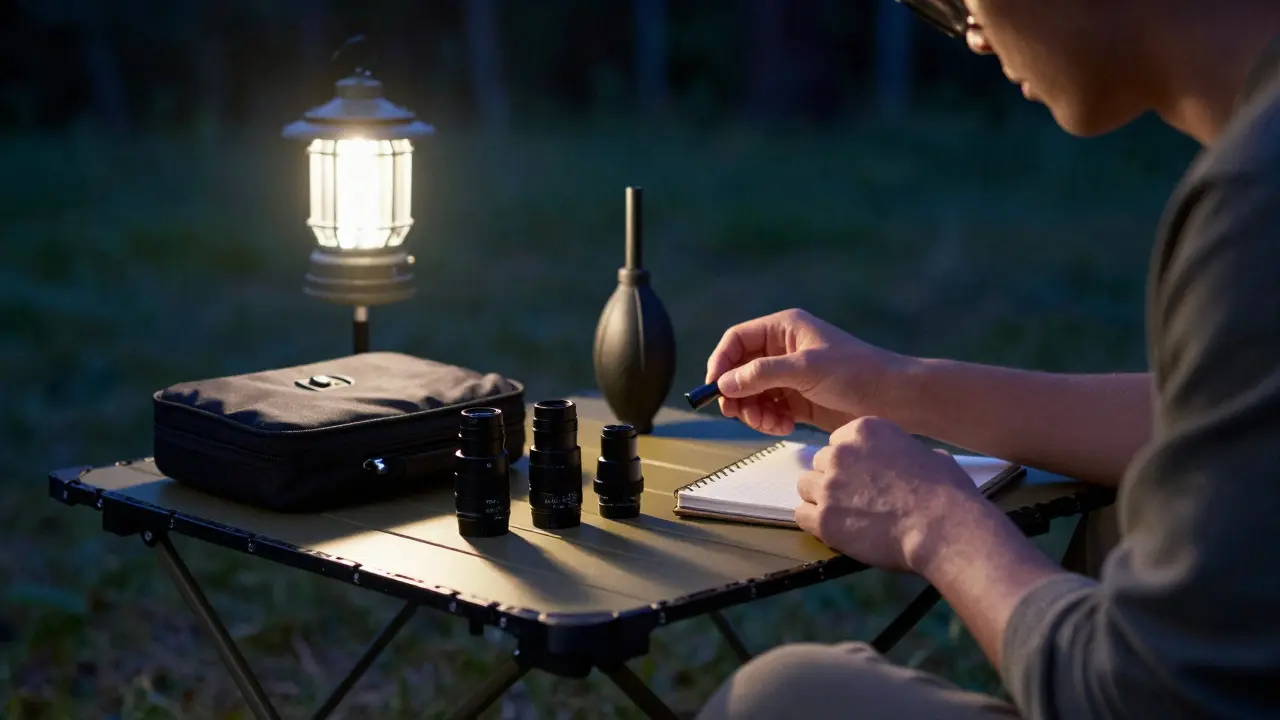
Keep your eyepieces clean. Dust and fingerprints scatter light, reducing contrast. Use a blower bulb to remove loose dust, and only use lens tissue if necessary. Store them in a padded case to prevent scratches. Also, remember that thermal equilibrium matters. If you take a cold eyepiece inside and then back outside, condensation forms on the lens. Let your equipment acclimate to the outdoor temperature for at least 30 minutes before observing.
Finally, keep a log of which eyepiece worked best for which object. You’ll quickly learn that some targets look better at lower power than others. For instance, the Andromeda Galaxy looks much larger and brighter at 30x than at 80x. Trust your eyes, not just the math.
Frequently Asked Questions
Do I really need a third eyepiece?
Yes. Two eyepieces leave a gap in magnification. A third fills the middle ground, ensuring you have a versatile tool for both wide-field and detailed viewing. It adds minimal cost but significantly increases your observational flexibility.
What is the best focal length for the Moon?
For the Moon, you want higher magnification to see craters and maria clearly. A 10mm to 12mm eyepiece is usually ideal for most beginner telescopes, providing 60x to 100x magnification depending on your scope's focal length.
Are zoom eyepieces better than fixed focal length sets?
Zoom eyepieces offer convenience by combining multiple focal lengths into one unit. However, they are often heavier, more expensive, and can have slightly inferior optical quality compared to fixed-focal-length eyepieces of the same price. For beginners, a set of three fixed eyepieces is usually a better value and performs more consistently.
Can I use binocular eyepieces with my telescope?
Not directly. Binocular eyepieces are designed for binoculars. To use dual eyepieces in a telescope, you need a diagonal or beam splitter specifically designed for telescopes. This is an advanced accessory and not recommended for beginners due to added complexity and cost.
How do I know if my eyepiece is compatible with my telescope?
Check the diameter of your telescope's focuser drawtube. Most amateur telescopes use 1.25-inch eyepieces. If your focuser is labeled 1.25", any standard 1.25" eyepiece will fit. If it is a 2" focuser, you can use either 2" or 1.25" eyepieces (with an adapter for the latter).