17 Aug 2026
- 0 Comments
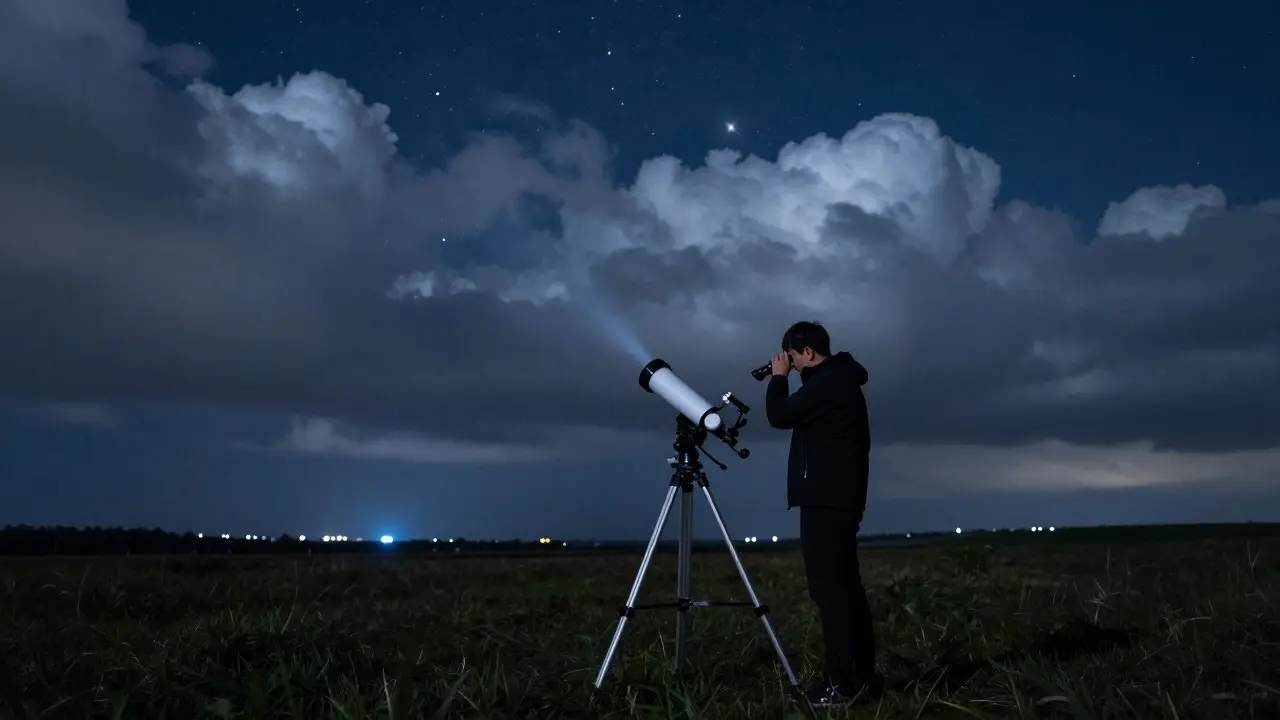
There is nothing more frustrating than setting up your telescope at 9 PM, only to watch a thick blanket of clouds roll in by 10. For amateur astronomers and astrophotographers dealing with patchy skies is a weather condition characterized by intermittent cloud coverage that creates unpredictable windows of clear visibility, the standard approach of "wait until it clears" often fails. You need a dynamic method. This is where the Cloud Gaps Strategy comes in. It shifts your focus from hoping for perfect conditions to actively hunting for brief, high-value observation windows.
Why Traditional Session Planning Fails in Variable Weather
Most observers plan their night based on moon phase and target declination. While these are critical factors, they ignore the single biggest variable: atmospheric opacity. In regions like the Pacific Northwest or coastal areas, cumulus clouds is a type of fair-weather cloud that forms in puffy clusters, often creating distinct gaps between individual formations can move quickly. A static two-hour block might be 80% obscured. The cost isn't just lost time; it's missed opportunities to capture specific celestial events or complete deep-sky sequences before the atmosphere degrades further.
The core problem is rigidity. If you commit to observing M42 (the Orion Nebula) for an hour, but the sky is 60% cloudy, you spend half your time waiting. The solution is to treat your observing session not as a fixed duration, but as a series of rapid, targeted bursts aligned with real-time cloud movements.
The Core Mechanics of Rapid-Switch Lists
A Rapid-Switch List is a pre-prepared set of targets ordered by priority and altitude, designed to be executed in short intervals-typically 15 to 30 minutes per target. Unlike a traditional observing list which might have 5 targets for the whole night, a Rapid-Switch List contains 10 to 15 potential targets, allowing you to skip any that are obscured.
- Identify High-Value Targets: Select objects that offer significant reward for short exposure times. Bright double stars, prominent nebulae, and well-separated planetary systems work best. Avoid faint galaxies that require long integration times unless you are doing astrophotography with tracking.
- Order by Altitude and Visibility: Arrange these targets so that you start with those highest in the sky during the clearest predicted window. As the night progresses and clouds may thicken near the horizon, switch to higher-altitude targets.
- Define 'Gap' Thresholds: Decide in advance what constitutes a usable gap. For visual observation, a 20-minute break in cloud cover is sufficient. For astrophotography, you might need 10 minutes of stable seeing to get a clean stack.
This structure allows you to pivot instantly. If the clouds close in over your primary target, you don't pack up. You simply rotate your scope to the next object on the list that is currently visible through a nearby gap.
Forecasting Tools That Actually Help
You cannot execute this strategy without accurate, granular weather data. Standard 7-day forecasts are useless for this purpose. You need minute-by-minute cloud cover predictions.
- Visualize Cloud Movement: Use apps like Windy.com or Clear Outside. These tools provide animated radar and satellite imagery. Look for the direction and speed of cloud banks. If clouds are moving West-to-East at 10 mph, a gap appearing now will disappear in 30 minutes. Plan your target sequence accordingly.
- Check Dew Point Spread: A large difference between temperature and dew point indicates dry air, which means clouds are less likely to form suddenly. A small spread suggests high humidity, meaning even if you see a gap now, it may fill back in rapidly.
- Monitor Celestial Opacity: Some apps calculate a "sky quality" index. Aim for sessions when the predicted opacity drops below 0.3 (on a scale of 0 to 1). This gives you a statistical baseline for when to set up.
Practical Execution: A Step-by-Step Workflow
Let’s look at a concrete scenario. It is August, and you are in Portland, Oregon. The forecast shows 60% cloud cover, with breaks expected every 45 minutes. Here is how you apply the Cloud Gaps Strategy:
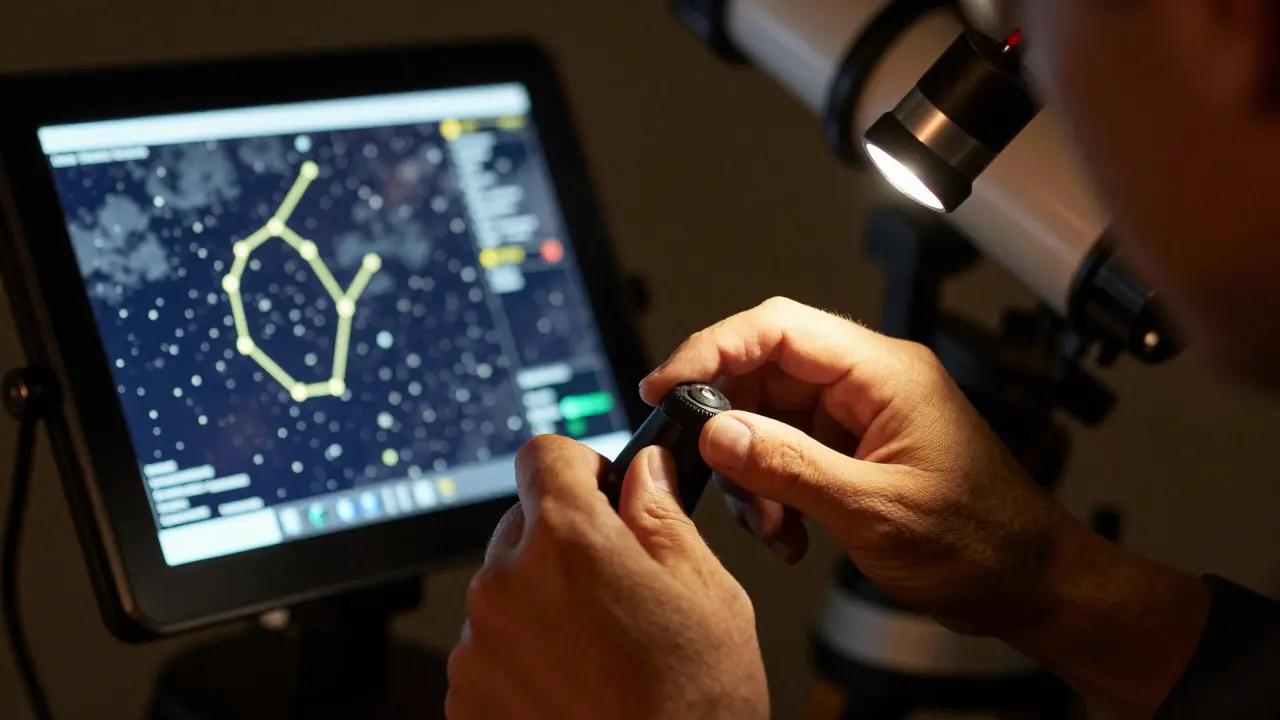
- Pre-Session Prep (Day Before): Create a Rapid-Switch List of 12 targets. Include bright summer constellations like Lyra, Cygnus, and Aquila. Prioritize the Double Cluster in Perseus and the Ring Nebula (M57) as they are visually rewarding even in short glimpses.
- Setup Time (9:00 PM): Check live radar. Clouds are thickening from the west. The east is clear. Set up your telescope pointed East. Start with Vega (Alpha Lyrae) and the surrounding star fields.
- The Switch (9:30 PM): Radar shows a cloud bank moving into the eastern sector. You have 15 minutes left. Quickly slew to the next target on your list that is still in the clear: Albireo. Observe for 10 minutes. Then, before the clouds fully arrive, slew to the next target: the North America Nebula.
- Adaptation (10:00 PM): The sky is now 80% covered. Instead of packing up, wait. Monitor the radar. A gap is opening in the north. Slew immediately to Deneb. Capture 5 minutes of visual notes or take a quick astrophoto.
This workflow keeps your momentum going. You are always observing something, rather than staring at a blank sky. The key is speed. Your mount should be calibrated, and your go-to database loaded before you even set up the tripod.
Comparison: Static vs. Dynamic Session Planning
To understand the efficiency gain, compare the two approaches side-by-side.
| Feature | Static Planning | Dynamic (Cloud Gaps) Planning |
|---|---|---|
| Target Selection | Fixed list of 3-5 objects | Large pool of 10-15 objects |
| Time Allocation | Long blocks (45+ mins per target) | Short bursts (10-20 mins per target) |
| Weather Dependency | High (fails if clouds persist) | Low (adapts to intermittent gaps) |
| Observer Fatigue | Moderate (waiting periods) | Low (constant activity) |
| Data Yield | Inconsistent | Consistent (multiple partial datasets) |
The dynamic approach yields more total observing time because you minimize downtime. Even if each individual observation is shorter, the cumulative effect of catching multiple gaps far exceeds the result of waiting for one perfect hour that never arrives.
Common Pitfalls and How to Avoid Them
Even experienced observers make mistakes when switching strategies. Here are the most common traps:
- Over-Committing to One Target: If you love a particular galaxy, it’s tempting to stay put. But if the clouds are closing, cut your losses. Move on. You can always come back later if the sky improves.
- Ignoring Seeing Conditions: Cloud gaps aren’t the only factor. Turbulent air causes stars to twinkle heavily, ruining detail. If a gap appears but the seeing is poor, switch to a brighter, easier target rather than struggling with a faint one.
- Failing to Log Data: When you do rapid switches, it’s easy to forget what you saw. Keep a simple logbook or app open. Note the time, target, and cloud condition for each burst. This helps you refine your future lists.
Optimizing for Astrophotography in Patchy Skies
If you are taking photos, the Cloud Gaps Strategy requires slight adjustments. Long exposures are risky. Instead, use short sub-exposures (30-60 seconds) and stack them. If a cloud passes during a sub, discard that frame. The goal is to accumulate enough clean subs to create a final image. This method turns a bad night into a productive one, as you can gather data across multiple gaps throughout the evening.
For wide-field photography, track the movement of cloud shadows. Sometimes, the shadow of a cloud moves faster than the cloud itself. Watching the ground or low trees can give you early warning of incoming obscuration, giving you precious seconds to stop capturing or change targets.
Building Your Personal Rapid-Switch Library
Your best tool is a personalized list of targets that work well for your specific equipment and location. Start by identifying the brightest objects in your region’s seasonal sky. Then, test them under marginal conditions. Which objects remain visible when the sky is 50% cloudy? Those are your anchors. Build your Rapid-Switch List around these reliable anchors, adding more challenging targets as secondary options for clearer moments.
By treating the sky as a shifting landscape rather than a static canvas, you transform frustration into opportunity. The Cloud Gaps Strategy doesn’t just help you survive bad weather; it helps you master it.
What is the minimum cloud gap size needed for visual observation?
For visual observation, a gap lasting 10 to 15 minutes is usually sufficient to observe a bright target comfortably. For fainter deep-sky objects, you may need 20 minutes to allow your eyes to dark-adapt and resolve details. Always prioritize bright, high-contrast targets for shorter gaps.
How do I choose which targets to include in my Rapid-Switch List?
Select targets that are bright, high in the sky, and easily identifiable. Double stars, bright nebulae, and planets are ideal. Avoid faint galaxies or small globular clusters unless you have excellent optics. The goal is to get value from short viewing windows, so prioritize objects that show impressive features quickly.
Can I use the Cloud Gaps Strategy for astrophotography?
Yes, but you must adjust your technique. Use short sub-exposures (30-60 seconds) and stack multiple frames taken during different gaps. Discard any subs affected by clouds. This method allows you to build a final image from data collected across several intermittent clear periods.
Which weather apps are best for tracking cloud movement?
Windy.com and Clear Outside are highly recommended. They provide animated radar, satellite imagery, and wind speed/direction data. These tools allow you to predict where clouds will be in the next 30-60 minutes, helping you plan your target sequence effectively.
How many targets should be on a Rapid-Switch List?
Aim for 10 to 15 targets. This provides enough variety to keep you busy while ensuring you have alternatives if several targets are obscured. Too few targets limit your flexibility; too many can overwhelm your planning process.