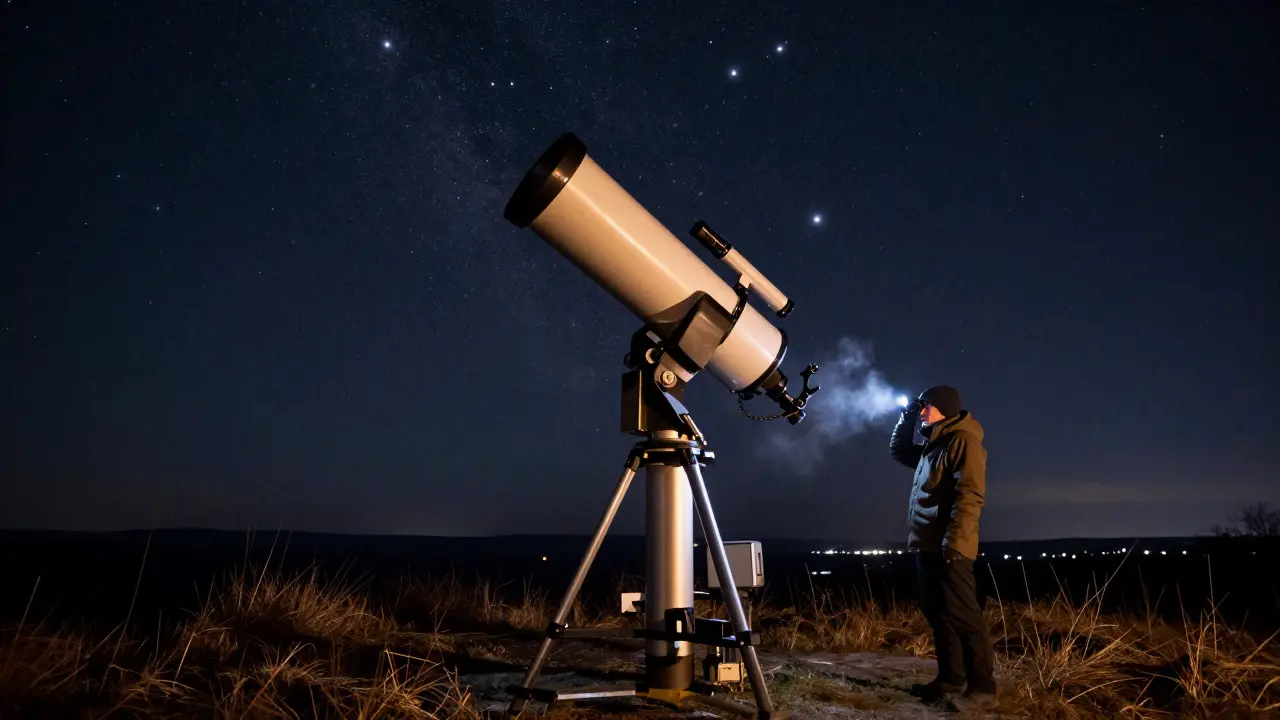
17 Aug 2026
- 0 Comments
Staring at a patch of sky and seeing two distinct points of light instead of one is one of the most satisfying moments in visual astronomy. It proves your eyes are working correctly, your equipment is aligned, and the atmosphere is stable enough to resolve detail. But finding these double stars is a type of binary star system where two stars orbit a common center of mass can be frustrating if you don't know where to look. The night sky changes with the seasons, and the best targets for binoculars or small telescopes shift as Earth orbits the Sun.
This guide breaks down the most accessible double star tours by constellation, organized by season. We focus on systems that are bright enough to see from suburban areas but close enough together to provide a genuine challenge for resolution. Whether you are using 10x50 binoculars or a 6-inch reflector, these lists will help you plan your next observing session effectively.
Why Seasonal Timing Matters for Double Stars
You cannot observe every double star all year round. The constellations rise and set based on their position relative to the Sun. In summer, the Milky Way core dominates the view, offering dense fields of faint binaries. In winter, the sky is clearer and darker, providing better contrast for brighter, wider-separation pairs. Understanding this rhythm prevents frustration. If you try to find a spring target in December, you will likely waste an hour scanning the wrong part of the sky.
The key attribute here is altitude. A double star is easiest to resolve when it is high in the sky, near the zenith. Atmospheric turbulence (seeing) is minimized at higher altitudes. Therefore, our seasonal lists prioritize constellations that reach their highest point during specific months. For example, Orion is a prominent winter constellation containing several famous multiple star systems. It reaches its peak visibility in January and February, making it the prime time for observing its stellar treasures.
Winter Targets: The Brightest Binaries
Winter is arguably the best season for double star hunting because the air is typically drier and the stars are brighter. Here are the top three systems to target between November and March.
- Albireo (Beta Cygni): While technically a summer/fall object due to its northern declination, it remains visible into early winter evenings. Its gold-and-blue color contrast makes it the most beautiful double star in the sky. Separation: ~35 arcseconds.
- Mizar and Alcor (Ursa Major): This is the classic "test of vision" pair. Mizar is a quadruple system itself, but visually, it appears as a double. Alcor is a separate star about 11 arcseconds away. You need dark skies and good eyesight to see Alcor without aid. Separation: ~11 arcseconds.
- Castor (Alpha Geminorum): One of the Twins is actually a sextuple system. With moderate magnification, you can split the primary pair. It is a great exercise in increasing magnification gradually until the components separate. Separation: ~2 arcseconds (requires telescope).
When observing Albireo, start with low power. The wide separation means you don't need high magnification. The color difference is real, not an optical illusion, caused by the different temperatures of the two stars. The orange star is cooler, while the blue star is hotter. This physical distinction makes it a perfect educational target for beginners.
Spring Challenges: Tight Pairs and Deep Sky Context
Spring brings the Hercules and Virgo constellations to prominence. These areas contain some of the tightest and most challenging double stars, often embedded within globular clusters or nebulae. This context adds difficulty but also reward.
| Target Name | Constellation | Separation (arcsec) | Magnitude Difference | Difficulty Level |
|---|---|---|---|---|
| Epsilon Lyrae | Lynx | ~8 | Low | Hard |
| Sirius AB | Canis Major | ~3 | High | Medium |
| Almach (Gamma Andromedae) | Andromeda | ~9 | Medium | Easy |
Epsilon Lyrae is a quadruple star system known as the Double-Double. It consists of two pairs of stars, each pair appearing as a single dot to the naked eye. To resolve all four components, you need excellent seeing conditions and a telescope with at least 8 inches of aperture. It is the ultimate test of atmospheric stability. If you can split Epsilon Lyrae, your night was exceptional.
Sirius AB is another major player. Sirius A is the brightest star in the night sky, which creates glare that makes finding the companion, Sirius B, difficult. Sirius B is a white dwarf, much smaller and dimmer than its giant companion. You need to use high magnification and careful defocusing techniques to spot the tiny point of light next to the blinding primary. This system demonstrates the vast range of stellar evolution stages visible in a single field of view.
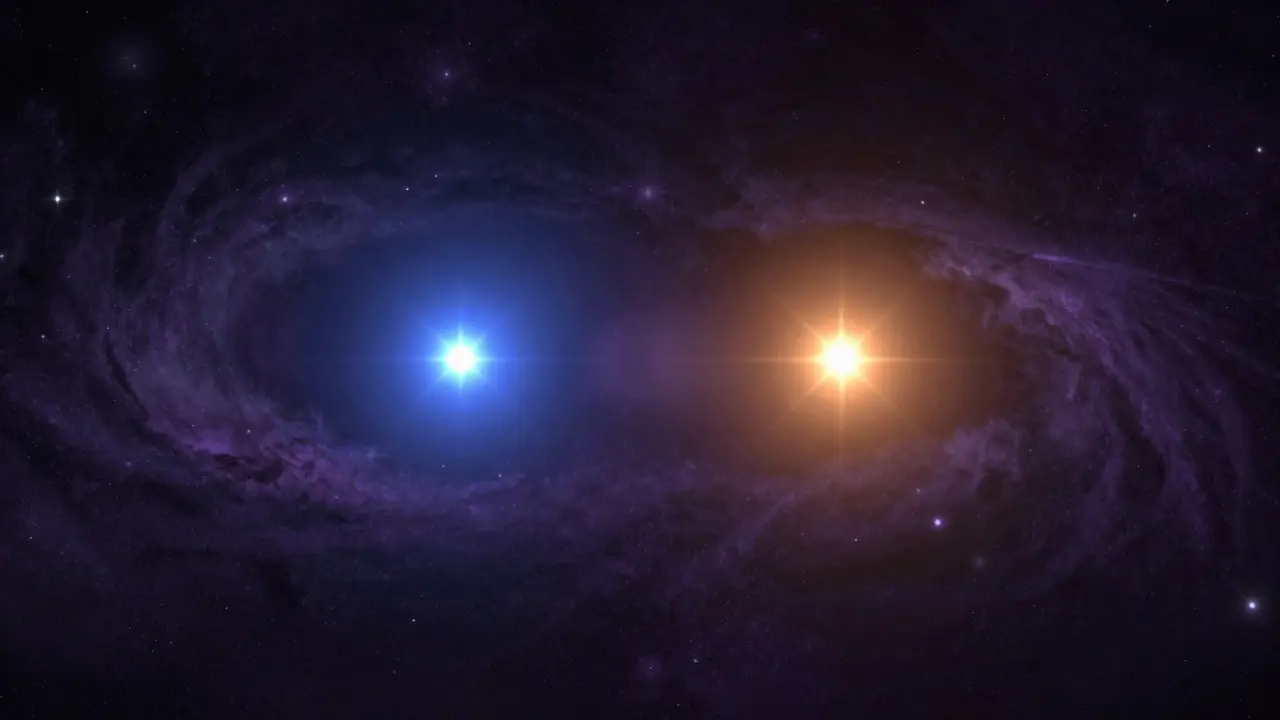
Summer Spectacles: The Milky Way Core
Summer nights offer the densest star fields in the entire annual cycle. The Sagittarius and Scorpius regions are packed with red giants and young blue stars. Many of these are multiple systems, though they are often harder to distinguish due to the crowded background.
- Antares (Alpha Scorpii): A red supergiant that has a faint companion. The companion is hard to see because Antares is so large and diffuse. Use high magnification to shrink Antares' disk and reveal the small point of light beside it.
- Spica (Alpha Virginis): A very tight binary system. The two stars are only about 0.4 arcseconds apart. This requires a large telescope (10+ inches) and steady seeing. It is one of the closest known binary pairs to Earth.
- Denebola (Alpha Leonis): A yellow-white star with a fainter companion. This is an easier target than Spica and serves as a good stepping stone for intermediate observers.
Observing in summer requires patience. The humidity in many parts of the world can fog up lenses quickly. Bring a lens heater or keep a dry cloth handy. Also, the light pollution from city lights can wash out the faint companions in these dense fields. If possible, drive to a darker site for summer double star tours.
Fall Favorites: Colorful Contrasts
Autumn skies are clear and crisp, perfect for detailed observation. The constellations Pegasus, Cassiopeia, and Perseus dominate the view. These areas contain several colorful double stars that stand out against the dark background.
Mira is a variable star in Cetus, but its companion is a fixed point of light. While Mira changes brightness over months, the companion remains constant. This provides a useful reference point for tracking Mira's variability. However, for pure double star beauty, look to Rigel in Orion (visible in fall evenings). Rigel is a blue supergiant with a faint red companion. The color contrast is striking, similar to Albireo but less famous.
Another standout is Vega in Lyra. Vega is a fast-spinning star that is flattened at the poles. It has a faint companion that is a brown dwarf or a very faint red dwarf. Resolving this pair requires high magnification and good optics. It is a challenging target that rewards experienced observers with a glimpse into the nature of substellar objects.
Equipment Tips for Resolving Doubles
Your choice of equipment dictates which stars you can resolve. The Rayleigh criterion defines the minimum angular separation required to distinguish two point sources. In practice, this depends on aperture, magnification, and seeing conditions.
- Binoculars: Best for wide separations (>10 arcseconds). Look for Albireo, Mizar/Alcor, and Almach. Use the lowest magnification available to maximize field of view and light gathering.
- Capable of resolving separations down to ~1 arcsecond under good seeing. Ideal for Castor, Sirius AB, and Denebola. Use medium magnifications (50x-100x).
- Large Telescopes (8+ inches): Necessary for tight pairs like Spica and Epsilon Lyrae. High magnifications (150x-250x) are required, but only if the atmosphere is stable. Avoid excessive magnification; it reduces brightness and worsens the effect of turbulence.
Always start with low power. Center the primary star, then slowly increase magnification. Watch the image carefully. If the stars merge into a single blob, you have either reached the limit of your aperture or the seeing is poor. Do not force it. Wait for a moment when the atmosphere settles, or lower the magnification slightly.
Common Pitfalls and How to Avoid Them
Many beginners make the same mistakes when attempting double star observations. Recognizing these pitfalls can save you hours of frustration.
- Chasing Seeing: If the stars are dancing around, stop trying to resolve tight pairs. Observe wide doubles or take notes. Waiting for better seeing is often more productive than struggling with bad conditions.
- Ignoring Defocus: Slightly defocusing the eyepiece can sometimes help separate close pairs by increasing the apparent size of the diffraction patterns. Experiment with this technique, especially for tight binaries like Sirius AB.
- Using Wrong Filters: Neutral density filters can reduce glare from bright primaries, making faint companions easier to see. Try a neutral density filter when observing Sirius or Rigel. Avoid colored filters unless you are specifically looking for color contrast, as they reduce total light.
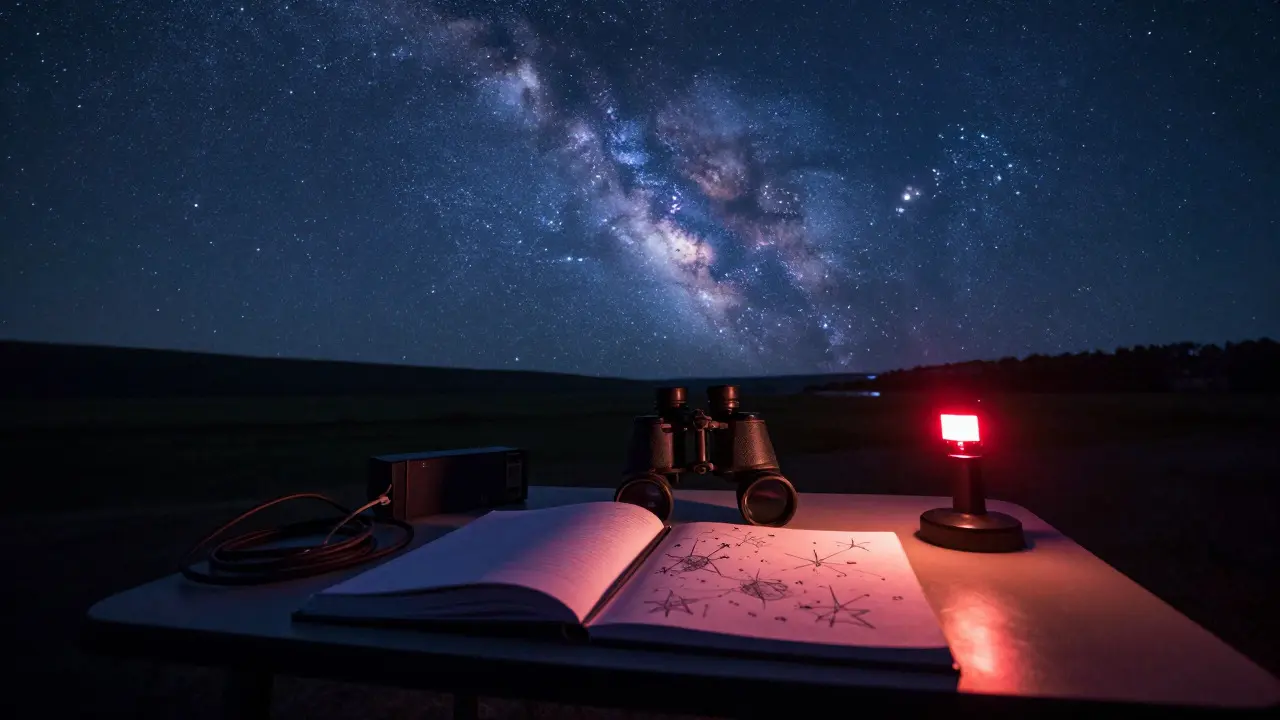
Keep a logbook. Record the date, time, seeing conditions, equipment used, and whether you resolved the pair. Over time, you will develop a sense of what your equipment can do under various conditions. This data is invaluable for planning future sessions.
Planning Your Observation Session
To get the most out of your double star tour, plan ahead. Check the moon phase first. A full moon washes out faint companions. Aim for new moon or crescent moon phases. Next, check the weather forecast for transparency and seeing. Apps like Clear Outside or Stellarium can provide local seeing predictions. Finally, prepare your equipment. Collimate your telescope, clean your lenses, and bring extra batteries. Cold nights drain batteries quickly, and a dead scope ruins the night.
Start with easy targets to warm up. Find Albireo or Almach. Once you feel confident, move to tighter pairs. This progressive approach builds skill and confidence. Remember, the goal is not just to see the stars, but to understand the physics behind them. Each double star tells a story of gravitational interaction, stellar evolution, and cosmic history.
What is the easiest double star to see?
Albireo (Beta Cygni) is widely considered the easiest and most beautiful double star. It has a wide separation of 35 arcseconds and a striking color contrast between the orange and blue components. It is visible to the naked eye in dark skies and easily resolved with binoculars.
Can I see double stars with binoculars?
Yes, absolutely. Binoculars are excellent tools for wide-separation double stars. Targets like Albireo, Mizar and Alcor, and Almach are easily seen with 10x50 or 15x70 binoculars. They provide a great introduction to the hobby before moving to telescopes.
How does moonlight affect double star viewing?
Moonlight significantly impacts the visibility of faint companions. A bright moon increases sky brightness, reducing contrast. Faint secondary stars may disappear entirely. Plan your observations for new moon or crescent moon phases to maximize the number of resolvable pairs.
What is the best season for double star observing?
Winter is generally considered the best season due to clearer, drier air and the presence of bright constellations like Orion and Taurus. However, summer offers the densest star fields, providing more opportunities for discovery if you have access to dark skies.
Winter is generally considered the best season due to clearer, drier air and the presence of bright constellations like Orion and Taurus. However, summer offers the densest star fields, providing more opportunities for discovery if you have access to dark skies.
Do I need a large telescope to see all double stars?
No, but larger apertures allow you to resolve tighter pairs. A 6-inch telescope can handle most popular targets. Only extremely tight systems like Spica require 10-inch or larger telescopes and excellent seeing conditions. Start with what you have and progress gradually.