17 Aug 2026
- 0 Comments
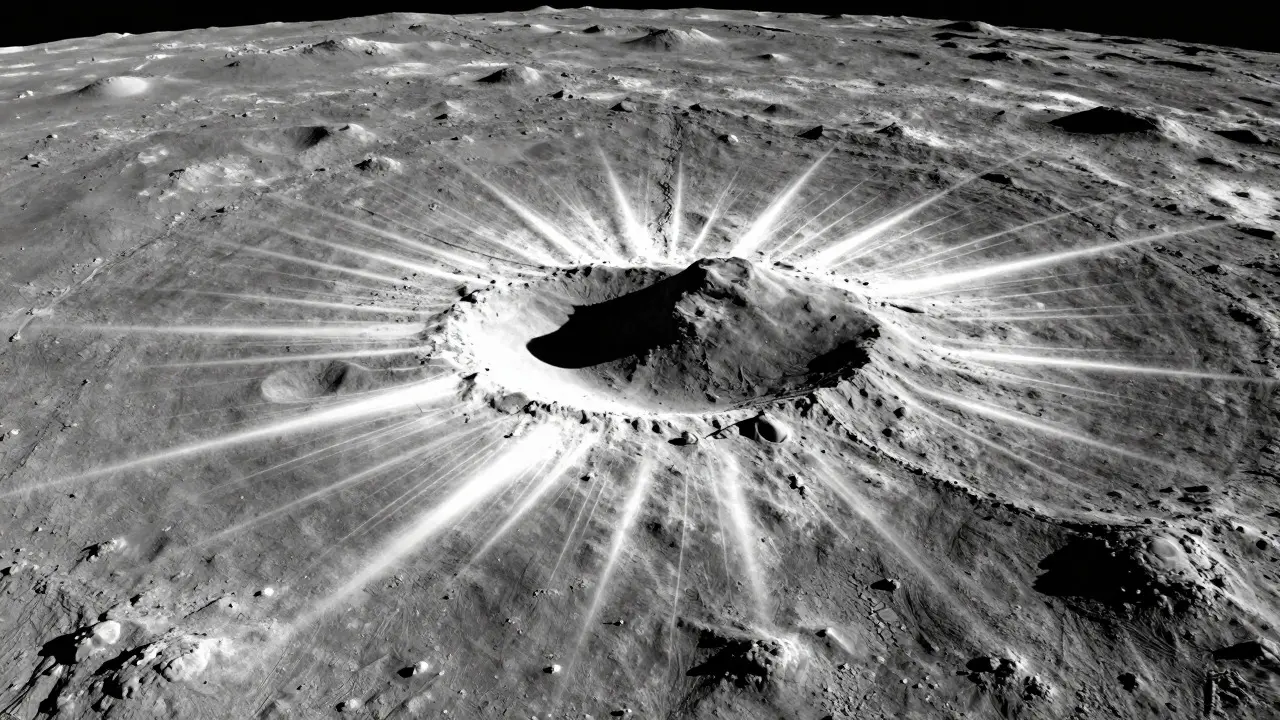
Staring at the Moon through a telescope on a clear night in Portland, you might notice a bright spot near the southern limb that looks like it’s glowing from within. That’s Tycho, a prominent lunar impact crater known for its brilliant ray system visible to the naked eye. It stands out because it is one of the youngest major craters on the Moon, meaning its surface hasn’t been darkened by solar wind or micrometeorite dust yet. This brightness makes it a favorite target for both novice and experienced observers.
But Tycho isn’t the only standout feature. The Moon’s surface is a museum of collisions, with thousands of craters ranging from tiny pits to massive basins. Understanding which ones are worth looking for-and why they look the way they do-transforms a simple glance into a deep dive into planetary history. Here’s what you need to know about the most notable formations, how to find them, and what they tell us about our celestial neighbor.
Why Some Craters Are Brighter Than Others
The difference between a dark, ancient basin and a dazzling fresh impact site comes down to age and composition. When a meteor strikes the Moon, it excavates material from beneath the surface. If that subsurface material is lighter-colored (richer in highland rock) than the surrounding regolith (the gray dust covering the Moon), the new crater appears brighter. Over time, space weathering darkens this fresh material, blending it into the background.
Ray systems, radial streaks of ejecta thrown out during an impact event, are the visual signature of young craters. These rays can stretch hundreds of kilometers across the lunar surface. The more extensive and unbroken the ray system, the younger the crater. Older craters lose their rays as subsequent impacts and dust deposition cover them up. This is why Copernicus, located in the northern part of the Oceanus Procellarum, is also highly visible despite being older than Tycho. Its central peak and terraced walls remain sharp because it sits in a region where erosion is minimal due to the lack of atmosphere or water.
Tycho: The Youngest Major Impact Site
Tycho is approximately 85 kilometers in diameter and was formed around 108 million years ago. To put that in perspective, it’s relatively recent in geological terms. The crater is situated in the southern highlands, far from the large, dark maria (seas). Its location matters because the highlands are composed of lighter-colored anorthosite rock, which contributes to the crater’s albedo (reflectivity).
When observing Tycho, look for the following features:
- Central Peak: A distinct mountain rising from the floor, indicating the rebound after the initial shockwave.
- Terraced Walls: The inner slopes show step-like structures caused by gravitational collapse during the formation process.
- Ray System: White streaks radiating outward in all directions. Under good seeing conditions, these rays extend over 1,000 kilometers, crossing the entire face of the Moon.
Copernicus: A Window into Lunar Geology
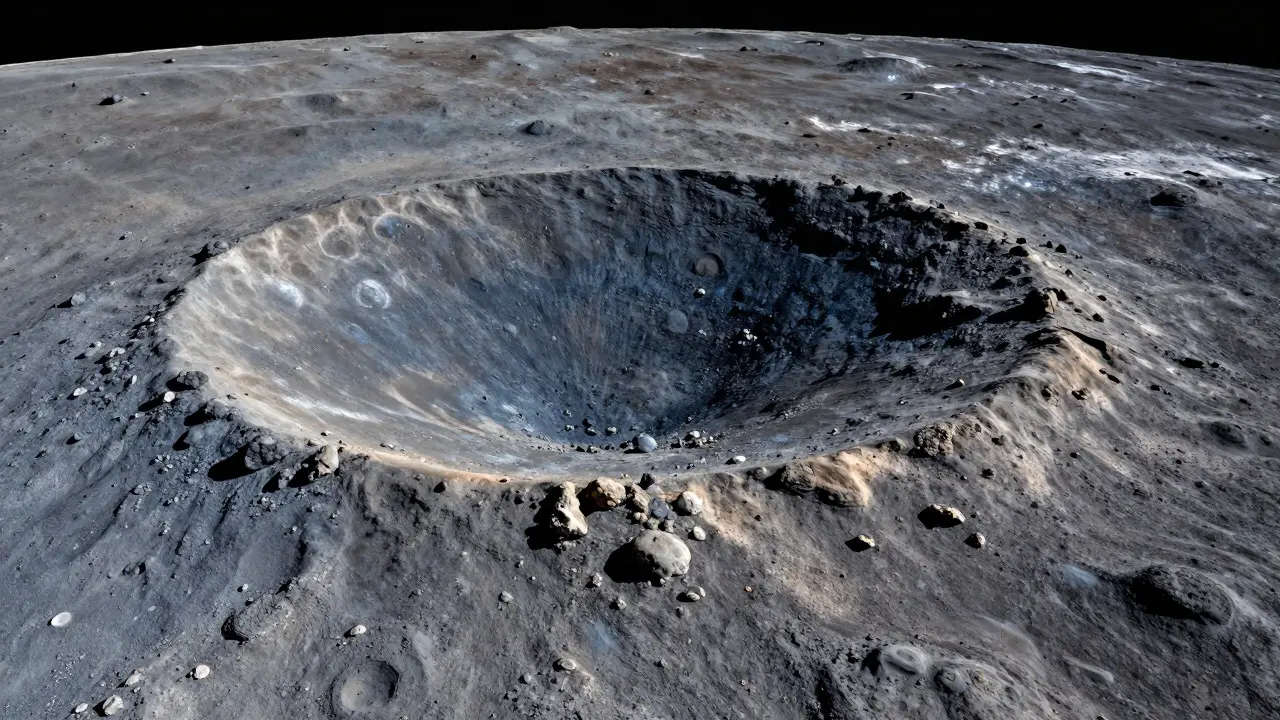
Copernicus is named after the astronomer Nicolaus Copernicus and is located at 9°N latitude. It is about 93 kilometers wide and formed roughly 800 million years ago. Unlike Tycho, which is isolated in the highlands, Copernicus sits on the edge of the Mare Imbrium, one of the largest dark plains on the Moon. This position allows it to display a mix of geological materials. The ejecta blanket surrounding Copernicus includes darker material from the mare and lighter material from the highlands, creating a complex pattern that is fascinating to study under magnification.
Copernicus is particularly interesting because it shows evidence of multiple stages of impact modification. The inner wall has slumped significantly, forming a smooth, bowl-shaped depression in the center. This suggests that the crater underwent significant relaxation after the initial impact. For observers, Copernicus offers a different visual experience than Tycho. While Tycho shines due to its brightness, Copernicus rewards you with structural detail. At higher magnifications (200x or more), you can resolve the intricate details of the rim and the secondary craters scattered across its ejecta blanket.
Other Notable Craters Worth Your Attention
Beyond the big two, several other craters offer unique viewing opportunities and scientific insights.
- Kepler: Located just north of Copernicus, Kepler is about 40 kilometers in diameter. It is famous for its star-like shape, with rays that are less extensive than Tycho’s but still clearly visible. Kepler is often used as a stepping stone for beginners learning to navigate the lunar surface, as it lies directly above Copernicus along the same longitude line.
- Clavius: Situated in the western highlands, Clavius is one of the largest craters visible to the naked eye. It measures 156 kilometers across and features a complex interior with numerous smaller craters and ridges. Its size makes it easy to locate, even with binoculars, and it provides a great example of how large impacts reshape the lunar landscape.
- Plato: Named after the Greek philosopher, Plato is a large, flat-floored crater located in the northeastern part of the Moon. It is part of the Aristarchus plateau, a region rich in volcanic activity. Plato’s floor is dotted with small cones and vents, suggesting past lava flows. This crater is excellent for studying lunar volcanism rather than impact processes.
- Humboldt: One of the brightest craters on the Moon, Humboldt is located in the eastern highlands. It is about 130 kilometers in diameter and features a prominent central peak. Its ray system is shorter than Tycho’s but very bright, making it a striking sight during the waxing crescent phase when the eastern limb is illuminated.
How to Observe These Features Effectively
Observing lunar craters requires more than just pointing a telescope at the Moon. Timing, equipment, and technique all play a role in what you see. Here are some practical tips to enhance your experience.
- Timing is Key: Plan your observations around the terminator. The first quarter and last quarter phases offer the best lighting for topographical features. Avoid full moon if you want to see depth and shadow; save that for identifying the broad ray patterns of Tycho and Copernicus.
- Magnification Matters: Start with low power (50x-100x) to locate the craters and understand their context. Then switch to higher power (150x-250x) to examine details like central peaks, terracing, and secondary craters. Too much magnification can wash out the image, especially if atmospheric turbulence is present.
- Use Filters: A neutral density filter or a dedicated lunar filter can reduce glare and increase contrast. This is particularly useful during full moon when the surface is blindingly bright. Some observers also use color filters to enhance specific features, though this is less common for general lunar observation.
- Keep a Log: Sketching or photographing your observations helps track changes over time. Lunar libration (the slight wobble of the Moon as seen from Earth) brings different parts of the surface into view over the course of a month. By keeping a log, you can document how features appear at different angles and phases.
What These Craters Tell Us About the Moon
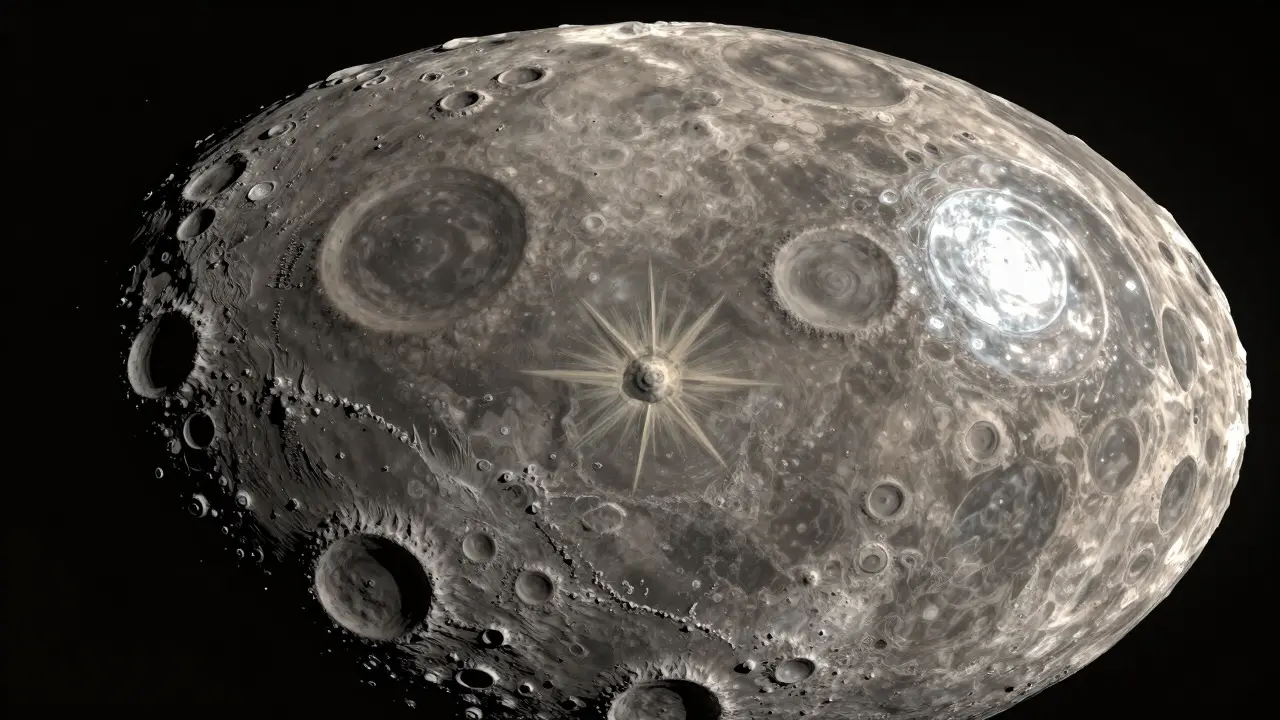
Every crater is a record of a violent event, but together, they paint a picture of the Moon’s dynamic past. The distribution of craters helps scientists determine the relative ages of different regions. Areas with high crater densities, like the highlands, are older and have been exposed to impacts for longer periods. Regions with fewer craters, like the maria, are younger and were resurfaced by lava flows that buried older impact sites.
The study of lunar craters also informs our understanding of the Solar System. Since the Moon lacks an atmosphere, its surface preserves a detailed history of impacts that would be erased on Earth by erosion and tectonic activity. By analyzing the size, shape, and distribution of craters like Tycho and Copernicus, researchers can estimate the frequency of asteroid and comet impacts throughout history. This data is crucial for assessing the risk of future impacts on Earth and for planning missions to other airless bodies, such as Mars or asteroids.
Furthermore, the composition of ejecta blankets provides clues about the Moon’s internal structure. Different colors and textures in the ejecta indicate different source materials, helping to map the boundaries between crustal types. This information is vital for selecting landing sites for future robotic or crewed missions, ensuring that vehicles land on stable ground with accessible resources.
| Crater Name | Diameter (km) | Age (Million Years) | Key Feature | Best Viewing Phase |
|---|---|---|---|---|
| Tycho | 85 | 108 | Bright ray system | Full Moon / Terminator |
| Copernicus | 93 | 800 | Complex ejecta patterns | First Quarter |
| Kepler | 40 | ~100 | Star-like shape | First Quarter |
| Clavius | 156 | ~1,000 | Large size, complex interior | Waning Crescent |
| Humboldt | 130 | ~500 | Bright albedo, central peak | Waxing Crescent |
Frequently Asked Questions
Can you see Tycho crater with the naked eye?
Yes, Tycho is one of the few lunar features visible to the naked eye. It appears as a bright spot near the southern limb of the Moon, especially during full moon. However, a telescope is required to see the detailed ray system and central peak.
Which is older, Tycho or Copernicus?
Copernicus is significantly older than Tycho. Copernicus formed approximately 800 million years ago, while Tycho formed only about 108 million years ago. This age difference explains why Tycho’s rays are brighter and more extensive.
What causes the bright rays around lunar craters?
The rays are composed of ejecta material thrown out during the impact. This material is often lighter in color than the surrounding regolith because it comes from deeper, fresher layers of the Moon’s crust. Over time, space weathering darkens this material, causing the rays to fade.
Is the best time to observe craters during full moon?
Not necessarily. Full moon is ideal for seeing the extent of ray systems, but the overhead lighting minimizes shadows. For detailed topographical features like central peaks and terraces, the first or last quarter phases are better because the low-angle sunlight casts long shadows, enhancing contrast.
How does lunar libration affect crater observation?
Lunar libration is the slight rocking motion of the Moon as seen from Earth. This motion allows observers to see slightly beyond the limb at different times, bringing features near the edge into better view. It also changes the angle of illumination, which can make certain craters appear more or less prominent depending on the date of observation.