17 Aug 2026
- 0 Comments
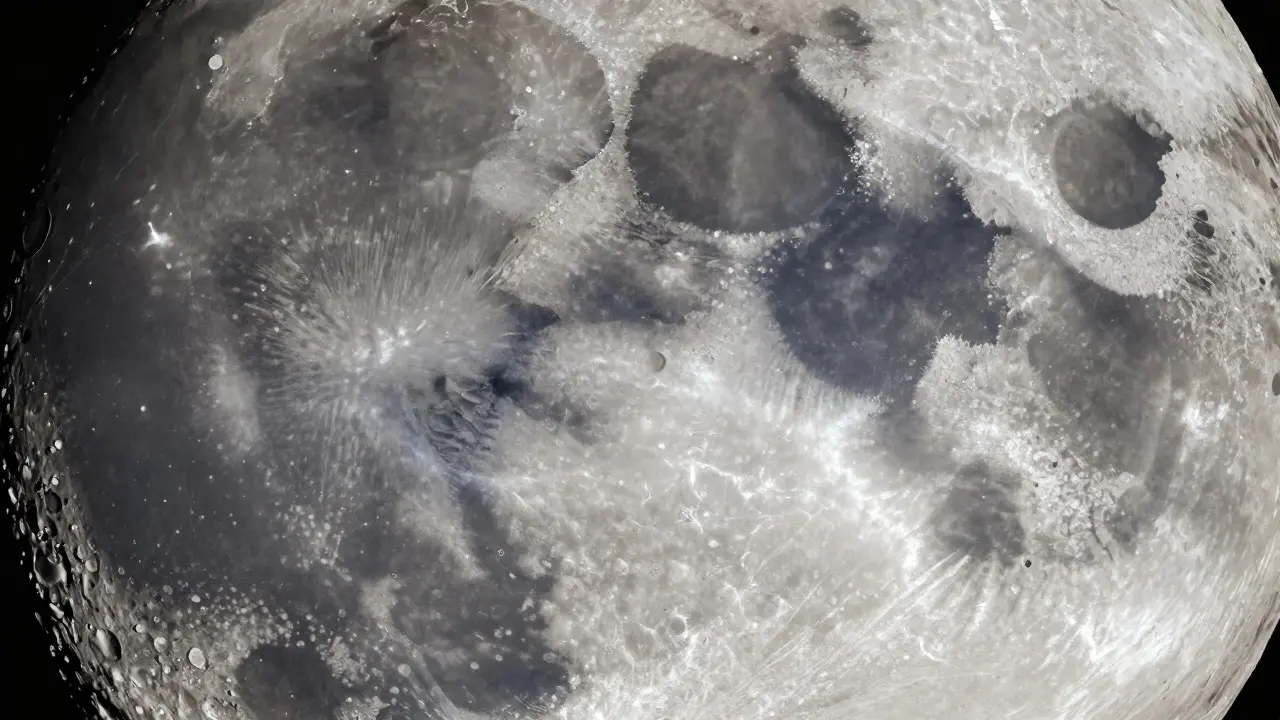
Look up at a full moon, and your eye is immediately drawn to the dark patches. They look like seas, right? Ancient maps called them Mare, or sea, because early astronomers thought they were actual water bodies. But there is no water on the Moon. So what are these vast, dark plains actually doing there? They are the result of some of the most violent volcanic activity in our solar system's history. Understanding the lunar maria isn't just about knowing what you're looking at; it’s about understanding how the Moon changed from a molten ball of rock into the cratered world we see today.
These features cover about 16% of the Moon's visible surface. If you use a telescope, you’ll notice they aren't just flat gray areas. They have texture, boundaries, and sometimes even mountain ranges rising out of them. This guide breaks down exactly what formed these basins, why they look dark, and how you can identify specific features during your next observing session.
What Are Lunar Maria?
Lunar maria are vast, dark basaltic plains on the Moon's surface formed by ancient volcanic eruptions. The term comes from the Latin word for "sea." Unlike Earth's oceans, which contain liquid water, these are solidified lava flows that accumulated over millions of years. They are primarily composed of basalt, a fine-grained igneous rock that is darker than the lighter highland terrain surrounding them.
The contrast between the bright highlands and the dark maria is stark. The highlands are older, heavily cratered, and made of anorthosite, a light-colored rock rich in plagioclase feldspar. The maria, however, are geologically younger. Because they formed after the period of heavy bombardment ended, they have fewer craters. This difference in age and composition is why they appear so distinct through a telescope.
There are two main types of lunar maria:
- Oceanus Procellarum (Ocean of Storms): This is the largest mare, covering roughly 4 million square kilometers. It’s not a single basin but a complex region filled with multiple smaller basins and lava flows. It dominates the western limb of the Moon as seen from Earth.
- Mare Imbrium (Sea of Rains): One of the most recognizable features, this is a classic impact basin filled with lava. It looks like a dark circle surrounded by brighter terrain.
The Formation Process: From Impact to Lava
You might wonder how a rocky body without plate tectonics could have such extensive volcanism. The story starts long before the lava flowed. It begins with impacts.
- The Giant Impact: Early in the Moon's history, massive asteroids struck the surface. These impacts were so energetic that they shattered the crust and melted the mantle beneath. Think of it like punching a hole in a balloon-the pressure releases, and material rushes in to fill the void.
- Basin Formation: These impacts created huge depressions known as impact basins. Some were hundreds of kilometers wide. The heat from the impact also caused the underlying mantle to rise, creating a "magma ocean" beneath the new basin floor.
- Crustal Thinning: The weight of the impacting object and the subsequent melting thinned the crust in these regions. This made it easier for magma from the deep interior to reach the surface.
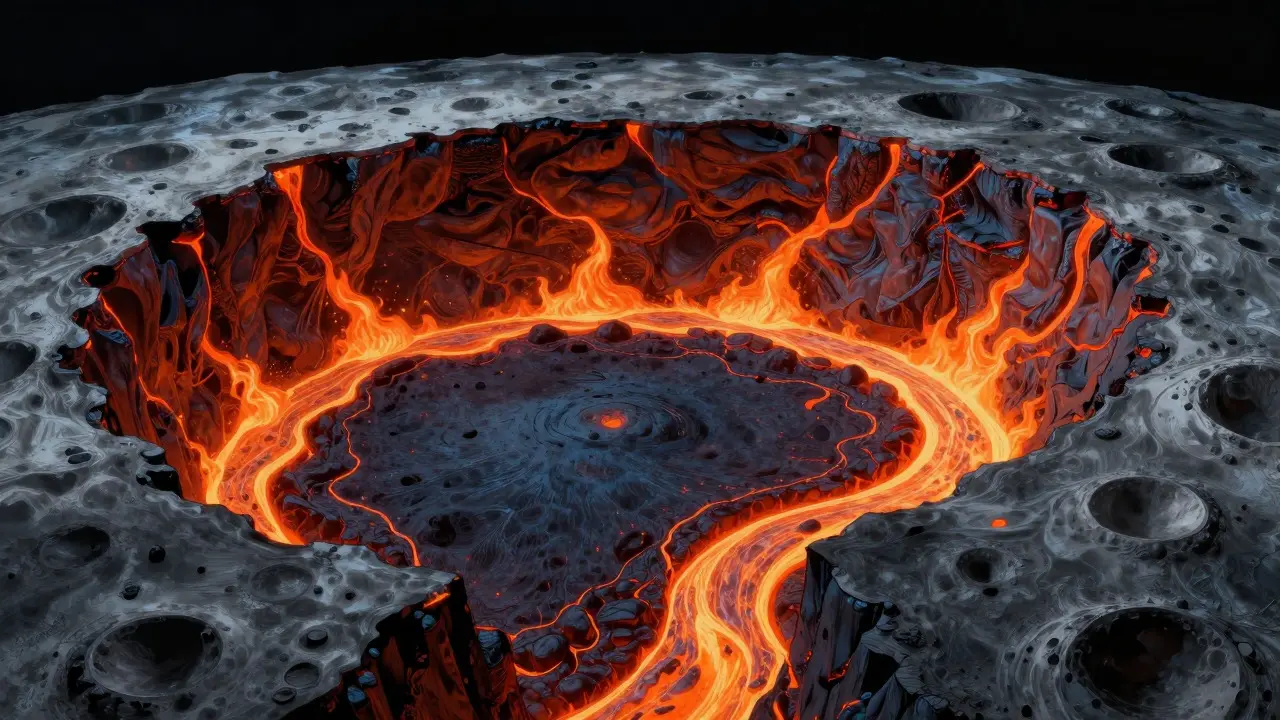
- Volcanic Eruptions: Over millions of years, fissures opened up across the basin floors. Magma erupted not from single point vents (like Hawaiian volcanoes) but from long cracks. This produced thin, fluid lava flows that spread out over vast distances.
This process explains why the maria are relatively smooth compared to the rugged highlands. The lava flows buried the original impact craters, creating a fresh, flat surface. However, not all craters were erased. Larger, deeper craters remained visible, and new craters formed after the lava hardened. This is why you can still see craters within the dark seas-they are either older than the lava or formed later.
Why Do They Look Dark?
The color difference is all about mineral composition and albedo. Albedo is a measure of how much light a surface reflects. The lunar highlands have a high albedo, meaning they reflect more sunlight. The maria have a low albedo, absorbing more light and appearing darker to our eyes.
Here is a quick comparison of the geological properties:
| Feature | Lunar Highlands | Lunar Maria |
|---|---|---|
| Primary Composition | Anorthosite (feldspar-rich) | Basalt (iron- and magnesium-rich) |
| Albedo (Reflectivity) | High (~0.12-0.15) | Low (~0.07-0.10) |
| Age | ~4.4 billion years | ~3.8 to 3.0 billion years |
| Crater Density | Very High | Lower (buried by lava) |
| Formation Mechanism | Cooling of primordial magma ocean | Post-impact volcanic flooding |
The basalt in the maria contains minerals like pyroxene and olivine, which are rich in iron and magnesium. These elements absorb more light than the aluminum-rich feldspar in the highlands. When you look through a telescope, this difference becomes obvious. The maria often have a slightly bluish tint in certain filters, while the highlands appear more neutral or yellowish.
Key Features for Observers
If you are planning an observing session, identifying specific maria helps you navigate the lunar landscape. Here are a few key targets and what to look for:
Mare Tranquillitatis (Sea of Tranquility)
This is one of the brightest and easiest to spot maria. It sits near the center of the Moon's face. In 1969, the Apollo 11 crew landed here. Why? Because the terrain was relatively flat and safe. Through a telescope, you can see the landing site area, though it requires high magnification. The eastern edge of the Mare is defined by a series of mountains, including Montes Apenninus, which cast long shadows when the terminator (the line between day and night) passes nearby.
Mare Serenitatis (Sea of Serenity)
Located just north of Tranquillitatis, this is another large, circular mare. It has a very distinct border. Look for the crater Aristarchus Complex on its northern edge. Aristarchus is famous for having one of the highest albedos on the Moon, making it stand out sharply against the dark mare background. It’s a great target for checking your optical alignment.
Mare Crisium (Sea of Crises)
This small, isolated circular feature stands out because it is surrounded entirely by highlands. It looks like a dark coin placed on a bright table. It’s a favorite for beginners because it’s easy to find and doesn’t require advanced tracking skills. The lack of surrounding maria makes its shape very clear.
Oceanus Procellarum (Ocean of Storms)
This is the big one. It covers a huge area on the left side of the Moon (as viewed from the Northern Hemisphere). It’s not a single basin but a collection of smaller maria and lava flows. It’s challenging to observe in detail because it’s so large and lacks sharp borders. However, it provides excellent context for understanding the scale of lunar volcanism.
The Role of Apollo Missions
We didn't always know the maria were volcanic. Before the space race, theories suggested they might be fossilized oceans or impact melt pools. The Apollo missions provided the definitive answer. Astronauts collected thousands of pounds of samples from various maria. Laboratory analysis confirmed that the rocks were basalt, identical to lava found on Earth. Radiometric dating showed that the lava flows occurred between 3.8 and 3.0 billion years ago, confirming the timeline of late-stage lunar volcanism.
The missions also revealed that the maria are not uniform. Some areas have thicker lava layers than others. In some places, the lava flowed over pre-existing craters, preserving their shapes under a layer of rock. In other areas, the lava was thinner, allowing older features to show through. This variation tells us that the volcanic activity was episodic, occurring in bursts rather than continuously.
Observing Tips for Lunar Maria
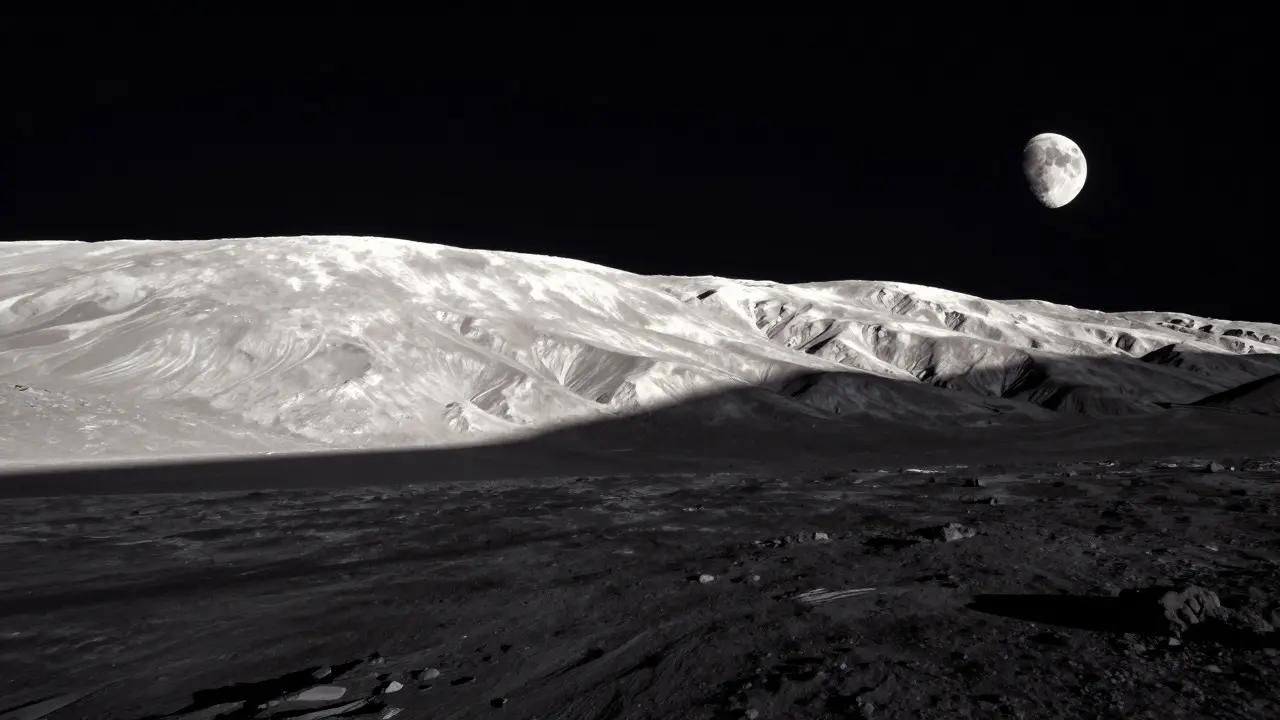
To get the best view of these features, timing is everything. You want to observe when the terminator is near the area you’re interested in. The terminator is where sunlight hits the Moon at a low angle, casting long shadows. These shadows highlight topography that would otherwise be invisible.
- Use Low Magnification First: Start with a wide field of view to locate the general area. Then zoom in to see details like mountain ranges or individual craters within the mare.
- Watch the Terminator Move: As the Moon waxes, the terminator moves eastward. Features near the terminator will have dramatic lighting. For example, the Apennine Mountains along the edge of Mare Tranquillitatis look stunning when the sun is just rising over them.
- Try Color Filters: A blue filter can enhance the contrast between the dark maria and bright highlands. It can also help bring out subtle color variations in the lava flows.
- Note the Age Difference: Count the craters. If you see a dense field of small craters, you’re looking at older highland terrain. If the surface is smoother with fewer craters, you’re likely looking at younger mare material.
Remember, the Moon is constantly changing its appearance due to the moving terminator. What looks flat and uninteresting at full moon can become a dramatic landscape of peaks and valleys a few days earlier or later. Keep a log of your observations and note the date and phase of the Moon. You’ll be surprised at how much detail you can pick up with practice.
Frequently Asked Questions
Are lunar maria actually water?
No. The name "mare" means sea in Latin, but these are dry, solidified lava plains. There is no liquid water on the Moon's surface. The dark color is due to the mineral composition of the basalt, not the presence of water.
Why are the maria darker than the rest of the Moon?
Maria are made of basalt, which contains iron and magnesium-rich minerals that absorb more light. The highlands are made of anorthosite, which is lighter in color and reflects more sunlight. This difference in albedo creates the visual contrast.
How old are the lunar maria?
Most lunar maria formed between 3.8 and 3.0 billion years ago. This period is known as the Late Heavy Bombardment aftermath. The exact age varies by location, with some flows being older and others slightly younger.
Can you see the Apollo landing sites in a telescope?
It is possible to see the general area of Apollo landing sites with a large telescope (10 inches or larger) under excellent seeing conditions. The sites themselves are tiny, but the surrounding terrain and the tracks left by rovers may be faintly visible. Most observers focus on the broader geological features instead.
Do the maria change over time?
Geologically, the maria are stable. They don't erode like landscapes on Earth because there is no wind or water. However, they do accumulate new craters from micrometeorite impacts over billions of years. To an observer, they appear static, but scientifically, they are slowly being modified by space weathering.