17 Aug 2026
- 0 Comments
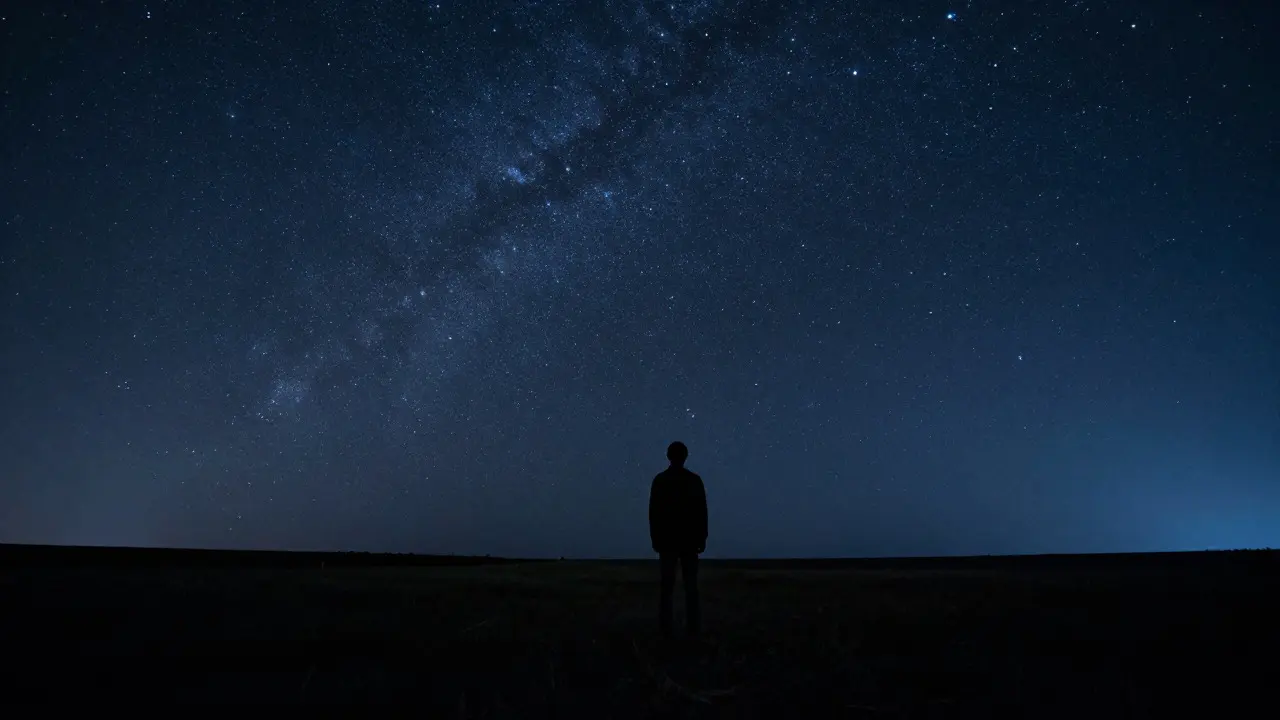
Imagine you are standing in a dark field far from city lights. The sky is a dome of stars, but without names, it’s just noise. To navigate or simply enjoy the view, you need a map that fits in your head. This is where star hopping comes in. It is not about memorizing every single star; it is about learning to recognize patterns and use them as stepping stones across the sky. If you have ever felt overwhelmed by the sheer number of constellations, this guide will show you how to build that knowledge systematically, turning chaos into clarity.
The Core Principle of Star Hopping
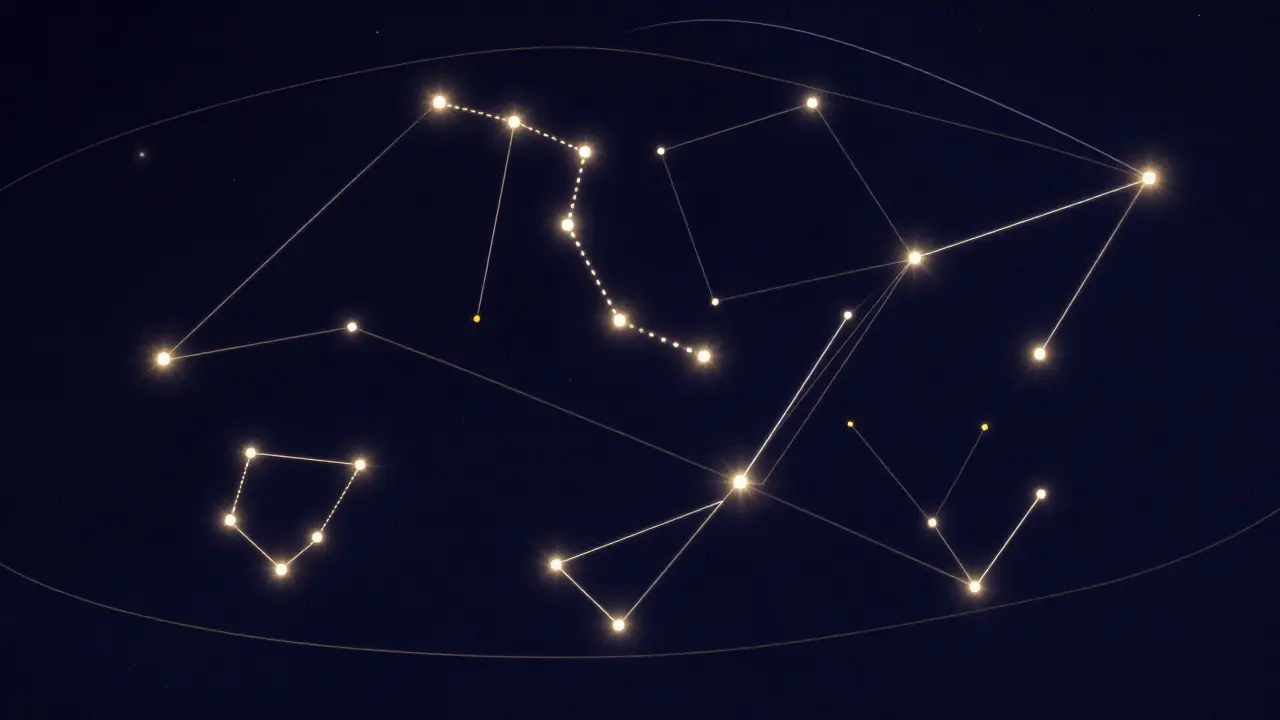
Star hopping is a navigational technique that uses known bright stars or asterisms to locate fainter objects or other constellations. Think of it like hiking with a trail marker. You don’t need to know the entire mountain range to get to the next campsite; you just need to find the next visible signpost. In astronomy, your "signposts" are the brightest stars and most recognizable shapes, such as the Big Dipper or Orion’s Belt. By linking these anchors together, you can traverse the entire celestial sphere without relying on a planisphere or an app constantly.
This method relies heavily on spatial memory rather than rote memorization of lists. Instead of trying to recall that Vega is in Lyra, you learn that Vega is the top star of the Summer Triangle, which connects directly to the handle of the Big Dipper. This relational thinking makes the sky feel connected rather than fragmented. For beginners, the goal isn't to identify 88 constellations in one night. It is to identify three or four key figures and understand how they relate to their neighbors.
Building Your Mental Map: Start with the Anchors
You cannot memorize the whole sky at once. You need anchor points. These are the most prominent features that remain visible for long periods or are exceptionally bright. In the Northern Hemisphere, the primary anchor is the Ursa Major, specifically the asterism known as the Big Dipper. Because Polaris, the North Star, lies in a straight line with the two pointer stars at the end of the Dipper's bowl, Ursa Major serves as your compass rose. Once you find Polaris, you have found true north, which orients your entire mental map.
From Polaris, you can reach Cassiopeia, which looks like a distorted 'W' or 'M' depending on the season. Cassiopeia is another critical anchor because it never sets below the horizon for observers north of latitude 39 degrees. Between Ursa Major and Cassiopeia lies Draco, the Dragon, which winds its way through the northern sky. By mastering the relationship between these three circumpolar constellations, you have a stable foundation that is always available, regardless of the time of year.
Connecting the Equatorial Sky
Once you have your northern anchors, you need to expand toward the celestial equator. This is where the seasonal constellations come in. In winter, the dominant feature is Orion, easily identified by its three-star belt. Orion acts as a bridge to many other constellations. The line extending from Orion's Belt points down to Sirius, the brightest star in the night sky, located in Canis Major. Extending the same line upward leads to Taurus and then to the Pleiades cluster. This linear connection is a classic example of star hopping: you start with a known shape (Orion) and follow a geometric path to discover new territory.
In summer, the focus shifts to the Summer Triangle, an asterism formed by three bright stars: Vega in Lyra, Deneb in Cygnus, and Altair in Aquila. This triangle is so large and distinct that it dominates the summer sky. From Vega, you can hop to Hercules, and from Deneb, you can trace the body of Cygnus, often called the Northern Cross. Recognizing these major asterisms allows you to quickly orient yourself even if you forget the specific boundaries of the official IAU constellations.
Practical Techniques for Retention
Reading about constellations is different from seeing them. To truly internalize the sky, you need active practice. Here is a simple workflow to build your skills:
- Pick a single region: Do not try to learn the whole sky. Choose one area, like the winter hexagon or the spring galaxy cluster region.
- Identify the brightest stars first: Learn the names and positions of the top 5-10 stars in that region. Brightness is your best friend; faint stars are hard to spot without binoculars.
- Draw the connections: Use a notebook to sketch the lines connecting these stars. Visualizing the geometry helps solidify the spatial relationships.
- Go outside: Find a dark location and spend 15 minutes just looking at that specific region. Try to point out each star you learned during the day.
- Repeat over weeks: Consistency beats intensity. Ten minutes a night is more effective than two hours once a month.
A useful heuristic is the "line extension" method. Many constellations are linked by imaginary lines drawn between their brightest stars. For example, the line from the tip of the Big Dipper's handle points to Arcturus in Boötes. Following this line leads to Spica in Virgo. This chain of associations creates a web of knowledge that is much easier to recall than isolated facts.
Common Pitfalls and How to Avoid Them
One common mistake is relying too heavily on apps. While tools like Stellarium or SkySafari are excellent for verification, using them while looking up can create a dependency. Try to identify the pattern first, then check the app to confirm. Another pitfall is confusing similar shapes. For instance, the Little Dipper (part of Ursa Minor) is often mistaken for the Big Dipper. However, the Little Dipper is significantly fainter, except for Polaris. If the stars look dim and washed out, you are likely looking at Ursa Minor, not Ursa Major.
Light pollution also plays a role. In areas with significant light pollution, fainter stars disappear, making some constellations harder to recognize. Focus on learning constellations that contain bright stars (magnitude 2 or brighter). These remain visible even under suburban skies. As your eye adapts to darkness, you will begin to see fainter stars, expanding your visible universe naturally.

Comparison of Key Learning Methods
| Method | Best For | Time Required | Effectiveness |
|---|---|---|---|
| Rote Memorization | Exams/Quizzes | High initial effort | Low retention for practical use |
| Star Hopping | Nighttime Navigation | Medium ongoing effort | High practical utility |
| App-Assisted Learning | Beginners | Low effort | Medium retention (dependency risk) |
| Sketching/Drawing | Spatial Memory | Medium effort | High retention for geometry |
Frequently Asked Questions
How long does it take to learn all 88 constellations?
For most casual observers, identifying the major constellations takes 3 to 6 months of regular observation. Mastering all 88 official constellations, including their fainter borders, can take several years. However, for navigation purposes, you only need to master the 20-30 brightest and most distinctive ones.
What is the easiest constellation to start with?
The Big Dipper (part of Ursa Major) is widely considered the easiest starting point in the Northern Hemisphere. It is bright, large, and never sets for mid-northern latitudes. In the Southern Hemisphere, Crux (the Southern Cross) is the equivalent anchor point due to its distinct shape and visibility.
Do I need a telescope to practice star hopping?
No. Star hopping is primarily a naked-eye skill. Telescopes have narrow fields of view, which actually make it harder to see the context of constellations. Binoculars can be helpful for spotting fainter stars within a constellation, but they are not necessary for learning the basic shapes and connections.
How do I distinguish between similar-looking constellations?
Focus on the brightness of the stars and their relative spacing. For example, the Big Dipper has seven bright stars, while the Little Dipper has six fainter stars (with Polaris being the exception). Also, consider the surrounding context. The Big Dipper is near the Milky Way's core in summer, while the Little Dipper is closer to Polaris. Contextual clues are often more reliable than shape alone.
Can I use star hopping for actual navigation?
Yes. Finding Polaris via the Big Dipper gives you true north. In the Southern Hemisphere, you can extend the long axis of the Southern Cross to approximate the south celestial pole. While less precise than a compass, this method is reliable enough for general orientation when magnetic instruments fail or are unavailable.