17 Aug 2026
- 0 Comments
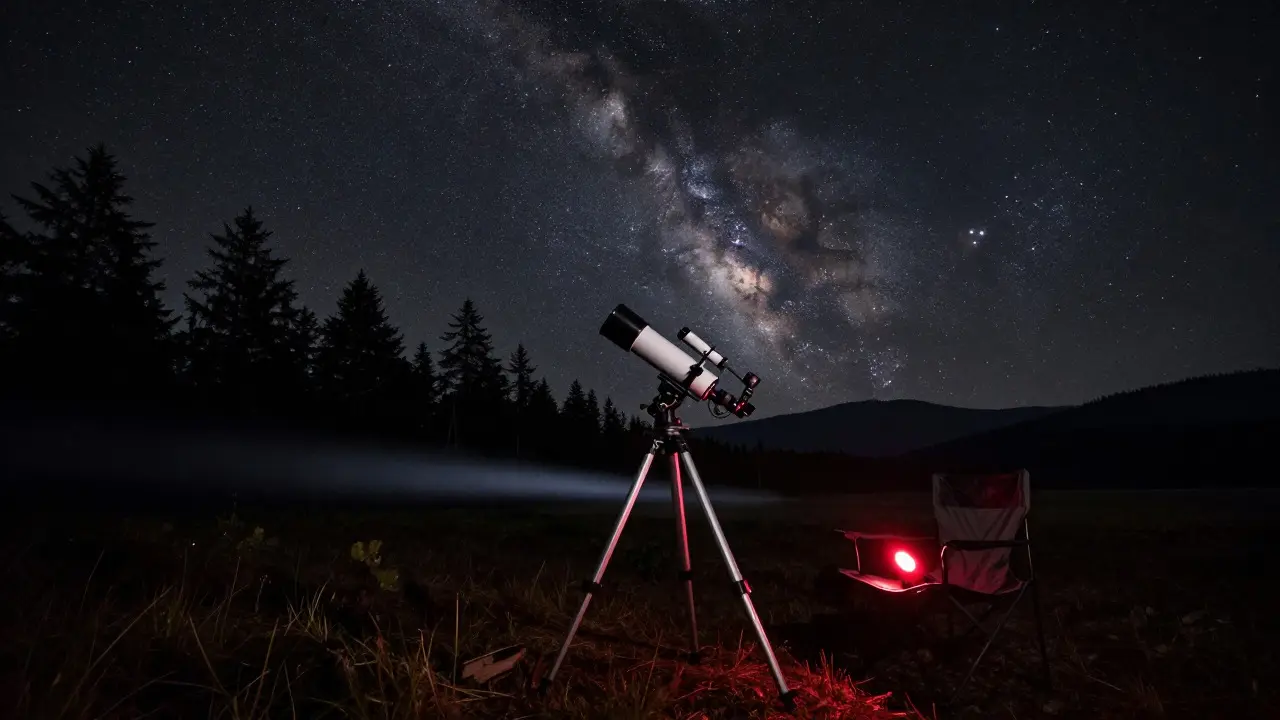
It is August 17, 2026. The moon is a thin crescent, and the next New Moon is approaching fast. For serious stargazers, this upcoming window represents the best opportunity of the summer season to hunt for faint nebulae and distant galaxies. But staring at a generic star chart isn't enough. You need a strategy that accounts for what is actually visible from your specific location in the Pacific Northwest right now.
Deep-sky object observation is the practice of viewing celestial bodies beyond our solar system, including nebulae, star clusters, and galaxies, typically using optical aids like telescopes or binoculars. Many beginners fail because they try to observe objects that are too low on the horizon or obscured by light pollution. By aligning your seasonal visibility with the lunar cycle, you can maximize the contrast between the dark sky and these faint targets. This guide breaks down exactly how to curate a list that works for late summer and early autumn in the Northern Hemisphere.
Understanding the New Moon Window
The "New Moon week" refers to the period roughly five days before and five days after the actual new moon phase. During this time, the moon sets shortly after sunset (in the pre-new phase) or rises shortly before sunrise (in the post-new phase), leaving the entire night sky dark. For observers in Portland, Oregon, this means you have approximately eight to nine hours of usable darkness. However, the quality of that darkness depends heavily on where you are. If you are within the city limits, light pollution will wash out everything fainter than magnitude 5.5. To see true deep-sky wonders, you need to drive at least 30 to 40 miles away from urban centers toward rural areas like the Columbia River Gorge or the Cascade foothills.
Timing is critical. In late August, the sun sets around 8:00 PM local time. By 9:30 PM, astronomical twilight ends, and the sky reaches its darkest point. Your session should ideally start no later than 10:00 PM to allow your eyes to adapt fully. Eye adaptation takes about 30 minutes; if you check your phone or look at streetlights during this time, you reset the clock. Use red-light headlamps to preserve your night vision once you are at your observing site.
What Is Visible in Late Summer?
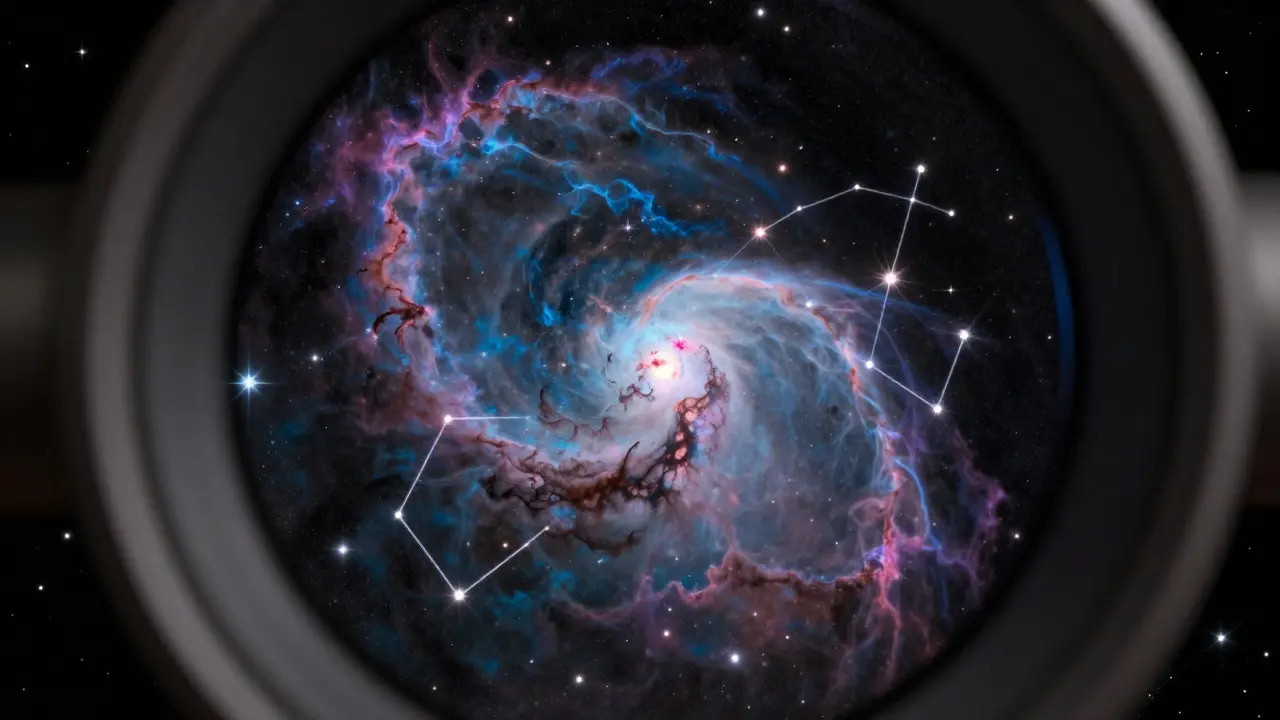
Right now, the constellation Cygnus (The Swan) dominates the northern sky. It is high overhead, making it an ideal starting point for your list. Within Cygnus lies one of the most famous targets in the entire sky: the North America Nebula. While it looks like a smudge in small telescopes, it reveals intricate structure in larger apertures. Nearby, the Veil Nebula offers stunning detail, especially if you use a narrowband filter. These two objects are close together, so you can hop between them easily without losing track of your position in the sky.
As the nights get longer and cooler, the constellation Lyra begins to dip lower in the west, but it remains accessible until midnight. The Ring Nebula in Lyra is a bright, easy target that serves as a good warm-up exercise for focusing your telescope. Further south, the constellation Sagittarius is rising in the southeast. Although it is still low, it contains the Galactic Center, which is the densest region of star fields in the Milky Way. Observing the center of our galaxy is a rite of passage for many astronomers, but it requires a dark site and patience. The area around Sagittarius A* is packed with open clusters and emission nebulae that reward careful observation.
Building Your Target List: A Practical Method
Don't just copy a list from a book. Create your own based on three factors: altitude, brightness, and personal interest. Start by opening a planisphere or a digital app like Stellarium. Set your location to your exact observing site, not just your home address. Then, look at the sky at 11:00 PM on the night of the new moon. Identify constellations that are above the 30-degree altitude line. Anything below that is likely to be blocked by trees, hills, or atmospheric distortion near the horizon.
Next, filter by brightness. If you have a small telescope (under 6 inches), prioritize objects brighter than magnitude 8. If you have a larger instrument (10 inches or more), you can push into magnitude 10 or 11. Here is a sample framework for a late-summer list:
- Warm-up Targets: Bright, easy objects to focus and find. Examples: M57 (Ring Nebula), M13 (Hercules Cluster).
- Primary Targets: The main reason you went out. Examples: NGC 7000 (North America Nebula), IC 1318 (Veil Nebula).
- Challenge Targets: Faint or difficult objects for advanced observers. Examples: M8 (Lagoon Nebula), M22 (Sagittarius Cluster).
- Double Stars: Good for testing optics. Examples: Albireo in Cygnus, Spica in Virgo.
Keep your list short. Trying to observe 20 objects in one night leads to burnout. Aim for 5 to 8 primary targets. Spend 15 to 20 minutes on each. Sketching or taking notes helps solidify what you saw. Even if you don't draw well, jotting down colors, shapes, and relative brightnesses adds value to your session.
Equipment Considerations for Dark Sky Sessions
Your gear dictates what you can see. A refractor with a focal length of 800mm or more is excellent for planetary work but can also handle deep-sky objects if the aperture is sufficient. Reflectors, such as Newtonian telescopes, offer more light-gathering power per dollar, making them superior for faint nebulae and galaxies. For a 10-inch Dobsonian telescope, you can easily see the spiral structure of nearby galaxies like M81 and M82, even under moderate conditions.
Filters are game-changers for deep-sky observing. In suburban areas, a UHC (Ultra High Contrast) filter can cut through light pollution and enhance the contrast of emission nebulae. If you have access to a truly dark site, you might not need filters, but they still help with seeing double stars and reducing glare. Binoculars are underrated tools. A pair of 15x70 binoculars can reveal the Milky Way in breathtaking detail and allow you to scan large areas of the sky quickly. They are perfect for finding your way to specific targets before switching to the telescope.
| Object Name | Constellation | Magnitude | Type | Best Viewing Time |
|---|---|---|---|---|
| M57 (Ring Nebula) | Lyra | 8.8 | Planetary Nebula | Evening |
| NGC 7000 (North America Nebula) | Cygnus | 4.0 | Emission Nebula | Midnight |
| IC 1318 (Veil Nebula) | Cygnus | 7.0 | Supernova Remnant | Midnight |
| M13 (Hercules Cluster) | Hercules | 5.8 | Globular Cluster | Early Evening |
| M22 (Sagittarius Cluster) | Sagittarius | 5.1 | Globular Cluster | Late Night |
Troubleshooting Common Issues
Even with a perfect plan, things can go wrong. If the sky feels "washed out," check the Bortle Scale rating of your site. If you are at a Bortle 7 or 8 site, faint objects will be nearly invisible. Move to a darker site. If your view is blurry, wait for the atmosphere to settle. This usually happens an hour or two after sunset when the air cools and becomes stable. Humidity is another factor. In Portland, summer humidity can cause dew to form on your telescope's mirror or lens within 30 minutes. Bring a dew heater strap or a small fan to keep your optics dry. Finally, if you can't find your target, stop trying to force it. Use a finder scope to locate a bright star nearby, then move your field of view incrementally. Star hopping is a skill that improves with practice, but it is frustrating when you are tired and cold.
Planning for the Next Season
As September approaches, the sky changes dramatically. The Summer Triangle fades, and the Autumn Square in Pegasus rises. This transition brings new targets like the Andromeda Galaxy (M31), which becomes prominent in October. Start building your fall list now. Note which objects are setting early in the evening and which are rising late at night. The goal is to always have a fresh set of targets ready for the next new moon. Astronomy is a marathon, not a sprint. Consistency matters more than any single spectacular sighting. By planning your sessions carefully, you ensure that every clear night counts.
How many days before the new moon should I start planning my session?
Start planning at least one week in advance. This gives you time to check weather forecasts, identify dark sites, and prepare your equipment. The last few days are best for finalizing your target list based on current sky conditions.
Is a new moon necessary for deep-sky observing?
While not strictly necessary, a new moon provides the darkest skies possible. During other phases, you can still observe bright deep-sky objects, but faint ones become much harder to see due to moonlight scattering in the atmosphere.
What is the best telescope size for a beginner?
For deep-sky observing, a 6 to 8-inch reflector is an excellent starting point. It offers good light-gathering power without being too heavy or complex to manage. Refractors are easier to maintain but cost more for the same aperture.
How do I deal with light pollution in the Pacific Northwest?
Light pollution is significant in urban areas like Portland. To mitigate it, drive to rural areas such as the Columbia River Gorge or the Cascades. Use light-pollution filters if you must observe from suburbs. Check the Bortle Scale map to find the darkest available sites within driving distance.
Can I use binoculars for deep-sky objects?
Yes, binoculars are great for wide-field views of the Milky Way, star clusters, and bright nebulae. They are less effective for faint galaxies or detailed nebula structures, but they are excellent for scanning and locating targets before using a telescope.