
17 Aug 2026
- 0 Comments
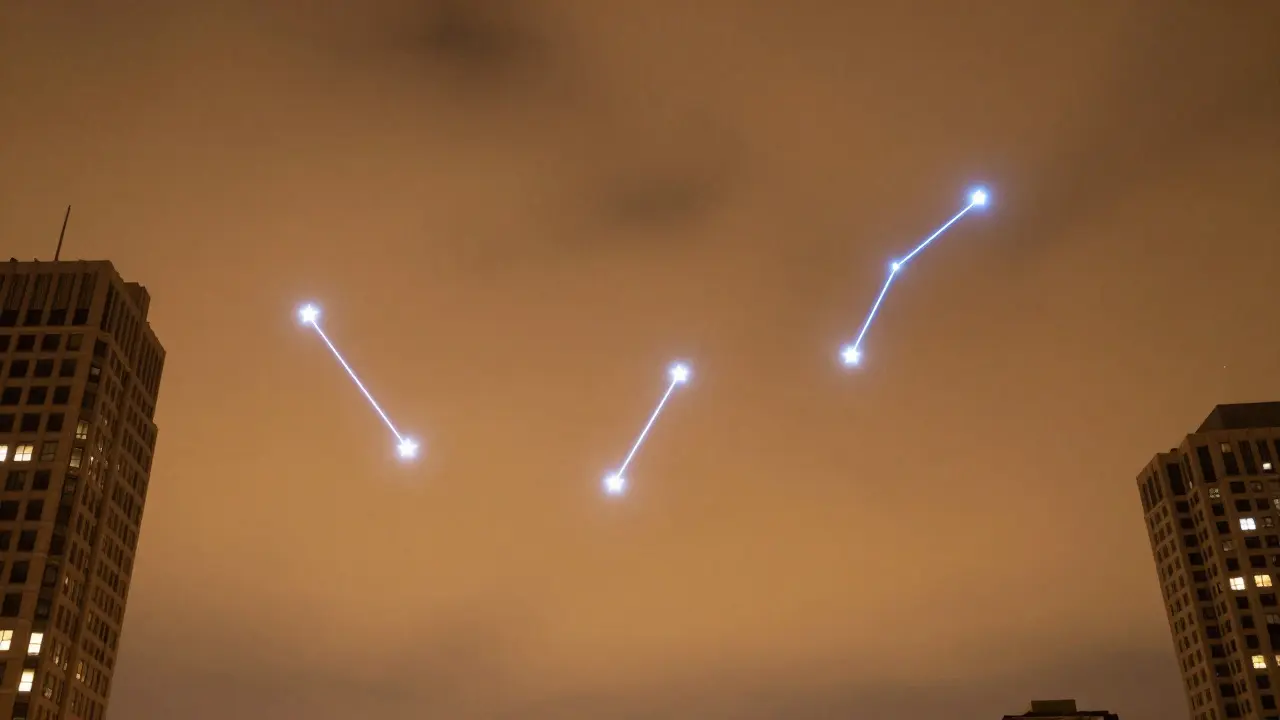
Look up from a city center at midnight, and you might count twenty stars. Drive forty minutes out of town, and that number jumps to over two thousand. This is the reality of skyglow is the brightening of the night sky caused by artificial light scattering in the atmosphere. For many urban dwellers, this haze makes stargazing feel impossible. But it doesn't have to be. With a few mental adjustments and practical tools, you can still trace the shapes of the constellations right above your apartment balcony.
Why Your Eyes Need Time to Adjust
The first hurdle isn't the lights themselves; it's how your eyes process them. Human vision operates on two types of photoreceptor cells: rods and cones. Cones handle color and detail in bright light, while rods are sensitive to low-light conditions but lack color perception. In a dark environment, your pupils dilate, and rod sensitivity peaks after about thirty minutes. In a city, constant exposure to streetlights keeps your pupils constricted and your rods suppressed.
To adapt, you need to give your eyes a break from direct light sources. When you step outside, avoid looking directly at streetlamps or car headlights. Instead, focus on a darker patch of sky for ten to fifteen minutes. You’ll notice the fainter stars beginning to emerge from the gray haze. This physiological shift is crucial because many constellation boundaries rely on stars with magnitudes between 3.0 and 4.5, which are often invisible to unadapted eyes in urban settings.
Focus on the Bright Anchors
In a rural sky, you see the full picture. In a city, you see fragments. The strategy shifts from memorizing every faint line to identifying the brightest anchors. Most major constellations contain one or two stars that are visible even through heavy light pollution. These are your entry points.
- Orion: Look for the three bright stars of Orion’s Belt. Even if the rest of the hunter fades into the glow, these three are usually distinct. Once you find them, the surrounding stars become easier to pick out as your eyes adjust.
- Cassiopeia: The W-shape of Cassiopeia consists of five bright stars. It circumpolar in mid-northern latitudes, meaning it never sets. If you can spot this W, you’ve found a reliable landmark that helps you orient yourself in the northern sky.
- Ursa Major (The Big Dipper): The seven stars of the Big Dipper are among the brightest in the northern hemisphere. The pointer stars at the end of the dipper lead directly to Polaris, the North Star. This asterism serves as a compass rose for finding other constellations like Ursa Minor and Draco.
By focusing on these high-magnitude stars, you build a framework. You don’t need to see the entire mythological figure immediately. You just need to lock onto the bright nodes and let the fainter connections fill in as your visual acuity improves.

Tools That Cut Through the Glow
Your naked eye is powerful, but technology can bridge the gap between what’s there and what you can see. Red-light flashlights are essential. Blue and white light scatters more easily in the atmosphere and resets your dark adaptation faster than red light. A dimmable red LED torch allows you to check your phone or map without losing your night vision.
Binoculars offer another advantage. They gather more light than your eyes alone, effectively lowering the limiting magnitude of your view. A pair of 7x50 or 10x50 binoculars can reveal stars that are completely invisible to the naked eye in a city. Use them to scan specific regions rather than sweeping the whole sky, as the field of view is narrower. This focused approach helps you confirm the shapes of constellations that look ambiguous to the unaided eye.
Smartphone apps have also evolved to account for light pollution. Many modern astronomy apps allow you to input your location and automatically filter out stars below a certain brightness threshold based on your Bortle scale rating. This prevents frustration by showing you only what is actually visible from your specific rooftop or park. Pairing an app with a physical star chart creates a robust system for learning the sky.
| Method | Limiting Magnitude (Urban) | Best For | Key Advantage |
|---|---|---|---|
| Naked Eye (Adapted) | ~3.5 - 4.0 | Identifying bright anchors | Wide field of view, no equipment needed |
| Binoculars (10x50) | ~5.0 - 5.5 | Filling in fainter stars | Significant light-gathering boost |
| Telescope (Small Refractor) | ~6.0+ | Deep-sky objects, detailed clusters | High magnification, isolates targets from glow |
Choosing the Right Targets
Not all constellations play fair under a city sky. Some are dense with bright stars, while others rely on faint, distant members. To learn efficiently, prioritize constellations with high stellar density and brightness.
Summer is dominated by the Summer Triangle, formed by Vega, Deneb, and Altair. These three stars belong to Lyra, Cygnus, and Aquila, respectively. They are so bright they pierce through most urban glows. Winter offers Orion, Taurus, and Gemini, all rich in bright stars. Spring brings Leo and Virgo, though Virgo’s Alpha Virginis (Spica) is one of the brighter stars, making it a good anchor point. Autumn is the trickiest season for urban observers, as the Milky Way core is absent and the constellations are generally fainter. However, Pegasus and Andromeda remain identifiable due to their bright square formation and the galaxy itself, which can sometimes be glimpsed as a fuzzy patch even in moderate pollution areas.
Avoid trying to identify small or faint constellations like Crux or Fomalhaut until you have mastered the larger, brighter figures. Start with the big shapes and work inward. This hierarchical approach builds confidence and spatial awareness.
Practical Exercises for Urban Stargazers
Learning constellations is a skill, not just a memory task. Here are three exercises to sharpen your ability:
- The Pointer Method: Find the Big Dipper. Extend the line formed by the two stars at the end of the bowl (Merak and Dubhe) about five times its length. You will land on Polaris. From Polaris, look for the fainter stars of Ursa Minor. This exercise teaches you how to use bright stars to locate faint ones.
- The Haze Check: Pick a region of the sky where you expect a constellation to be. Cover one eye and look with the other. Now switch eyes. If the shape looks different or disappears, it’s likely an illusion caused by the haze or your brain filling in gaps. Trust the bright anchors over the perceived lines.
- The App Verification: Point your phone at a suspected constellation. Let the app overlay the names. Compare the digital lines with what you see. Notice which stars are missing. This gap analysis tells you exactly what your local light pollution is hiding, helping you set realistic expectations.
Overcoming Common Pitfalls
Many beginners give up because they compare their city view to photos taken from deserts. Those photos show thousands of stars. Your view shows hundreds. That’s normal. Stop comparing and start observing. Another common mistake is using white light from phones. Always switch to a red mode or cover the screen with a red cellophane sheet if your device lacks a red light option. Finally, don’t rush. Give your eyes time. Ten minutes of patience can transform a gray void into a recognizable map of the heavens.
Urban astronomy is about adaptation, not perfection. By leveraging bright anchors, using appropriate tools, and managing your expectations, you can decode the sky above your city. The constellations are still there, waiting to be seen.
Can I see the Milky Way from a city?
In heavily polluted cities, the Milky Way is usually invisible to the naked eye. However, in areas with moderate light pollution (Bortle Class 5-6), you might see a faint band of the Milky Way near the zenith, especially during summer when the galactic core is high in the sky. Binoculars can help reveal parts of it that are hidden from the naked eye.
What is the best time of year to learn constellations in the city?
Winter and Summer are the best seasons. Winter features Orion and Taurus, which are packed with bright stars. Summer offers the Summer Triangle and the Milky Way core. Spring and Autumn are more challenging due to fewer bright anchor stars, but Leo and Pegasus provide good starting points.
Do I need a telescope to see constellations?
No, a telescope is not necessary for identifying constellations. In fact, telescopes have a narrow field of view, which makes it hard to see the overall shape of a constellation. Binoculars are much better for this purpose, as they widen your field of view while boosting light gathering. Telescopes are best for deep-sky objects like nebulae and galaxies within those constellations.
How does light pollution affect star colors?
Light pollution washes out subtle color differences. In dark skies, you can see red, blue, and orange hues in stars. In cities, most stars appear white or yellowish due to the atmospheric scattering of artificial light. Don’t worry if you can’t distinguish colors; focus on brightness and position instead.
What is the Bortle Scale?
The Bortle Dark-Sky Scale is a 9-point scale used to measure the darkness of the night sky. Class 1 is pristine dark skies, while Class 9 is inner-city skies. Most urban areas fall into Classes 7-8, where only the brightest stars and planets are visible. Knowing your Bortle class helps you choose the right targets and manage expectations.