16 Aug 2026
- 0 Comments
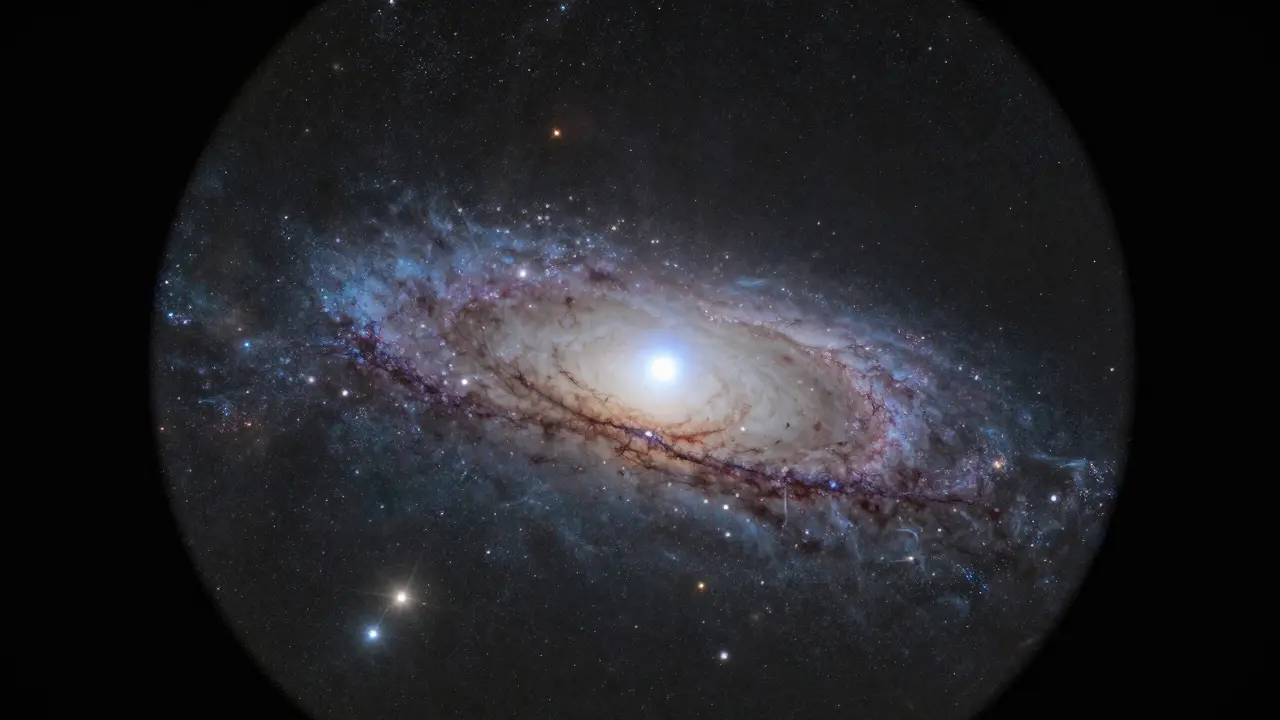
Imagine you spot a bright new star in the Andromeda galaxy. Your heart races. Is it a supernova? Or is it just a variable star acting up? This is where supernova candidate vetting comes in. It’s the critical process of separating real cosmic explosions from false alarms. For citizen scientists, this step determines whether your discovery makes headlines or gets buried in a database of noise. Without rigorous checking, even the brightest candidates can turn out to be mundane objects. The goal isn’t just to find something new; it’s to confirm it’s worth the professional astronomers’ time.
The First Hurdle: Cross-Matching Against Star Catalogs
Before you call anyone, you need to know if that light source has been seen before. This is called cross-matching. You take the coordinates of your potential supernova and check them against established stellar catalogs like the Gaia DR3 or Pan-STARRS. If there’s a match with a known star within a small angular distance (usually less than 1 arcsecond), it’s likely not a supernova. It could be a binary system, a variable star, or an asteroid passing through the field. The key here is precision. A slight error in your astrometry can lead you to the wrong neighbor. Always use the most recent catalog available, as older ones might miss fainter background stars that are now visible due to improved detector sensitivity. If no match exists in the primary catalog, don’t stop there. Check secondary catalogs or deep-field surveys. Sometimes, a supernova occurs in a region so dense with stars that a faint background object was previously unresolved. If you find a match, measure the brightness difference. If the "new" object is significantly brighter than the catalog entry, it might still be a supernova superimposed on a star, but it requires careful spectral follow-up to separate the two light sources.
Photometric Checks: Reading the Light Curve
Cross-matching tells you *where* the object is. Photometry tells you *what* it’s doing. A true supernova has a distinct light curve shape. It rises quickly, peaks, and then declines slowly over weeks or months. Variable stars, on the other hand, often show periodic changes or erratic fluctuations without a clear peak-and-decline pattern. When you observe a candidate, record its magnitude in at least one standard filter, preferably R-band or I-band, which are less affected by atmospheric extinction. Take multiple measurements over several nights. If the object brightens steadily and then starts to fade, you’re onto something. If it stays constant or varies randomly, keep watching but lower your confidence level. Pay attention to color indices too. Type Ia supernovae tend to be blue-white early on, while core-collapse types (like Type II) often appear redder. If your candidate is extremely red compared to nearby stars, it might be dust-obscured or a different class of transient entirely. Use tools like Aladin or SkyView to overlay your photometric data on existing charts. This visual comparison helps spot anomalies that raw numbers might hide.

Distinguishing Real Transients from False Positives
Not every brightening object is a supernova. Here’s a quick breakdown of common impostors and how to identify them:
- Asteroids: They move. Check if the object shifts position between frames taken minutes apart. If it moves more than a few arcseconds, it’s solar system debris, not a galactic explosion.
- Variable Stars: Look for historical data. Sites like AAVSO have decades of observations. If the star has varied similarly in the past, it’s probably not a first-time event.
- Instrument Artifacts: Hot pixels, cosmic rays, or satellite trails can mimic point sources. Check adjacent frames. If the artifact disappears or changes shape, it’s likely instrumental. Also, verify the object appears in multiple independent datasets if possible.
- Gamma-Ray Burst Afterglows: These fade much faster than optical supernovae, often dropping by several magnitudes in days. If your object vanishes quickly, it might be a GRB rather than a long-lived supernova.
Always ask: Does the behavior fit the physics? Supernovae release enormous energy over extended periods. Anything that behaves inconsistently with this timeline needs extra scrutiny.
The Role of Spectroscopy in Final Confirmation
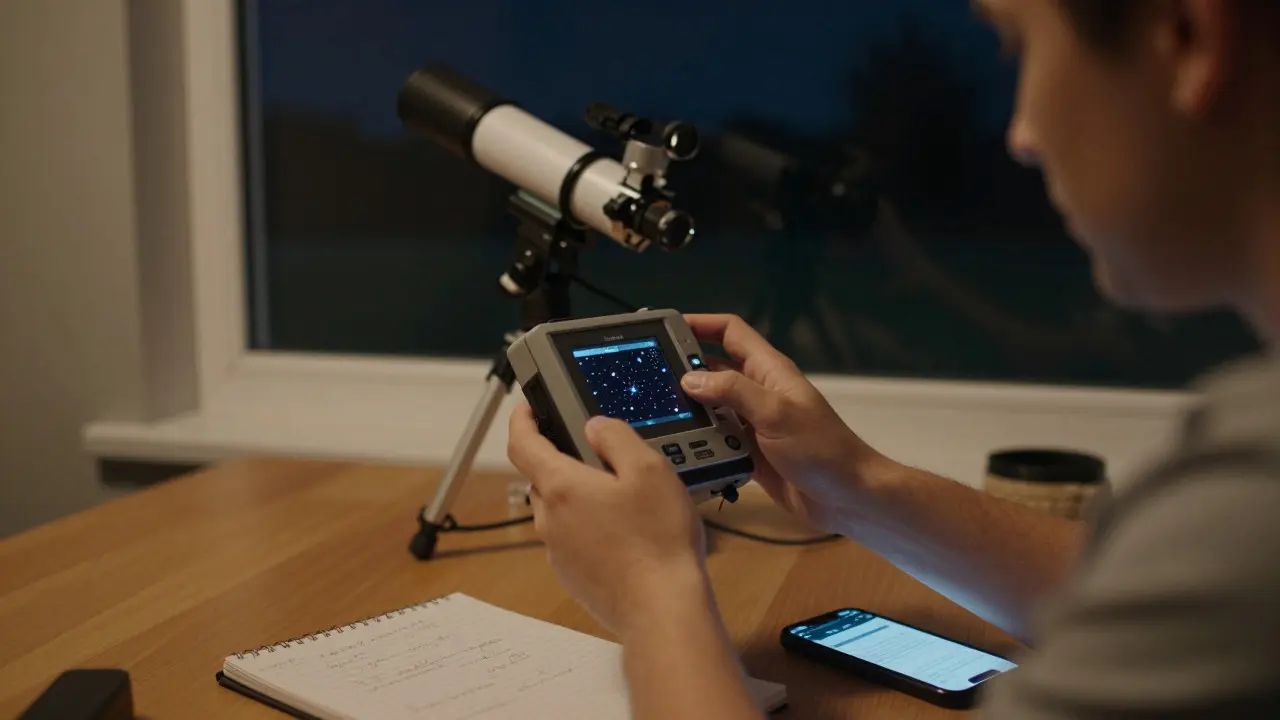
While photometry and cross-matching are essential first steps, spectroscopy provides the definitive answer. A spectrum reveals the chemical composition of the light source. Supernovae show broad absorption lines from expanding gas clouds, which look very different from the sharp lines of normal stars. However, getting a spectrum is hard for amateur observers. Most rely on professional observatories for this step. Your job as a citizen scientist is to provide high-quality photometric data and precise coordinates so professionals can target the object efficiently. Submit your candidate to databases like the Transient Name Server (TNS). Include your light curve, coordinates, and any notes on variability. The more complete your submission, the faster experts can triage it. If you have access to a small spectrograph, even low-resolution data can help rule out certain classes of objects. But never wait for a spectrum to report a strong candidate. Speed matters in transient astronomy.
| Feature | Supernova | Variable Star | Asteroid |
|---|---|---|---|
| Light Curve Shape | Rise, peak, slow decline | Periodic or erratic | Constant brightness (if tracked) |
| Motion | Stationary (relative to host galaxy) | Stationary | Moves across sky |
| Duration | Weeks to months | Hours to years | Minutes to hours (per pass) |
| Spectral Signature | Broad absorption lines | Sharp stellar lines | Reflective solar spectrum |
Best Practices for Submission and Follow-Up
Once you’ve done your vetting, submit your candidate promptly. Delays can mean missing the peak brightness, which is crucial for classification. Use standardized formats when reporting. Specify the date, time, filter, magnitude, and uncertainty. Mention if you’ve checked for motion or prior observations. Professionals appreciate thoroughness. After submission, keep observing if possible. Follow-up data strengthens your case. If the object fades as expected, note it. If it does something unexpected, flag it immediately. Community collaboration is key. Share your findings on forums or social media groups dedicated to transient hunting. Other eyes can catch errors or confirm patterns. Remember, vetting is iterative. What looks like a false positive today might reveal itself as a rare event tomorrow with more data. Stay curious, stay rigorous, and let the data guide your conclusions.
Frequently Asked Questions
How accurate do my coordinates need to be for cross-matching?
Aim for an accuracy of less than 1 arcsecond. At typical distances to nearby galaxies, this ensures you’re matching the correct star or confirming the absence of one. Larger errors increase the chance of false matches or misses.
What if I can’t get a spectrum? Is my candidate still valid?
Yes. Many supernovae are initially identified via photometry alone. Spectroscopy confirms the type, but photometric light curves and cross-matching are sufficient for initial detection and reporting. Professionals will handle the spectral follow-up.
Which filters should I prioritize for photometric checks?
R-band and I-band are ideal because they minimize atmospheric effects and align well with many supernova spectra. If available, adding B- or V-band data helps determine color evolution, which aids in classification.
How long should I monitor a candidate before giving up?
Monitor for at least 3-5 nights to establish a trend. If the object shows no change or random variation after this period, it’s likely not a supernova. However, keep an eye on it for a week if the light curve is ambiguous, as some transients evolve slowly.
Where should I submit my verified candidate?
Submit to the Transient Name Server (TNS) database. This is the central repository for astronomical transients. Include all relevant data: coordinates, light curve, discovery date, and observer notes. This ensures global visibility and rapid expert response.