15 Sep 2026
- 0 Comments
You’re standing in the aisle of a camera shop or scrolling through an online forum, staring at two telescopes that look identical on paper. One has a 150mm aperture and a 750mm focal length; the other has a 200mm aperture and a 1000mm focal length. Which one is actually "better"? The answer depends entirely on what you want to see. A big aperture gathers more light for faint galaxies, but a short focal length gives you a wider field of view for sweeping star clusters. You can’t have both without compromising somewhere else.
This is where telescope specification calculators become your best friend. These digital tools take the raw numbers-aperture, focal length, eyepiece specs-and spit out the real-world performance metrics that matter: true magnification, exit pupil size, surface brightness, and limiting magnitude. Instead of guessing or doing mental math while you’re tired from work, you plug in the data and get an instant comparison. It’s like having a physics tutor in your pocket who never gets bored explaining why f/5 isn’t always better than f/8.
Why Raw Specs Lie Without Context
Manufacturers love big numbers. They put "200x Magnification!" on the box because it sounds impressive to beginners. But here’s the thing: maximum useful magnification is dictated by the laws of optics, not marketing departments. If you try to push a small refractor beyond its physical limit, you don’t get more detail-you just get a dim, blurry mess. Telescope calculators help you bypass this hype by calculating the theoretical and practical limits based on the aperture diameter.
Consider the relationship between aperture and light-gathering power. Doubling the aperture doesn’t double the light; it quadruples it. A 200mm mirror collects four times as much light as a 100mm mirror. This non-linear scaling is hard to intuit. A calculator visualizes this difference instantly. When you compare two models, you aren’t just comparing tube lengths; you’re comparing how many photons hit your retina per second. That difference determines whether you see a fuzzy gray blob or a distinct spiral arm in a galaxy.
The Core Metrics Every Calculator Reveals
When you use a reliable tool, it doesn’t just give you one number. It breaks down the optical system into components that affect your viewing experience. Here are the three critical outputs you need to watch for when comparing models.
- Magnification: Calculated as Focal Length of Telescope / Focal Length of Eyepiece. But remember, higher isn’t always better. Atmospheric turbulence usually caps usable magnification around 200x-300x, regardless of your scope’s potential.
- Exit Pupil: This is Aperture divided by Magnification. It represents the width of the beam of light entering your eye. For deep-sky objects, you want an exit pupil of 4mm-7mm to match your dark-adapted pupil size. For planets, 1mm-2mm provides sharper contrast.
- Focal Ratio (f-number): Focal Length divided by Aperture. This tells you how "fast" or "slow" the telescope is. Fast scopes (f/4-f/6) are great for wide-field views and photography but may show coma (star distortion) at the edges. Slow scopes (f/10+) offer high contrast for planetary details but require longer exposure times for imaging.
Let’s say you’re looking at a Dobsonian reflector versus a Schmidt-Cassegrain. The Dob might have a 10-inch aperture at f/5, while the SCT has 8 inches at f/10. On paper, the Dob looks bigger. But if you plan to observe Jupiter, the SCT’s longer focal ratio might provide better contrast despite the smaller aperture, assuming good seeing conditions. A calculator helps you weigh these trade-offs objectively.
| Telescope Type | Aperture (mm) | Focal Length (mm) | Focal Ratio | Max Useful Mag (approx) | Best Use Case |
|---|---|---|---|---|---|
| Refractor | 80 | 400 | f/5 | 160x | Wide-field star clusters |
| Dobsonian | 200 | 1200 | f/6 | 400x | Deep-sky objects |
| Schmidt-Cassegrain | 200 | 2000 | f/10 | 400x | Planets & Moon |
| Astrograph | 100 | 400 | f/4 | 200x | Nebulae & Imaging |
Matching Eyepieces to Your Telescope
Owning a great telescope means nothing if you pair it with the wrong eyepiece. Many beginners buy a "power kit" with random focal lengths and end up with unusable views. A specification calculator allows you to simulate different eyepiece combinations before you spend money. You can input your telescope’s focal length and test various eyepiece options-say, a 25mm Plössl versus a 9mm Orthoscopic-to see exactly what magnification and exit pupil they produce.
For example, if you have a 1000mm focal length telescope and use a 25mm eyepiece, you get 40x magnification. With a 200mm aperture, your exit pupil is 5mm (200/40). This is perfect for viewing the Andromeda Galaxy, which is large and diffuse. Switch to a 10mm eyepiece, and you get 100x magnification with a 2mm exit pupil. Now you’re ready to split double stars or examine lunar craters. The calculator shows you this transition instantly, helping you build a logical eyepiece case rather than a random collection of glass.
Field of View: The Hidden Variable
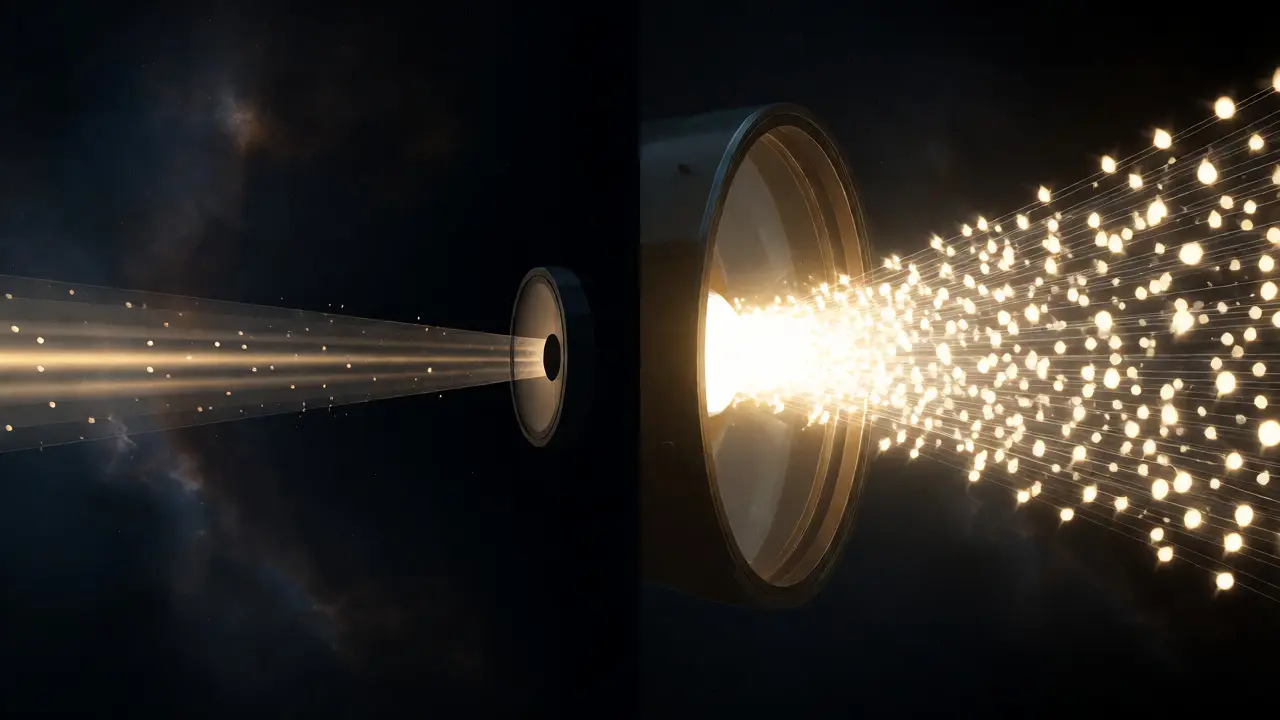
Most people forget about the True Field of View (TFOV). Manufacturers advertise the Apparent Field of View (AFOV) of the eyepiece-often 50°, 60°, or even 100°. But what you actually see through the scope is narrower. The formula is TFOV = AFOV / Magnification. If you use a 60° AFOV eyepiece at 100x magnification, your actual view is only 0.6 degrees wide. That’s tiny compared to the full moon, which is about 0.5 degrees.
Calculators highlight this discrepancy. If you want to frame the Orion Nebula comfortably, you need a wide TFOV. A fast telescope (low f-ratio) paired with a wide-angle eyepiece will give you a larger patch of sky. A slow telescope requires a lower-power eyepiece to achieve the same TFOV, which might sacrifice detail. By running these scenarios in a tool, you avoid buying expensive wide-angle eyepieces that won’t perform well on your specific scope design.
Practical Steps to Use a Calculator Effectively
Don’t just plug in numbers blindly. Follow this workflow to make smart decisions:
- Identify your target: Are you chasing faint galaxies (needs light grasp) or sharp planetary details (needs contrast)?
- Input primary specs: Enter the aperture and focal length of the telescopes you’re considering.
- Add your current gear: Include the eyepieces you already own. See how they perform on each candidate scope.
- Check the exit pupil: Ensure it stays within the 1mm-7mm range for your intended targets. Anything below 0.5mm is usually too dim for visual observation.
- Evaluate portability vs. performance: Remember that a 12-inch Dobsonian offers better resolution than a 6-inch SCT, but it weighs 50+ pounds. No calculator measures your back pain, so factor in logistics.
One common pitfall is ignoring central obstruction. In reflectors and catadioptric scopes, the secondary mirror blocks some incoming light. This reduces contrast slightly. While basic calculators might not account for this, advanced ones allow you to specify the obstruction percentage. A 30% obstruction can noticeably wash out low-contrast nebulae compared to a pure refractor. If you’re comparing a Newtonian to a Refractor, keep this subtle difference in mind.
Beyond Visual: Implications for Astrophotography
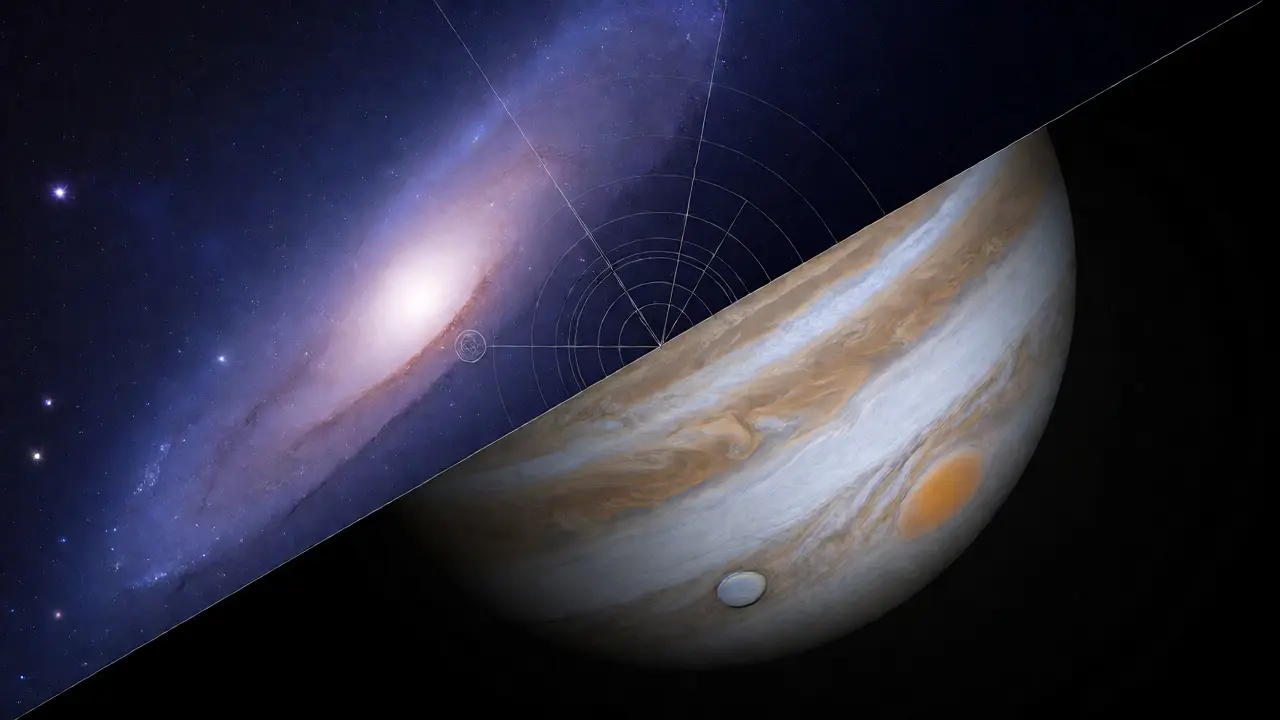
If you plan to photograph the sky, the stakes change. Telescope calculators often include modules for sensor compatibility. You’ll need to consider image scale (arcseconds per pixel), which depends on your camera’s pixel size and the telescope’s focal length. A shorter focal length covers more sky but captures less detail per pixel. A longer focal length zooms in but requires precise tracking and guiding.
For instance, shooting the Milky Way with a 400mm lens (f/2.8) is vastly different from shooting Mars with a 2000mm SCT (f/10). The former needs a wide field and fast speed; the latter needs stability and high resolution. Tools like AstroBin’s equipment finder or dedicated web-based calculators let you overlay your camera’s sensor dimensions onto the telescope’s field of view. This prevents the frustration of finding out after purchase that your favorite nebula doesn’t fit in the frame.
Frequently Asked Questions
What is the most important spec when comparing telescopes?
Aperture is generally the most critical specification because it determines light-gathering power and resolving power. However, focal ratio significantly impacts usability and field of view. You must balance both based on your observing goals.
Can I use any eyepiece with any telescope?
Physically, yes, if the barrel sizes match (usually 1.25" or 2"). Optically, no. Some eyepieces may not focus properly with certain telescope designs due to back-focus limitations, especially in Schmidt-Cassegrains. Always check compatibility charts.
Does a higher focal ratio mean better quality?
Not necessarily. Higher focal ratios (slower scopes) tend to be easier to manufacture with fewer aberrations and provide higher contrast for planets. Lower focal ratios (faster scopes) offer wider fields and faster imaging but may require additional corrector lenses to fix edge distortions.
How do I calculate limiting magnitude?
Limiting magnitude estimates the faintest star you can see. A common rule of thumb is: Limiting Mag = 2 + 5 * log10(Aperture in mm). A calculator uses more precise formulas accounting for observer skill and sky conditions, giving you a realistic expectation of what you’ll see.
Is a bigger telescope always better?
No. A huge telescope that stays in the garage because it’s too heavy to set up is worse than a smaller one you use regularly. Portability, setup time, and maintenance often outweigh marginal gains in aperture for casual observers.